
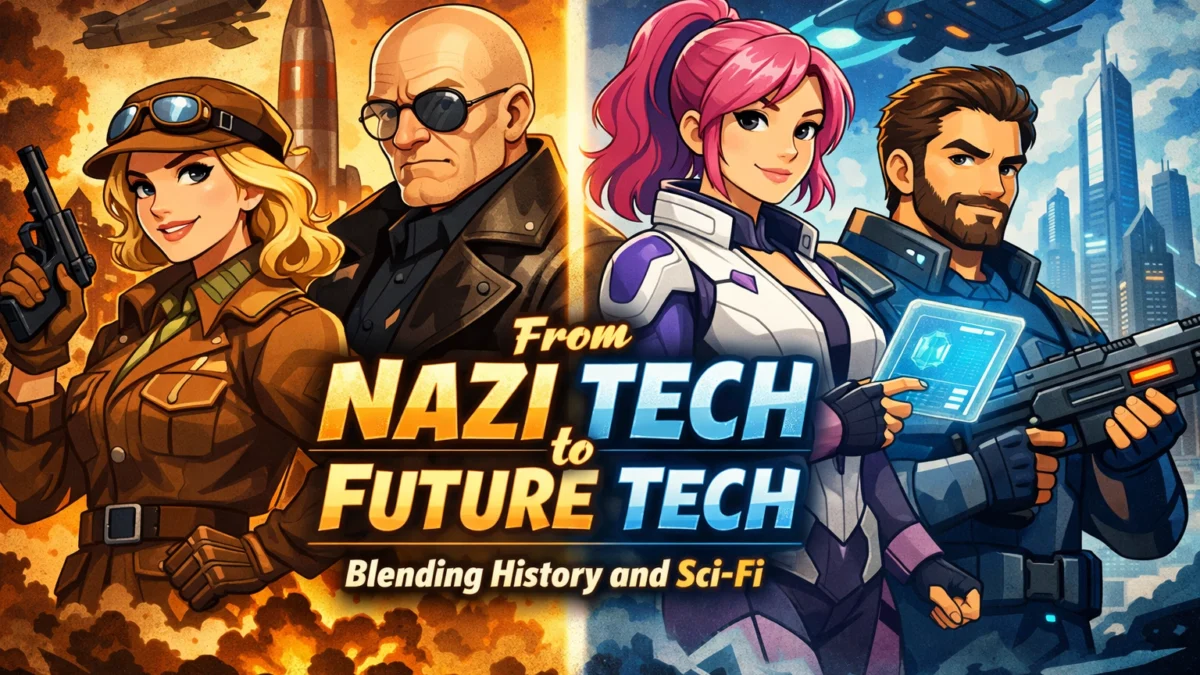
Meta Description: Discover how The Rainsavers blends real Nazi-era technology with speculative sci-fi. From V-2 rockets to eco-adventures, history meets future in this wild ride.
Here's the thing about writing sci-fi in 2026: the past is weirder than most fiction.
Seriously. Nazi Germany's wartime tech reads like a rejected sci-fi screenplay. Guided bombs dropped from 20,000 feet. The first cruise missiles. Rockets that traveled faster than sound, before we even had jet planes for regular people. And the wildest part? All of this actually happened.
Which is exactly why The Rainsavers doesn't just invent cool tech out of thin air. It starts with the bizarre, sometimes terrifying foundation of real history and asks: "What if this tech kept evolving in secret?"
When History Is Already Sci-Fi
Let's talk V-2 rockets for a second.
These things launched in 1944, before your great-grandparents probably had a TV, and they could hit London from hundreds of miles away. They traveled so fast that people couldn't even hear them coming. No warning sirens. Just… boom.

The V-2 arrived supersonically. That means it broke the sound barrier before Chuck Yeager did. And the tech was so advanced that after WWII ended, both the U.S. and Soviet Union basically scrambled to grab German scientists through Operation Paperclip. Those same rockets? They became the foundation for NASA's space program.
The first photograph from space? Captured using a modified V-2 in 1946.
So yeah. History is bonkers.
The Fritz X and the Birth of Smart Weapons
Here's another rabbit hole: the Fritz X guided bomb.
Dropped in September 1943, this thing was radio-controlled and could actually change direction mid-flight. Pilots would guide it down from above, manually steering a bomb toward ships below. It sounds like something from a video game, except it sank actual battleships.
What's fascinating isn't just that it worked, it's that it kicked off the first-ever electronic warfare battles. The Allies started jamming the radio signals. Germany countered with anti-jamming tech. Back and forth. This electromagnetic chess match from 1943 is basically the blueprint for modern cyberwarfare.
And in The Rainsavers? Well, let's just say this kind of "old tech meets new applications" thinking shows up when you least expect it.
Why Blend History With Speculative Fiction?
Because it makes everything feel real.
When you root your story in actual historical events: even the wild ones: it gives readers a toehold. They can Google "Fritz X bomb" or "V-2 rocket" and go, "Holy crap, that actually existed." Then, when you extrapolate forward into fictional territory, the suspension of disbelief is already there. You've earned it.

The Rainsavers takes this approach seriously. The series doesn't just throw around sci-fi buzzwords. It builds on real innovations: jet propulsion, diesel-electric submarines, precision-guided systems: and imagines how that tech could evolve when paired with modern environmental stakes and eco-adventure storytelling.
Think about it: Germany's night vision tech from the 1940s eventually led to the infrared scopes we use today. Their diesel-electric sub designs influenced naval engineering for decades. These weren't dead ends. They were starting points.
So what happens when those starting points take a different turn? What if some of that research didn't stop after the war? What if it went underground, literally or figuratively: and emerged decades later with a new purpose?
That's the kind of "what if" that fuels great speculative fiction.
The Radar Revolution (And Microwaves!)
Here's a fun fact: radar technology: specifically the cavity magnetron that produces microwaves: might have had a bigger impact on WWII than the atomic bomb.
Some historians genuinely argue this. Radar let the Allies detect incoming bombers, track submarines, and coordinate defense in ways that fundamentally shifted the balance of power. And the same magnetron tech? It's why you can heat up leftovers in 90 seconds today.

War tech becomes civilian infrastructure. Military innovation becomes everyday convenience. It's a pattern that repeats throughout history, and it's a goldmine for storytelling.
The Rainsavers leans into these contradictions. How do you take tools designed for destruction and repurpose them for survival? For ecological restoration? For saving the planet instead of conquering it?
Those questions make for way more interesting adventures than "here's a magic space gun."
Eco-Adventure Meets Historical Tech
So where does all this history-meets-future stuff land in a six-book eco-adventure series?
Everywhere.
The beauty of blending historical tech with modern environmental stakes is that it creates layers. You're not just dealing with bad guys who want power: you're dealing with legacy systems, forgotten research, and the consequences of decisions made 80+ years ago.
Plus, it keeps the action grounded. When characters in The Rainsavers face threats, they're not battling cartoon villains with impossible tech. They're up against repurposed innovations, salvaged systems, and the kind of "what if this fell into the wrong hands" scenarios that feel disturbingly plausible.
Because let's be honest: in 2026, we know that old tech doesn't just disappear. It gets rediscovered. Reverse-engineered. Weaponized in new ways.
That's not fiction. That's just… Tuesday.

Why This Approach Works
Readers are smart. They can smell lazy worldbuilding from a mile away.
But when you do your homework: when you dig into the actual Fritz X combat deployments, or the genuine specs of V-2 propulsion systems, or the real-world electromagnetic warfare of 1943: your fiction becomes richer. More textured. More believable, even when it veers into speculative territory.
And here's the kicker: it makes the eco-adventure stakes feel urgent. Because if humanity could develop supersonic missiles and guided bombs in the 1940s, what are we capable of now? And more importantly, what should we be using that capability for?
The Rainsavers asks those questions without getting preachy. It just drops you into a world where history, technology, and environmental crisis collide: and lets you figure out the answers alongside characters who are equally in over their heads.
The Legacy Continues
From Nazi jet engines to modern aviation. From V-2 rockets to space exploration. From guided bombs to precision military drones.
The through-lines are everywhere once you start looking.
And the best part? We're still living in that legacy. The tech that shocked the world in the 1940s is still evolving, still influencing modern innovation, still showing up in unexpected ways.
Which means there's no shortage of material for great storytelling.

Whether you're into historical deep-dives, speculative tech, or eco-adventures with real stakes, blending these elements creates something that hits different. It's not just escapism: it's a lens for understanding how we got here and where we might be headed.
And honestly? That's way more fun than making stuff up from scratch.
Ready to see how history and future collide? Read Book One now and dive into The Rainsavers series: where yesterday's impossible tech becomes tomorrow's survival tool.
