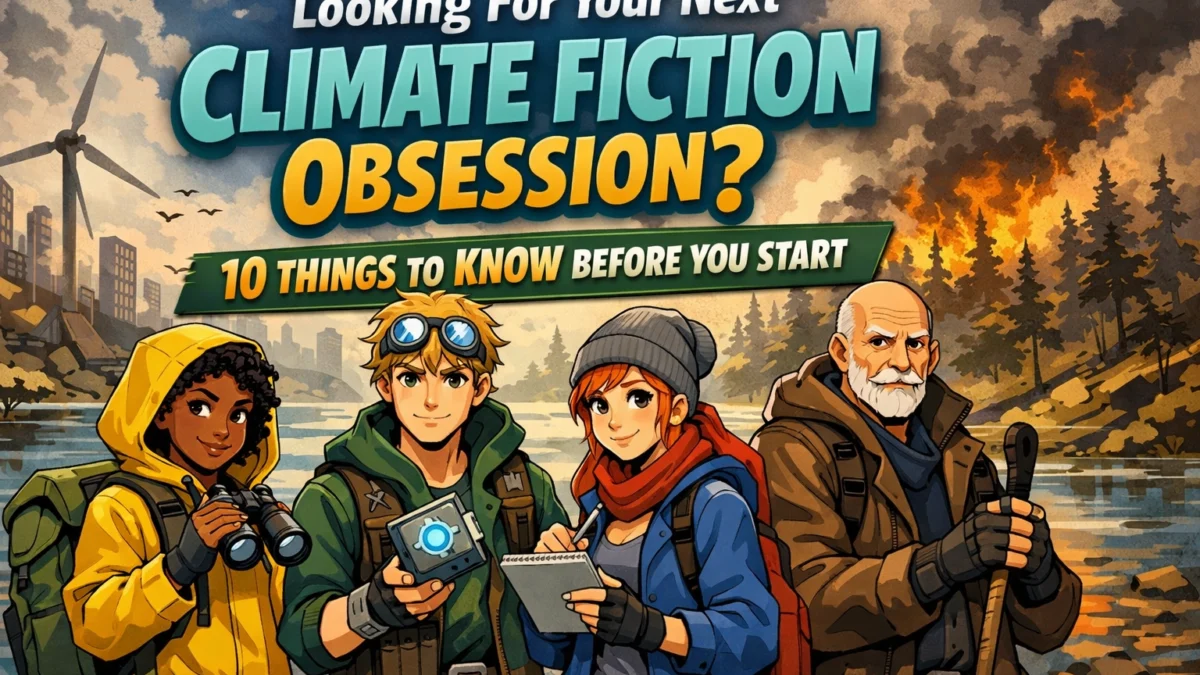
Meta Description: Ready to dive into climate fiction? Here are 10 essential things you need to know before starting your next eco-adventure obsession, from what makes cli-fi tick to why it hits different in 2026.
Tactical expedition team member in high-tech field respirator preparing for climate mission
So you're thinking about diving into climate fiction? Smart move. In 2026, we're past the point of pretending our planet isn't going through some things, and cli-fi gives us a way to process it all without doom-scrolling until 3 AM.
But before you commit to your next reading obsession, here's what you actually need to know about the genre, no PhD in environmental science required.
1. It's Science-Based, But Not a Textbook
Climate fiction is rooted in real science, but that doesn't mean you're signing up for a lecture. The best cli-fi (like The Rainsavers series) takes legitimate climate science and weaves it into stories about actual people dealing with actual problems. Think of it as your environmental science class, but with plot twists and characters you'll actually care about.
You won't need to memorize carbon parts-per-million to follow along. The science is there, it's just packaged in a way that makes you feel it instead of just understanding it intellectually.

2. "Dystopia" Doesn't Always Mean "Depressing"
Yeah, most climate fiction leans dystopian. That's kind of the genre's thing. But dystopian doesn't automatically equal soul-crushing hopelessness. The best stories in this space show characters adapting, innovating, and finding community even when everything's falling apart.
It's 2026, we're all living in somewhat uncertain times anyway. Climate fiction just gives us a framework to explore resilience when things get weird. And sometimes, watching fictional characters navigate climate chaos actually makes our own reality feel more manageable.
3. The Protagonist Won't "Save The World"
Here's the thing about climate change: one person can't fix it. So if you're expecting a traditional hero's journey where someone single-handedly reverses global warming, you're gonna be disappointed.
Instead, climate fiction focuses on how individuals and teams navigate systemic problems. The drama comes from emotional arcs, tough choices, and interpersonal dynamics, not from a lone wolf solving everything. Team-based stories (hello, six-book series about environmental crisis response teams) capture this reality way better than solo hero narratives.
4. Expect Fast Pacing and High Stakes
Climate fiction doesn't mess around. Most stories feature accelerated pacing, punctuated by crisis moments that keep you turning pages. The mood tends toward anxious and urgent, because, well, that's what climate change feels like.
Settings transform dramatically. Characters face resource scarcity. Everything feels consequential. If you like your fiction chill and meandering, this might not be your genre. But if you want propulsive storytelling that mirrors the accelerating pace of real environmental change? You're in the right place.

5. It Spans Way More Styles Than You Think
"Climate fiction" isn't a monolith. The genre includes dystopian nightmares, utopian visions of what we could build, near-future thrillers, and even optimistic tales of adaptation and innovation.
Some stories are completely bleak. Others are hopeful. Most land somewhere in between, showing both the crisis and the ways humans rise to meet it. Before you dive in, figure out what kind of emotional journey you're up for right now.
6. Human Responsibility Is Usually Part of the Story
Most cli-fi doesn't shy away from the fact that humans created this mess. Expect themes around culpability, uneven impacts across regions and generations, and the ethics of who pays the price for environmental destruction.
This isn't about guilt-tripping readers, it's about honest storytelling. The best climate fiction acknowledges responsibility while also exploring what happens next. How do we move forward? What do we build? Who leads? Those questions drive the narrative.
7. It Makes Abstract Problems Feel Personal
Climate change is inherently hard to comprehend at scale. Global temperature increases, parts-per-million, planetary tipping points, it's all too big and incremental to emotionally process.
That's where fiction comes in. By showing how climate change affects individual characters' lives, their relationships, their daily survival, their hopes for the future, cli-fi makes planetary-scale problems feel personal and urgent. You stop thinking about abstract statistics and start caring about specific people navigating specific challenges.

8. Earth Stays in Focus
Unlike general science fiction that might explore distant galaxies or alien worlds, climate fiction keeps Earth front and center. This is our planet, our home, our mess to deal with.
That narrow focus makes environmental science more approachable. You're not learning about fictional ecosystems on made-up planets, you're engaging with exaggerated versions of real environmental processes happening right now.
9. Character Development Drives Everything
Since the "problem" of climate change can't be solved by act three, the emotional satisfaction in cli-fi comes from character growth. How do people change when their world is changing? What relationships form under pressure? Who rises to leadership when systems collapse?
The best climate fiction series develop characters across multiple books, letting you watch them evolve as their circumstances shift. You get invested in their personal journeys even as the larger environmental crisis continues unfolding.
10. It's Both Entertainment and Processing Tool
Here's the real secret: climate fiction serves multiple purposes. Yes, it's entertaining. But it's also a way to emotionally process anxiety about our actual climate crisis without completely losing your mind.
Reading about fictional characters dealing with environmental collapse somehow makes real climate news less overwhelming. It gives you a framework for thinking about adaptation, resilience, and community response. It's escapism that paradoxically helps you engage more thoughtfully with reality.
Ready to Start?
If these ten things sound like your kind of reading experience, you're ready for climate fiction. The genre offers propulsive storytelling, complex characters, real science, and emotional depth: all while helping you process one of the defining challenges of our time.
Looking for a series that balances urgency with hope, science with character development, and crisis with community? Read Book One now and start your climate fiction obsession the right way.
Trust us: once you're in, you won't want to stop.
