
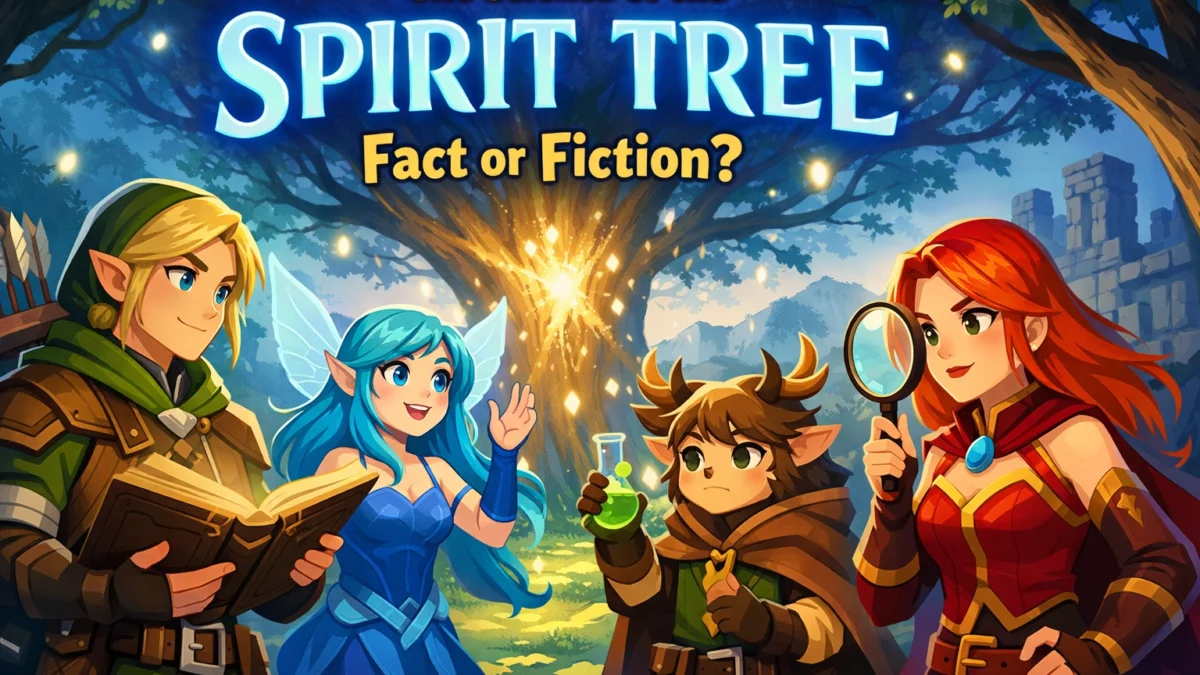
Meta Description: Could glowing trees actually exist? We dig into the real science behind spirit trees, ancient beliefs, and why The Rainsavers' mystical jungle tech might not be pure fiction after all.

Look, we've all been there. You're reading an adventure novel, you hit the part where the heroes discover a glowing tree that somehow controls the entire ecosystem, and you think: Yeah, right. Cool visual, but come on.
But here's the thing, in 2026, the line between "ridiculous sci-fi trope" and "wait, that's actually real?" is getting blurrier every day.
So let's talk about spirit trees. Not the fictional kind (yet), but the very real, very weird phenomena that inspired them.
The Glow-Up: When Trees Actually Light Up
First, the science that'll make you double-take: trees can glow.
No, seriously. It's called bioluminescence, and it's been freaking people out for centuries. When wood decays, certain fungi and microorganisms produce a faint, eerie light through chemical reactions. Historically, folks called it "foxfire" or "will o' the wisp", because nothing says "I definitely shouldn't follow that glowing thing in the forest" like a name referencing foxes and wisps.

The light is subtle, not exactly Avatar-level neon jungle vibes, but it's there. It happens when luciferin (yes, that's the actual chemical name) reacts with oxygen. The result? A soft, ghostly glow that's been inspiring campfire stories and mystical beliefs since… well, probably since humans first noticed it and thought "that's either magic or I ate the wrong mushrooms."
Cultural Truth Bombs: When Belief Becomes Conservation
Here's where it gets interesting. Indigenous communities worldwide, the Iban people of Borneo, the Mohawks, the Maya, have honored sacred trees as portals, wisdom sources, and spiritual anchors for generations.
And before anyone dismisses this as "just folklore," consider this: among the Iban, spiritual beliefs about spirits inhabiting strangler fig trees lead communities to preserve these trees and the surrounding forest buffers. Translation? Spiritual belief creates real-world conservation. No external enforcement needed. No government policy. Just respect for something bigger.
The Spirit Tree at Grand Portage Indian Reservation is a real northern white cedar with genuine cultural significance. Is it scientifically proven to house spirits? No. Does it matter? Also no, because its designation as sacred protects it, and that protection extends to the entire ecosystem around it.

That's not fiction. That's humans understanding ecology through cultural wisdom long before Western science caught up.
The "But Actually" Part: Where Science Taps Out
Now, let's be clear: trees don't have consciousness comparable to humans. They don't think. They don't plot revenge against loggers (tempting plot point, though). And they definitely don't beam mystical energy that controls weather patterns or heals the planet overnight.
Claims about "orgone energy" or assertions that fMRI studies prove tree consciousness? Yeah, those aren't mainstream science. They're more like "I watched a YouTube documentary at 2 AM and now I have THEORIES" territory.
**But: ** and this is a big but: trees do have measurable, incredible properties:
- They regulate water cycles
- They control wind patterns
- They support insanely complex ecosystems
- They communicate through mycorrhizal networks (the "wood wide web")
- They can literally change local climates
So while they're not conscious in the way we understand consciousness, they're also not just… standing there looking pretty. They're active participants in planetary systems we're only beginning to understand in 2026.
The Rainsavers: Where Fiction Meets "Wait, Maybe?"
Which brings us to The Rainsavers.
In the series, the Spirit Tree isn't just a glowing prop: it's a nexus of ancient technology and natural phenomena, a bridge between indigenous wisdom and modern eco-science. The team discovers it's not magic, but it's not just a tree either. It's something in between, something that requires both scientific understanding and cultural respect to comprehend.

Sound far-fetched? Maybe. But consider:
- We're discovering new species every year
- Quantum biology is revealing wild stuff about how nature works at the molecular level
- Indigenous knowledge is increasingly validated by modern research
- Technology and nature are converging in ways we couldn't predict a decade ago
The Spirit Tree in The Rainsavers asks: What if the ancients understood something about ecosystem connectivity that we're only now re-learning? What if that glowing tree isn't supernatural: it's just operating on principles we haven't fully mapped yet?
The Verdict: Both, Actually
So is the Spirit Tree concept fact or fiction?
Yes.
The glowing? Real (sort of). The cultural significance? Absolutely real. The measurable ecological impact? Verified. The consciousness and mystical portals? Fiction… probably. The idea that we should protect and study these natural phenomena with both scientific rigor and cultural humility? That's the sweet spot.
In 2026, we're learning that the most interesting stories aren't pure fantasy or pure documentary: they're the ones that live in that weird, fascinating space where "this is impossible" meets "okay but what if it's not?"
The Rainsavers nails that balance. It takes real ecological concepts, real indigenous wisdom, real scientific phenomena, and asks: what adventure would unfold if we paid attention to all of it at once?

Your Next Adventure Awaits
Want to explore the science-fiction-truth triangle yourself? Curious about how ancient mysteries blend with modern environmental threats in ways that feel both fantastical and eerily plausible?
Read Book One now and discover why sometimes the most mind-bending adventures are the ones that could almost be real.
Because in a world where trees glow, fungi create internet-like networks underground, and climate science reveals daily miracles, maybe the real question isn't "fact or fiction?"
Maybe it's: "How close are we to finding out?"
