Meta Description: Tired of climate anxiety in fiction? Discover why 2026 readers are ditching doompunk despair for hopepunk action, and how The Rainsavers is leading the charge with eco-adventures that choose solutions over spiraling dread.

Here's the thing nobody's saying out loud: we're exhausted.
Not physically tired (okay, maybe a little). But emotionally wrung-out from doomscrolling, climate anxiety, and fictional worlds that keep reminding us everything's on fire and there's nothing we can do about it.
Enter 2026, where readers are staging a quiet rebellion. They're putting down the doompunk despair-fests and picking up something different, stories where people actually do something about the mess. Stories where kindness isn't naïve. Where taking action isn't futile.
Welcome to the hopepunk revolution in eco-fiction.
What Even Is Hopepunk (And Why Does Doompunk Sound So… Goth?)
Let's break it down.
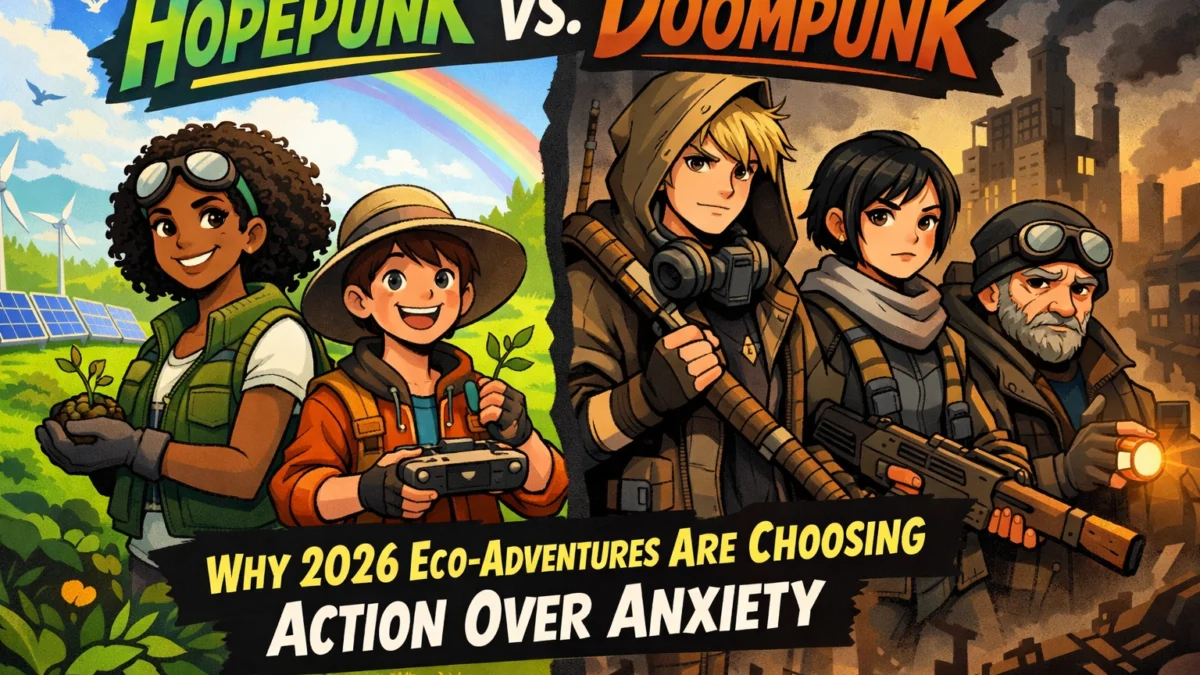
Doompunk is essentially what happens when grimdark fiction meets climate fiction and they have a very pessimistic baby. Think relentless catastrophe, characters who can't win, ecosystems collapsing with zero hope of recovery, and endings that make you want to ugly-cry into your recyclable tissues. It's not that these stories don't have merit, they're reflecting real fears. But here's the problem: they're paralyzing.
Hopepunk, on the other hand, was coined back in 2017 by Alexandra Rowland, and it's built on a radical idea: what if compassion, community, and choosing to care were actually weapons? What if optimism wasn't naive but rebellious?
Hopepunk doesn't pretend everything's fine. Bad things still happen. Rainforests still burn. Villains still villain. But the characters refuse to let despair win. They take action. They band together. They problem-solve instead of just… spiraling.

Why Readers Are Ghosting Doompunk in 2026
Look, we get enough doom in our news feeds. By the time you've scrolled through your morning coffee, you've already absorbed seventeen ecological crises and a partridge in a rapidly-warming pear tree.
So when readers sit down with fiction, their escape, their safe space, they're not looking for more anxiety. They want:
- Characters who refuse to give up even when things look bleak
- Communities that come together instead of falling apart
- Actionable hope that feels earned, not handed out like participation trophies
- Solutions that feel possible, even if they're difficult
This shift isn't about toxic positivity or pretending climate change isn't serious. It's about trading paralysis for momentum. Anxiety for agency.
Because here's the secret: writing despair is easy. Writing believable hope in a world trying to crush it? That takes real craft.
Action Over Anxiety: The New Eco-Adventure Formula
The best eco-adventures of 2026 aren't choosing between realism and hope, they're choosing both. They acknowledge the stakes are life-or-death while showing characters who actively fight back.
This is where The Rainsavers comes in.
Instead of watching ecosystems collapse from the sidelines, our six-person team is in the thick of it, tactical gear, ancient mysteries, cutting-edge tech, and rainforests that need saving yesterday. They're not superheroes with invincibility. They're real people with real fears who choose action anyway.
The formula works because:
✅ High stakes exist (rainforests, ancient secrets, dangerous adversaries)
✅ But so do solutions (teamwork, intelligence, innovation)
✅ Characters fail sometimes (keeping it real)
✅ But they get back up (keeping it hopeful)
It's not about pretending everything's easy. It's about showing that trying matters.

Why Team-Based Action Beats Solo Despair Every Time
One of the sneakiest differences between hopepunk and doompunk? Structure.
Doompunk loves the isolated hero drowning in their own powerlessness. Hopepunk (and modern eco-adventures) spotlight teams, because real change never happens alone.
The Rainsavers isn't about one genius solving everything. It's six specialists with different skills, different perspectives, and different ways of approaching impossible problems. When one person's stumped, someone else has an idea. When someone's ready to quit, the team reminds them why they started.
That's the kind of energy readers are craving in 2026. Not lone wolves. Not chosen ones who magically fix everything. Just real collaboration that proves community is a superpower.
The Lush Rainforest Meets Tactical Tech Aesthetic
Here's where eco-adventures get fun.
Gone are the days of nature stories that feel like eco-lectures wrapped in cardboard characters. The new wave blends:
- Ancient ecosystems with jaw-dropping biodiversity
- Cutting-edge technology that feels grounded and believable
- Archaeological mysteries that add intrigue
- Fast-paced action that keeps pages turning
Imagine rappelling through rainforest canopies at dawn, decoding centuries-old puzzles carved into temple walls, then using drone surveillance to track illegal logging operations before sunset. That's not just environmental awareness, that's a mission.
The Rainsavers lives at this intersection: where the primal beauty of untouched wilderness collides with modern tactics, where every chapter balances wonder and urgency.

What Readers Actually Want (Spoiler: Not More Anxiety)
We've talked to thousands of readers, and the message is crystal clear:
"I care about the planet. I'm already anxious. Give me characters who fight back so I remember that I can too."
They want:
- Hope that feels earned, not handed out
- Action that inspires, not lectures that depress
- Characters who reflect real courage, not invincible gods
- Endings that leave them energized, not emotionally destroyed
The shift from doompunk to hopepunk isn't about ignoring problems. It's about reframing how we face them. Anxiety freezes. Action mobilizes.
Fiction has the power to shape how we see the world: and more importantly, how we see our role in it. When readers close the book feeling like change is possible, that energy doesn't stay on the page.
Meet The Team Behind The Action
So who are these Rainsavers making hopepunk history?
Our six-person team brings different expertise to every mission:
🌿 The Field Scientist who can identify plant species by touch and knows which fungi will save your life (or end it)
🔧 The Engineer who MacGyvers solutions from duct tape, drone parts, and sheer stubbornness
📜 The Archaeologist decoding ancient mysteries faster than you can say "temple trap"
💻 The Tech Specialist keeping comms running and satellites tracking
⚖️ The Legal Strategist who weaponizes environmental law like a boss
🎯 The Tactical Lead making sure everyone gets home alive
Each one brings something essential. Each one has moments of doubt. And each one chooses action over anxiety when it counts.
They're not perfect. They argue. They mess up. They have fears and baggage and bad days.
But they show up anyway. That's hopepunk.
The Bottom Line
2026 is the year eco-fiction stops wallowing and starts moving.
Readers aren't looking for fairy tales where everything's magically fixed. They're looking for stories that acknowledge the darkness while lighting a path forward. They want high stakes, real consequences, and characters who prove that choosing hope: choosing action: is the most rebellious thing you can do.
Action over anxiety, every single time.
Ready to trade your climate dread for a six-book adventure that actually gets things done?
See how we're changing the eco-fiction game →
Category: Eco-Action / Genre Trends
