
Let’s be honest: by the time we hit March 2026, the way we look at the "end of the world" has changed. We’ve seen enough movies where a giant laser beams down from a spaceship to realize that, while flashy, it’s not exactly what keeps us up at night anymore.
The most gripping stories today aren't happening in a galaxy far, far away. They are happening right here, in our own backyards, our vanishing rainforests, and our rising oceans. This shift has given birth to a genre that is completely rewriting the rules of science fiction: the Environmental Protection Thriller.
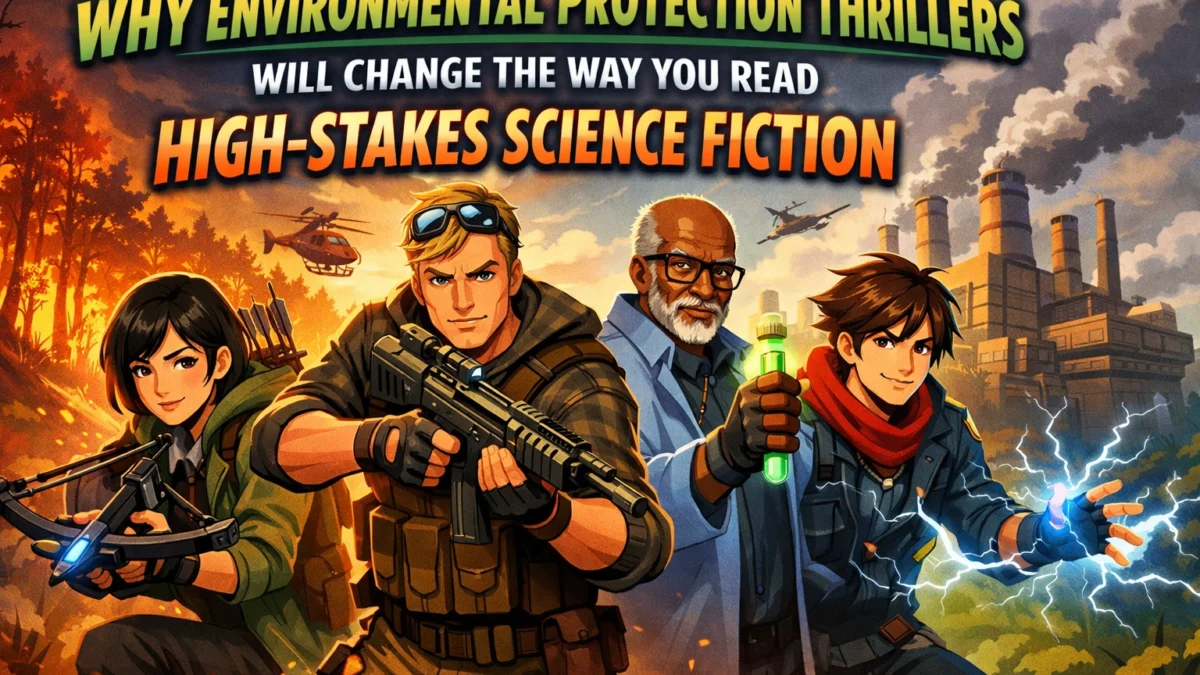
At The Rainsavers, we’ve seen this evolution firsthand. Readers are moving away from the "chosen one" with a magic sword and toward teams of experts equipped with tactical gear and field respirators, fighting to save the only planet we’ve got. Here’s why this genre is changing the way you read high-stakes sci-fi forever.
1. The Stakes Are Systemic, Not Just Spectacular
In traditional sci-fi, the threat is often a single "Big Bad": a villain with a thumb on a literal or metaphorical detonator. But environmental thrillers operate on a level of systemic complexity.
When you read a story about environmental protection, the "villain" isn't just a person; it’s a cascading series of events. It’s the butterfly effect in action. If a corporation clears a specific sector of the Amazon, it’s not just about the trees; it’s about the weather patterns in the Midwest, the survival of undiscovered medicinal plants, and the indigenous communities caught in the crossfire.
This complexity makes for a much more immersive reading experience. You aren't just waiting for a final showdown; you’re watching a high-stakes chess match against a poly-crisis. It forces you to think about how everything is interconnected. If you’ve ever felt overwhelmed by climate anxiety, these stories offer a way to process that complexity through a lens of action and agency.

2. Tactical Realism Over Superpowers
One of the biggest shifts we’ve seen in 2026 is the craving for "grounded" sci-fi. Readers are tired of characters who can fly or bench-press a tank just because they were born that way. In environmental protection thrillers, the "superpowers" are replaced by high-tech field gear and specialized knowledge.
In The Rainsavers series, our heroes don’t wear capes. They wear tactical expedition suits designed for high-humidity environments. They use high-tech field respirators to navigate zones where the air has been compromised by industrial toxins or ancient spores. They rely on hacking, biology, and tactical strategy.
When a character’s survival depends on the battery life of their respirator or their ability to navigate a dense canopy using LIDAR, the tension feels earned. It feels real. This shift toward tactical realism makes the high-stakes moments feel much more personal. You find yourself wondering, "What would I do in that gear?" rather than "I wish I had laser eyes."
3. The Move from "Solo Hero" to "Mission-Driven Team"
Science fiction has a long history of the "lone wolf" protagonist. But let’s face it: one person can’t save the planet. Environmental protection is, by definition, a team sport.
Environmental thrillers are leading the charge in team-based adventure stories. When you have a group: like a hacker-nurse, a teen raised in the jungle, and a tactical specialist: you get a friction and a chemistry that solo stories just can’t match.
This change reflects our modern world. We know that real-world change happens through collaboration, and our fiction is finally catching up. It turns out that watching a team of specialists argue over the best way to disable a deforestation drone is way more engaging than watching one guy punch his way through a corridor. It also allows for more diverse perspectives, making the story feel more like a global effort than a localized skirmish.

4. Science is the Plot, Not the Window Dressing
In the past, "technobabble" was often used to hand-wave away plot holes in sci-fi. In environmental thrillers, the science is the plot.
When we talk about solar geoengineering, cloud seeding, or biome restoration, we aren't just using big words to sound smart. These are the tools and the threats that define our characters' lives. As noted in recent literary research, these narratives require ecological storytelling to be integral to the plot, not just "greenwashing" over a standard action story.
This means the reader gets to learn something while they’re on the edge of their seat. You’re not just reading about a chase scene; you’re reading about a chase scene through a landscape that is reacting to the characters’ presence. This integration of real-world scientific concerns makes the fiction feel urgent. It stops being escapism and starts being a "what if" scenario that feels like it could happen next Tuesday.
5. Ancient Mysteries Meet Modern Threats
One of the coolest things happening in the genre right now is the blend of historical mystery and cutting-edge science. Many environmental protection thrillers explore the idea that the planet has "reset" before, or that ancient civilizations had a better grasp on ecological balance than we do.
By mixing ancient technology with modern threats, writers are creating a new kind of "Eco-Adventure." It’s Indiana Jones meets Black Mirror. This adds a layer of wonder and discovery to the genre. It’s not just about stopping a disaster; it’s about uncovering the secrets of our planet’s past to secure its future.

6. Why This Changes How You Read
So, why does this matter for your reading list?
Because once you’ve experienced a thriller where the stakes are this high: where the survival of an entire ecosystem is on the line: it’s hard to go back to "standard" sci-fi. You start looking for that depth in everything you read. You start asking:
- What is the environmental impact of this space battle?
- How does this futuristic city handle its waste?
- Why is the hero working alone when they clearly need a botanist?
Environmental protection thrillers change the way you think about adventure stories because they demand more from the narrative. They demand a story that is as complex and vibrant as the world we live in. They offer a sense of "Eco-Heroism" that feels attainable, inspiring, and: most importantly: incredibly fun to read.
The Future is Tactical
As we move further into 2026, the lines between speculative fiction and our daily reality will continue to blur. We don’t need more stories about how the world ends; we need more stories about the people who refuse to let it happen.
We need characters in tactical gear, breathing through respirators, and standing their ground in the heart of the rainforest. We need heroes who use their brains as much as their brawn.
If you’re ready to see how high-stakes sci-fi has evolved, it’s time to dive into a genre that doesn’t just entertain you: it prepares you. The stakes are real, the gear is ready, and the mission is clear.
Read Book One now and join the mission at The Rainsavers.

