Meta Description: Looking for your next environmental read in 2026? We compare high-stakes eco-thrillers vs. "cozy" climate fiction. Discover why pulse-pounding sagas like The Rainsavers offer the impact the planet needs.
Hey everyone, Steven G. Samuels here.
It’s Tuesday, March 3, 2026, and if you’ve looked outside lately, or just checked your weather app, you know the world isn’t exactly "quiet." We are living in an era where the environment isn't just a background setting; it’s the lead protagonist (and sometimes the primary antagonist).
As the CEO of The Rainsavers, I spend a lot of time thinking about how we tell stories. Specifically, how we tell stories about the planet. If you’re browsing the digital aisles for your next read, you’ve probably noticed two major camps emerging in the "Eco-Fiction" world: the "Cozy" Climate Fiction and the High-Stakes Eco-Thriller Saga.
Today, I want to break down why the latter, the heart-pounding, tactical-gear-wearing, world-saving adventure, is exactly what we need right now.
What is "Cozy" Climate Fiction Anyway?
Before we get into the adrenaline-pumping stuff, let’s talk about the competition. "Cozy" climate fiction (or "Clim-Fi") usually focuses on small-scale stories. Think of it as a community garden mystery or a gentle tale about a family adapting to a slightly warmer coastline.
There’s absolutely a place for those stories. They are the "warm blanket" of the genre. They focus on:
- Domestic life in a changing world.
- Interpersonal relationships.
- Low-stakes conflict (like who stole the heirloom seeds).
- Reflective, slow-paced prose.
In a world that feels like it's moving at 100mph, some people want to slow down. But here’s the thing: the environment isn't slowing down. And frankly, neither are we.

The High-Stakes Saga: Why Adventure Wins
In 2026, we don’t just want to reflect on the weather; we want to do something about it. That’s where the high-stakes eco-thriller comes in. This is the world of The Rainsavers.
In a high-stakes saga, the fate of entire ecosystems: and the people within them: is on the line. These stories aren't about sitting back and watching the tide rise; they’re about the team that’s out there in the storm, using every bit of tech and grit they have to turn the tide back.
1. The Stakes are Global, Not Just Local
While a cozy story might worry about a local pond, a high-stakes saga is dealing with continental water crises, massive weather anomalies, and the shadowy organizations that profit from ecological collapse. When you read an adventure like The Rainsavers, you feel the weight of the world. That pressure makes the eventual victory (or the narrow escape) feel earned.
2. Action vs. Observation
Let’s be real: action is fun. In 2026, we’ve moved past the era of "man vs. nature" where nature is just a disaster to be survived. Now, it’s about tactical intervention. We’re talking high-tech field respirators, specialized gear, and strategic planning.
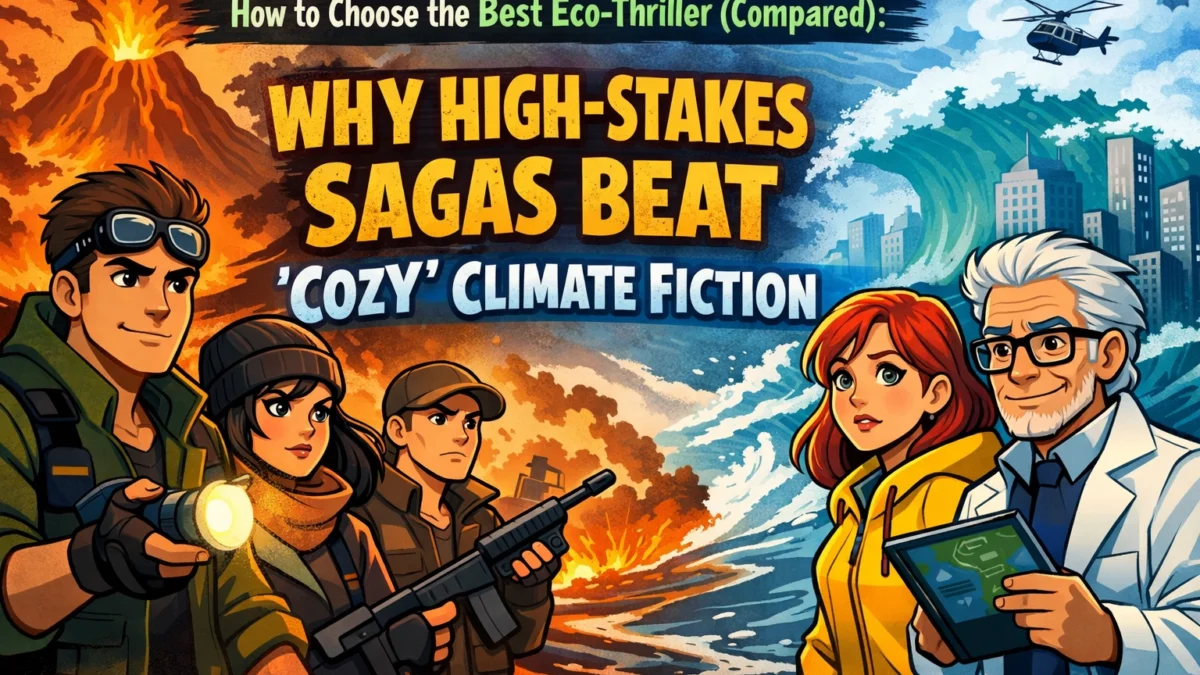
When you see a character like Alpha: our tactical lead: on the move, you aren't just reading about a storm. You’re reading about how a specialist navigates that storm with precision and purpose.
3. The Science is a Weapon
In cozy fiction, science is often just "background noise." In a high-stakes thriller, science is the ammunition. Look at Dr. Mubari. She isn't just a scientist in a lab; she’s the intellectual backbone of the mission. Her expertise in climate patterns and resource management is what gives the team the edge. In these sagas, intelligence is just as vital as physical strength.

Why the "Tactical Look" is the New Hero Aesthetic
Gone are the days of the caped crusader. In 2026, the modern hero looks like someone you’d see on a high-tech search-and-rescue mission. We’re talking about functionality over fashion: though, let’s be honest, tactical gear looks pretty cool.
The "character-forward" look of modern eco-adventures features:
- Field Respirators: Essential for navigating unpredictable atmospheres.
- Modular Tactical Vests: Because you need your tech within arm's reach.
- Rugged, All-Weather Materials: No spandex here, just gear that survives the elements.
This aesthetic signals to the reader that this story isn't a walk in the park. It’s a mission. It’s high-stakes. It’s The Rainsavers way.
Comparing the Experience: Which One is for You?
If you’re still on the fence, let’s look at a quick comparison:
| Feature | Cozy Climate Fiction | High-Stakes Eco-Thriller |
|---|---|---|
| Pacing | Slow, contemplative | Fast-paced, "can't put it down" |
| Main Conflict | Personal or community-based | Global, systemic, and dangerous |
| Character Archetypes | The neighbor, the gardener | The specialist (Alpha), the expert (Dr. Mubari) |
| Technology | Low-tech, traditional | High-tech, experimental, tactical |
| Vibe | "Let's talk about it" | "Let's fix it" |
At The Rainsavers, we believe that the "Let's fix it" energy is what resonates most with readers today. We want to see heroes who are proactive. We want to see the friction between ancient mysteries and modern threats.

How to Choose Your Next Eco-Thriller
If you’ve decided that you’re ready for the high-stakes route, here’s how to pick the best one:
Look for the "Team" Dynamic
Solo heroes are great, but the planet is too big for one person to save. The best sagas feature a team with diverse skills. You want to see the interplay between the muscle and the brains. When Alpha and Dr. Mubari are working together, that’s when the magic happens. A good team dynamic adds layers of tension and camaraderie that solo stories lack.
Check the "Realism" Factor
Even though it’s fiction, you want an eco-thriller that feels grounded in real-world possibilities. The threats should feel like they could happen tomorrow (or, in our case, by 2026). The stakes feel higher when the science: led by characters like Dr. Mubari: feels plausible.
Does it Have a "Big Bad"?
Cozy fiction often lacks a true antagonist. But in a saga, you want someone (or some organization) to root against. Whether it’s a corrupt corporation or a shadowy group trying to control the world’s last water reserves, a tangible villain gives our heroes something to fight against, making the journey much more satisfying.
Join the Adventure
We are moving into an era where our stories need to be as big as our challenges. While there will always be a spot on the shelf for a cozy story about a quiet forest, the roar of the high-stakes adventure is what’s calling to us in 2026.
If you’re tired of stories where nothing happens, and you’re ready to dive into a world where every decision matters and every second counts, it’s time to join us.
Are you ready to see how we save the rain?
Head over to The Rainsavers Website to explore our latest episodes, meet the rest of the team, and dive into a saga that refuses to be "cozy."
Stay safe out there, and keep your gear ready.
: Steven G. Samuels, CEO of The Rainsavers
