Meta Description: Join Tom "Primal" Swift for a crash course in eco-friendly superhuman strength. Learn how to navigate the Amazon without crushing the very world we’re trying to save in this 2026 field guide.

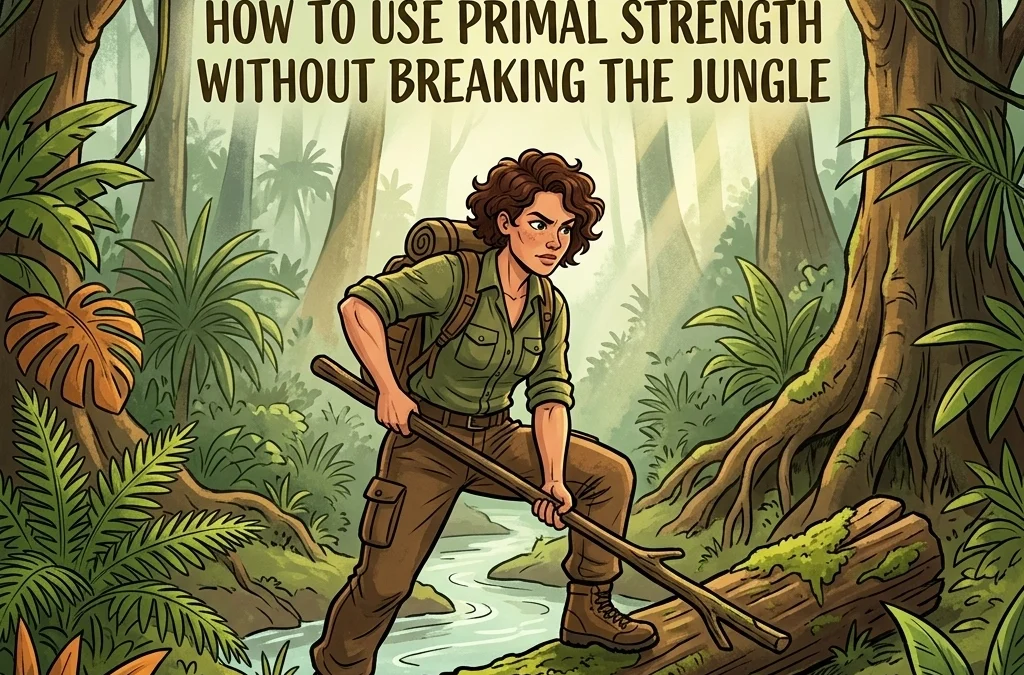
Featured image prompt: A character-forward shot of Tom "Primal" Swift (heroic physique, tactical gear, high-tech field respirator) lifting a heavy fallen tree trunk to clear a path while carefully avoiding a cluster of delicate tropical flowers. Amazon jungle background. No superhero logos.
Hey everyone, Tom Swift here. Or, as the rest of The Rainsavers like to call me when I accidentally crush a tactical tablet: "Primal."
It’s Friday, April 17, 2026, and I’m currently sitting under a canopy so thick it feels like the trees are trying to stage a collective intervention. We’re deep in the heart of the Amazon, and while the scenery is breathtaking, it’s also incredibly fragile.
Being the "muscle" of a team dedicated to environmental preservation is… a bit of a paradox. Imagine trying to perform surgery while wearing oven mitts. Or, more accurately, imagine being a 250-pound guy with the cellular density of a silverback gorilla trying to walk through a room full of glass sculptures. That’s my life.
If you’re following our adventures over at The Rainsavers, you know that my "Primal" strength isn’t just for show. It’s a tool. But out here, if you use that tool wrong, you’re just another part of the problem.
So, for all you aspiring eco-adventurers (or if you just happen to wake up one day with superhuman grip strength), here is my skimmable guide to having heavy hands and light footprints.
Heavy Hands, Light Footprints: Survival 101 with Primal
1. The "Two-Finger" Rule
When you have the power to uproot a mahogany tree, your biggest enemy is "over-torque." I’ve learned the hard way that you don't need 100% output to pick up a specimen jar.
- The Technique: Practice doing everyday tasks using only your thumb and pinky. It forces your brain to calibrate the micro-muscles instead of just engaging the lats.
- The "Oops" Moment: Last Tuesday, I tried to open a coconut with a "gentle" squeeze. I didn’t get coconut water; I got coconut mist. It’s a work in progress.
2. Move Like the Ancestors (Efficiency > Ego)
Research shows that our primitive ancestors weren't just meatheads running through the brush. They were efficient. They walked: a lot. They climbed. They only sprinted when something was trying to eat them or when they were the ones doing the eating.
- Don't Bulldoze: Just because I can walk through a wall of vines doesn't mean I should. Every vine is a highway for ants, a home for a lizard, or a vital part of the canopy’s structural integrity.
- Climb, Don't Crush: Use your strength to pull yourself up and over obstacles. It’s better for the ground soil (less compaction) and keeps you from snapping delicate ground flora.

Placeholder: Tom Primal Swift demonstrating a "delicate" climb up a massive Ceiba tree, showing focus and precision.
3. Log Lifting: The Ethical Way
In the Amazon, a fallen log isn't just "debris." It’s a luxury apartment complex for beetles, fungi, and maybe a very cranky snake.
- The Primal Path: If a log is blocking our team’s path, I don't just kick it aside. I lift it. I use that "superhuman" leverage to move it just enough for the team to pass, then I set it back down exactly where it was.
- Watch the Flowers: Always check the "landing zone." The Amazon is home to rare orchids that take years to bloom. Squashing one of those just to clear a path is a rookie move.
4. Gear Check: The Respirator is Your Best Friend
You’ll see in my field photos that I’m usually rocking a high-tech field respirator. It’s not just because I want to look like a sci-fi hero.
- Pollen and Pathogens: When you move as fast and hard as I do, you stir up a lot of dust, spores, and ancient jungle funk. The respirator keeps my lungs clear so I can keep my breathing steady. Steady breathing = steady muscles = fewer accidental breakages.
5. Training in the Wild
I don’t have a squat rack out here. I have gravity and chaos. To keep my "Primal" edge without ruining the ecosystem, I use what the jungle gives me:
- Static Holds: Instead of lifting and dropping heavy rocks (which disturbs the soil), I find a steady overhead branch and just hang. Five minutes of dead-hang in 90% humidity will do more for your grip than any gym workout.
- Natural Plyometrics: Jumping over a ravine without crumbling the edge upon landing. It’s all about the "soft landing." If I make a sound when I hit the dirt, I did it wrong.

Placeholder: A close-up of Tom’s tactical boots landing softly on a mossy rock, highlighting the "Light Footprint" philosophy.
Why Does This Matter?
You might be thinking, "Tom, you’re a Rainsaver. You’re supposed to be fighting the bad guys and stopping the big corporations from burning the forest down. Why are you worried about a few trampled ferns?"
Because consistency matters. If we claim to save the world but we destroy the very things we’re protecting just by being there, then we’re just a different kind of disaster.
The Rainsavers aren't just about the big wins; we’re about the small footprints. Whether it’s Leo coordinating the tech or me moving a two-ton boulder to save a trapped river dolphin, we do it with respect.
Field Notes: The Humid Reality
It’s currently 10:45 AM, and my tactical gear is already soaked through with sweat. The jungle doesn't care that it's 2026; it still feels like the Cretaceous period in here.
I just watched a blue morpho butterfly land on the very log I was about to move. I waited. Five minutes. My legs were screaming from holding a crouch, but that butterfly had nowhere to be, and honestly, neither did I. That’s the "Primal" secret: knowing when not to use your strength.
If you want to see how the rest of the team handles these "delicate" situations (and watch me occasionally fail at the Two-Finger Rule), you’ve got to check out the full story. We’re dealing with more than just gravity and greenery out here: there are forces in this jungle that don't care about "light footprints."
Read Book One now to get the full story of how we’re trying to keep the planet spinning without breaking it in the process.
Stay strong, stay light.
: Tom "Primal" Swift
Member of The Rainsavers

Placeholder: A group shot of The Rainsavers team at a jungle campsite, Tom is seen in the background carefully whittling a piece of wood with a tiny knife, looking comical given his size.
Want more behind-the-scenes looks at our 2026 missions?
Check out our blog page for more field notes, tech leaks, and team banter.
And remember, whether you’re in the Amazon or your backyard: Heavy Hands, Light Footprints.
Auto-publish: Enabled
Location: Amazon Basin – Sector 4
Status: Mission Ongoing
