
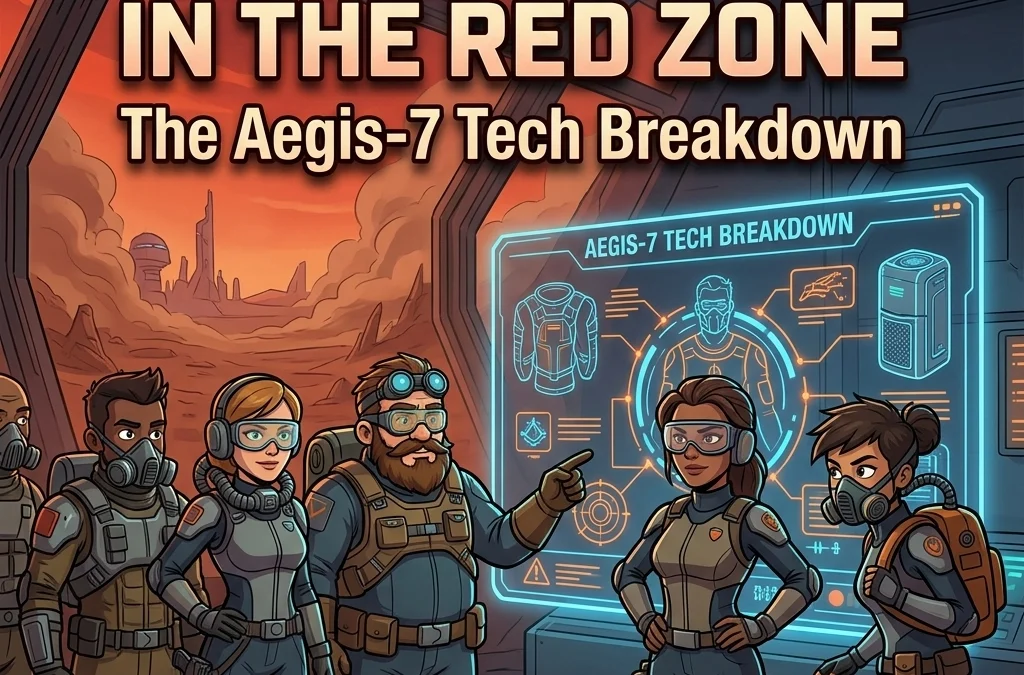
Meta Description: Ever wondered how the Rainsavers survive the most toxic environments on Earth? Sunbyte gives you an exclusive tech breakdown of the Aegis-7 Field Respirator, the ultimate gear for the Red Zone.
Featured image prompt: A close-up, high-tech product shot of the Aegis-7 Field Respirator (sleek, metallic-grey with glowing blue filters and an integrated HUD) sitting on a tactical equipment case. No superhero logos.
ALT text: The Aegis-7 Field Respirator.
Hey everyone, Sunbyte here!
If you’ve been following our missions over at rainsavers.com, you know that the "Red Zones" aren’t exactly a walk in the park. Between the hyper-active smog clouds in Neo-Tokyo and the sulfurous vents we encountered during the Andes operation, breathing isn't something we take for granted. In fact, if it weren’t for some seriously high-end engineering, our team would have spent more time coughing than saving the world.
Today, I’m pulling back the curtain on the single most important piece of gear in the Rainsavers’ locker: the Aegis-7 Field Respirator.
Now, I know what you’re thinking. "Penny, it’s just a gas mask, right?" Wrong! Calling the Aegis-7 a gas mask is like calling a supercomputer a calculator. It’s a life-support system, a communication hub, and a literal lifesaver all rolled into one sleek, metallic-grey package.
Let’s dive into the guts of this thing and see what makes it tick.
The Anatomy of the Aegis-7
When the Rainsavers head into a mission, they’re often dealing with air that’s more "soup" than "oxygen." The Aegis-7 was designed specifically to handle the volatile climate shifts of 2026. It’s light, it’s durable, and, thanks to some design tweaks from the team, it doesn't even mess up Leonard’s hair (okay, maybe it does a little, but don't tell him I said that).
1. The Quad-Stage Bio-Syn Filters
The glowing blue canisters on the sides? Those aren't just for show. They house the Quad-Stage Bio-Syn filters.
Most industrial respirators use charcoal or HEPA filters. Those are fine for dust, but they’re useless against the synthetic neurotoxins we’ve been seeing lately. The Aegis-7 uses a proprietary biological-synthetic mesh that actually "eats" pollutants. It’s full of engineered microbes that neutralize toxic particles on contact.
Pro-Tip from the Field: If the blue glow starts turning purple, it means the microbes are working overtime. If it turns red? Well, that’s when you start running.

Image prompt: A technical diagram or close-up showing the interior of a glowing blue filter canister, revealing a complex, honeycomb-like structure pulsing with light.
2. The Integrated HUD (Heads-Up Display)
If you’ve ever worn a standard mask, you know the struggle: fog. You breathe, the glass fogs up, and suddenly you’re walking into a wall.
The Aegis-7 solves this with a polarized, anti-fog nanocrystal visor. But it does more than just let you see; it helps you see. The HUD overlays real-time atmospheric data directly onto the wearer’s field of vision. It tracks:
- Oxygen levels (obviously).
- Toxin concentration (the "Red Zone" meter).
- Team vitals.
- Thermal heat maps.
When the team is deep in a cave or a crumbling industrial complex, being able to "see" the heat signature of a failing pipe or a lurking threat is the difference between success and… well, a very bad day.
Why We Need It: The "Red Zone" Reality
In our world, the Red Zones aren’t just places on a map; they’re reminders of what happens when we lose the fight for the environment. These are areas where the air quality has dropped below the "Lethal Threshold."
You can read more about how we tackle these environmental disasters in our Eco-Adventure category.
The Aegis-7 wasn't built for soldiers; it was built for restoration. It allows our team to get close enough to the damage to fix it. Whether it's planting a "Rainsaver" atmospheric scrubber or sealing a chemical leak, the Aegis-7 provides the four hours of breathable air needed to get the job done.
Field Notes: The "Oops" Moments
Even the best tech has its quirks. While the Aegis-7 is a masterpiece of engineering, the Rainsavers have definitely had some "learning experiences" with them.
Take last month, for example. We were exploring a flooded lab (you can catch the full story in our episodes). Jax decided that the internal hydration port was the perfect place to store his experimental protein shake.
Long story short: the shake fermented in the heat, the pressure built up, and the HUD was suddenly covered in strawberry-banana sludge. Jax had to finish the mission flying blind, guided only by my voice in his ear. We now have a very strict "Water Only" policy for the Aegis-7 hydration systems.

Image prompt: A funny candid shot of a Rainsaver hero (partially obscured) trying to wipe a pink sticky substance off the inside of a high-tech visor while looking frustrated.
Tech vs. Nature: Finding the Balance
One of the things Steven G. Samuels (our CEO and the brains behind the operation) always says is that we shouldn't rely only on the tech. The Aegis-7 is a tool, not a solution. The real goal is to get to a point where we don’t need masks at all.
That’s a recurring theme in a lot of the fiction books we publish. We love exploring that tension between high-tech gadgets and the raw, unpredictable power of nature. If you’re curious about how we balance sci-fi gear with grounded environmentalism, you should check out our guide on why eco-fiction will change the way you think about adventure stories.
The Aegis-7 Specs (For the Nerds Like Me)
For those of you who want the nitty-gritty, here are the official specs from the Rainsaver Technical Manual:
- Weight: 1.4 kg (Carbon-fiber reinforced).
- Seal Type: Magnetic-Induction Gasket (works even with a beard: looking at you, Leonard).
- Battery Life: 12 hours (HUD and active filtration).
- Comm Link: Encrypted Burst-Sub-Space (EBSS) for crystal clear chat even through three miles of solid rock.
- Filter Life: 4 hours in High-Toxicity environments; 48 hours in Standard Polluted zones.
How Can You Get One?
Actually, you can't. Sorry! These are custom-built for the team and cost more than my entire server rack. But, you can see them in action. We’ve got some incredible concept art and "in-the-field" shots over on our characters page.
The Aegis-7 is a symbol of what the Rainsavers stand for: using every bit of human ingenuity to survive and repair the damage we've done to our planet. It’s about being prepared for the worst while working for the best.
If you’re feeling a bit overwhelmed by all the "Red Zone" talk in the real world, you aren't alone. We actually wrote a piece about struggling with climate anxiety and how stories like ours can help give you a bit of hope (and maybe a little escape).
Final Thoughts from Sunbyte
Writing this breakdown made me realize just how much I love being the "voice in the mask." While the team is out there breathing through their Aegis-7s, I’m right there with them, monitoring the HUDs and making sure nobody accidentally drinks another protein shake through their air supply.
The world of 2026 is a wild place, but with the right gear and a team that has each other's backs, there's nothing we can't handle.
Want to dive deeper into the world of the Rainsavers? Whether it's ancient technology or modern environmental threats, we’ve got it all. See how we blend both at rainsavers.com.
Until next time, keep breathing easy!
: Penny (Sunbyte)
Did you enjoy this tech leak? Check out our other blog posts for more behind-the-scenes looks at the equipment, the villains, and the mysteries of the Rainsavers universe!
