
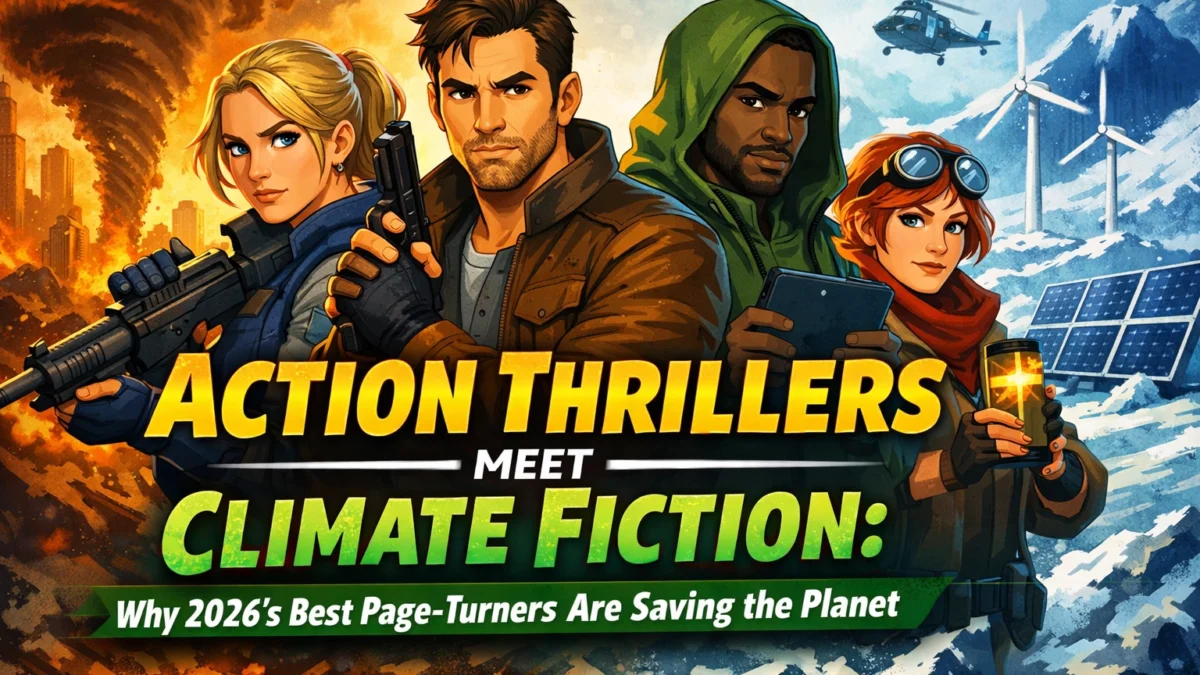

Meta Description: Action thrillers and climate fiction are colliding in 2026's hottest page-turners. Discover why eco-adventures with high stakes are dominating bookshelves and what makes The Rainsavers the perfect blend of both worlds.
Remember when climate fiction meant slow, meditative novels about melting ice caps? Yeah, 2026 said "nope" to all that.
The hottest books flying off shelves right now are action-packed climate thrillers, and readers can't get enough. We're talking high-stakes chases through collapsing ecosystems, bioweapon conspiracies tied to ancient secrets, and teams of unlikely heroes racing against extinction-level threats. If you've been sleeping on this genre mashup, buckle up. Things are about to get wild.
Why Everyone's Suddenly Obsessed With Climate Action Thrillers
Here's the thing: people are done with climate stories that feel like homework. We get it, the planet's in trouble. But in 2026, readers want their environmental wake-up calls wrapped in edge-of-your-seat plots that make you forget you're on page 347 at 2 a.m.
The secret sauce? Urgency that matches real life.
Climate change isn't some distant threat anymore, and neither are these stories. Modern eco-thrillers drop you straight into worlds where environmental collapse creates immediate danger. Forest fires aren't background scenery, they're hunting the protagonist. Bioweapons aren't theoretical, they're two chapters away from global release. That adrenaline rush keeps pages turning while sneaking in some serious "holy crap, we need to fix this" energy.
Plus, let's be real: watching a ragtag team outsmart eco-villains is way more satisfying than reading another depressing think piece about carbon emissions.

The 2026 Formula That's Breaking BookTok
If you've scrolled through #BookTok lately (and who hasn't?), you've seen the pattern. The most viral climate thrillers share a few key ingredients:
High-tech meets ancient mystery. Readers are obsessed with plots that blend cutting-edge science with historical secrets. Think lost civilizations, forgotten biotech, or weaponized nature that's been hiding in rainforests for millennia. It's Indiana Jones energy meets Black Mirror vibes.
Team-based heroes over solo saviors. The lone wolf superhero? Dead and buried. In 2026, it's all about diverse crews with complementary skills. You need the scientist, the field operative, the local guide who knows the terrain, and maybe someone who can hack a satellite from a mud hut. Solo heroes feel dated when the planet needs all of us.
Moral complexity that doesn't preach. The best thrillers don't hit you over the head with messages. Instead, they pose impossible questions: What if saving one ecosystem dooms another? What if the villain's methods are horrifying but effective? Readers want to think, not be lectured.
Settings that feel like characters. Forget generic "tropical location." Modern climate fiction makes you feel the Amazon's humidity, hear the canopy at dawn, and understand why rainforests matter through immersive, boots-on-the-ground storytelling.
Sound familiar? That's exactly what The Rainsavers delivers across six pulse-pounding books.
Why Rainforests Are the Perfect Thriller Playground
Okay, confession time: rainforests are criminally underused in action fiction. Everyone's writing post-apocalyptic wastelands or Arctic expeditions, but the Amazon? The Congo Basin? These are pressure cookers for high-stakes drama.
Dense canopy where drones can't track you? Check. Ancient ruins hiding biotech that shouldn't exist? Absolutely. Local communities with knowledge that could save or doom humanity? You bet. Plus, there's something primal about stories set in Earth's literal lungs: these ecosystems are fighting for survival, and so are your characters.
The Rainsavers nails this setting better than any series we've seen. You're not just reading about rainforest conservation: you're sprinting through it while dodging mercenaries, decoding pre-Columbian tech, and trying not to get eaten by something with too many teeth.

What Makes This Genre Mashup Actually Work
Here's why slapping "thriller" and "climate fiction" together isn't just a marketing gimmick: it's a storytelling evolution.
Action creates emotional investment. When your protagonist is literally running from a bioweapon outbreak, you're not thinking "this is an eco-metaphor." You're thinking "OH GOD DON'T OPEN THAT DOOR." But later, when the adrenaline settles, the environmental stakes stick with you. That's powerful.
Thrillers make climate change personal. Abstract threats like "rising temperatures" become concrete when they're chasing characters you care about through burning forests. Suddenly, planetary health isn't a policy issue: it's survival.
The format allows hope without being cheesy. Pure climate fiction often struggles with endings. Doom feels realistic but depressing. Happy endings feel naive. But action thrillers? They've always been about impossible odds and scrappy underdogs pulling off wins. That framework gives climate stories permission to be optimistic without seeming delusional.
Plus, let's not ignore the obvious: explosions and helicopter chases are just fun. If you can smuggle actual environmental awareness into a book that keeps readers hooked until 3 a.m., you've cracked the code.
The Rainsavers: When Climate Fiction Gets Its Bourne Identity Moment
Look, we're obviously biased, but The Rainsavers is exactly what 2026 needs.
Six books. One desperate mission to stop a conspiracy that could weaponize nature itself. A team of specialists who shouldn't work together but somehow do. Ancient rainforest secrets that'll make you question everything you thought you knew about human history. And stakes so high, you'll forget to breathe between chapters.
What sets it apart? It doesn't treat environmental themes like a side quest. The rainforest isn't just scenery: it's the key to everything. The science is real enough to feel plausible, the action is relentless, and the characters are flawed humans doing their messy best to prevent catastrophe. No capes. No chosen ones. Just people who refuse to give up when the planet needs saving.

Why 2026 Is the Perfect Year for This
Timing matters. In 2026, we're past the point of debating whether climate change is real. We're living in it. Record-breaking storms, ecosystem collapses, entire species vanishing: it's the background noise of daily life.
Readers don't want to be told the planet is dying. They know. What they crave are stories that channel that anxiety into something cathartic. Something where the good guys can actually win. Where knowledge, teamwork, and sheer stubborn determination make a difference.
That's why action-thriller climate fiction is exploding right now. It gives us the emotional release we need while honoring the seriousness of what we're facing. It's escapism that doesn't ask you to escape reality: just to imagine fighting back against it.
Your Next Obsession Starts Here
If you're tired of doomscrolling and ready for climate fiction that actually gets your heart racing, you know what to do.
The Rainsavers isn't just another series: it's six books of high-octane adventure that'll change how you think about environmental storytelling. Ancient tech. Modern threats. Rainforest mysteries that span centuries. And a team you'll be rooting for from page one.
Read Book One now and see why 2026's best page-turners are the ones fighting to save the planet: one explosive chapter at a time.
