
Meta Description: Explore whether ancient mysteries or modern sci-fi creates more compelling villain motivations in 2026's adventure fiction. Discover how The Rainsavers masterfully blends both approaches.

Picture this: Your villain wants to destroy the world. But why?
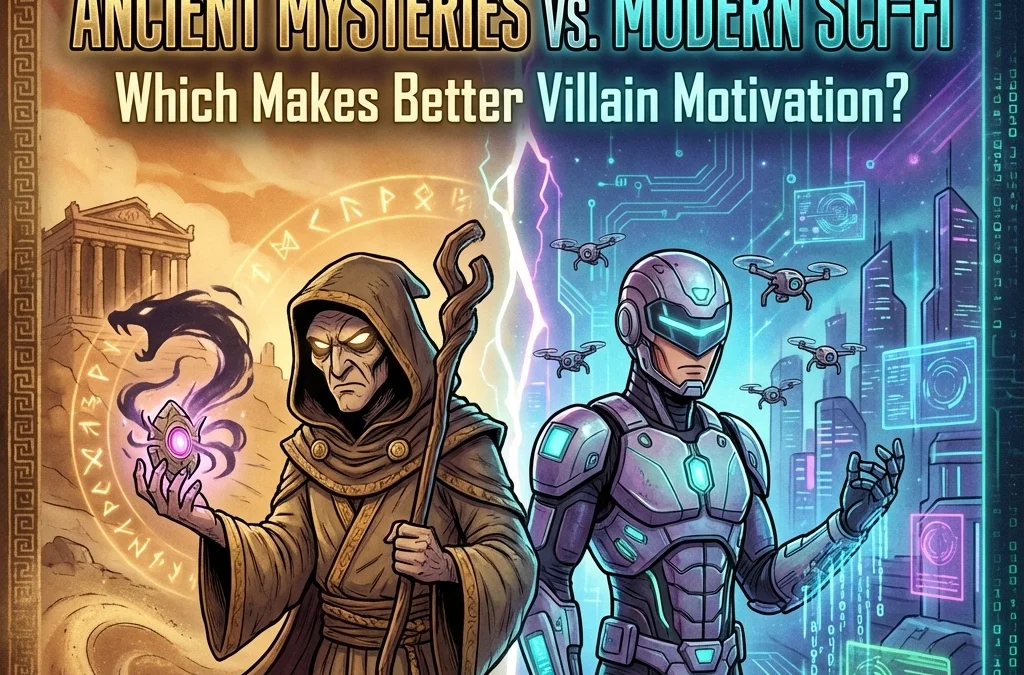
In 2026's adventure fiction landscape, two powerhouse approaches dominate villain motivation: and they couldn't be more different. Ancient mysteries tap into humanity's deepest fears about forgotten knowledge and lost civilizations. Modern sci-fi explores our anxieties about technology, environmental collapse, and what we're becoming as a species.
But which approach creates more compelling antagonists? Let's dive in.
The Ancient Mysteries Advantage
There's something primal about ancient mysteries that gets under our skin. When villains are motivated by forgotten prophecies, lost artifacts, or awakening ancient powers, they tap into our collective unconscious.
The Fear Factor
Ancient mystery villains work because they represent knowledge we've lost: or maybe knowledge we were never meant to have. Think about it: What's scarier than facing an enemy who understands forces that predate modern civilization?
These villains often possess:
- Forbidden knowledge passed down through secret lineages
- Artifacts with powers that defy scientific explanation
- Connections to civilizations that "vanished for a reason"
- Prophecies that suggest certain doom is inevitable
Timeless Appeal
Ancient mysteries feel both familiar and unknowable. They've been with humanity since we first told stories around fires. Your reader doesn't need a PhD in quantum physics to understand why someone might go mad seeking the secrets of Atlantis or become corrupted by an artifact that's been buried for millennia.

The Weakness
But here's where ancient mystery villains sometimes fall flat: They can feel disconnected from modern concerns. If your 2026 readers are worried about climate change, AI ethics, or social inequality, a villain obsessed with resurrecting Egyptian gods might not hit the same emotional notes.
Modern Sci-Fi's Power Play
Modern sci-fi villain motivations excel at making the future feel terrifyingly possible. These antagonists aren't just threatening: they're relevant.
The Relevance Factor
Sci-fi villains motivated by technological advancement, environmental control, or social engineering speak directly to contemporary anxieties. In 2026, readers don't need to suspend disbelief when the villain's plan involves:
- Climate manipulation technology
- AI systems that have evolved beyond human control
- Genetic modification programs
- Corporate entities that prioritize profit over human survival
Relatable Logic
The best sci-fi villains aren't cackling madmen: they're people who looked at real problems and chose terrible solutions. Their motivations often start from genuinely good intentions that spiraled out of control.
Maybe they wanted to save the environment but decided humanity was the problem. Perhaps they developed AI to solve global issues but programmed it with flawed parameters. These villains feel real because their starting point is recognizable.

The Limitation
Modern sci-fi motivations can become dated quickly. The cutting-edge technology that feels threatening today might seem quaint in a decade. They also risk becoming preachy if the social commentary overwhelms the story.
So Which Approach Wins?
Here's the plot twist: The best villain motivations don't choose sides: they blend both approaches.
Ancient mysteries provide the emotional weight and timeless fear factor. Modern sci-fi delivers the immediate relevance and logical framework. Combine them? You get villains who feel both ancient and urgent, mysterious and believable.
The Hybrid Advantage
Consider a villain who discovers ancient climate manipulation techniques and adapts them using modern technology. Or an antagonist who believes a forgotten civilization's warnings about humanity's future and decides to "save" the world through genetic modification.
These hybrid motivations work because they:
- Ground fantastical elements in scientific possibility
- Make ancient knowledge feel urgently relevant
- Create moral complexity (the villain might actually be right about the threat)
- Appeal to readers across different genre preferences

The Rainsavers' Approach
This is exactly where The Rainsavers shines. Rather than picking ancient mysteries or modern sci-fi, the series weaves both into complex villain motivations that feel both timeless and timely.
The antagonists in The Rainsavers aren't just randomly evil: they're driven by discoveries that bridge ancient wisdom and cutting-edge science. They've found something that suggests humanity's relationship with the planet is fundamentally broken, and they're willing to take extreme measures to fix it.
What makes these villains compelling isn't just their power: it's that readers can understand their logic, even while disagreeing with their methods. They've seen evidence of both ancient environmental disasters and modern climate threats. From their perspective, they're the heroes of their own story.
Character-Driven Complexity
The series excels at creating villains whose motivations evolve throughout the story. They might start seeking ancient knowledge for academic reasons, only to discover modern applications that seem to offer solutions to contemporary problems. The gradual corruption happens through understandable steps: making their eventual transformation both tragic and terrifying.

Why Blending Works in 2026
Today's readers are sophisticated. They want villains who feel both mythic and realistic. They're drawn to ancient mysteries because they offer escape from modern anxieties, but they also want stories that acknowledge contemporary challenges.
The most effective villain motivations in current adventure fiction recognize that our oldest fears and newest concerns often spring from the same source: the tension between human ambition and natural limits.
The Sweet Spot
The best villain motivations in 2026 adventure fiction:
- Start with relatable modern concerns
- Add mysterious ancient elements that suggest larger patterns
- Create moral ambiguity (the villain's goals might be admirable)
- Build toward choices that feel both inevitable and tragic
This approach respects readers' intelligence while delivering the emotional satisfaction they seek. It acknowledges that the line between hero and villain often depends on methods, not goals.
The Verdict
Ancient mysteries and modern sci-fi both create compelling villain motivations: but neither approach reaches its full potential alone. The future of adventure fiction lies in stories that honor both our oldest fears and our newest challenges.
Want to see how masterful storytelling blends ancient wisdom with cutting-edge science to create unforgettable villains? See how we blend both in The Rainsavers series, where every antagonist carries motivations that will make you question everything you thought you knew about heroes and villains.
