Meta Description: Ever wonder why you're drawn to scary bioweapon stories when the real world is stressful enough? Here's how thrillers like The Rainsavers might actually help you cope, plus meet the team fighting "Black Rain."
Okay, real talk.
It's January 2026, and if you're anything like us, you've spent the last few years watching headlines that read like dystopian fiction. Climate disasters. Global health scares. Political chaos that makes you want to hide under a weighted blanket with snacks.
So why on earth would you willingly pick up a book about a bioweapon threatening to wipe out entire ecosystems?
Great question. Weird answer: it might actually help.
Let's dig into this.
Wait, Reading Scary Stuff… Helps?
Here's the thing about anxiety: it loves uncertainty. It thrives when you feel powerless and out of control. Your brain is basically a nervous little hamster running on a wheel, trying to predict every possible disaster.
But fiction? Fiction gives you something anxiety hates.
A contained experience.
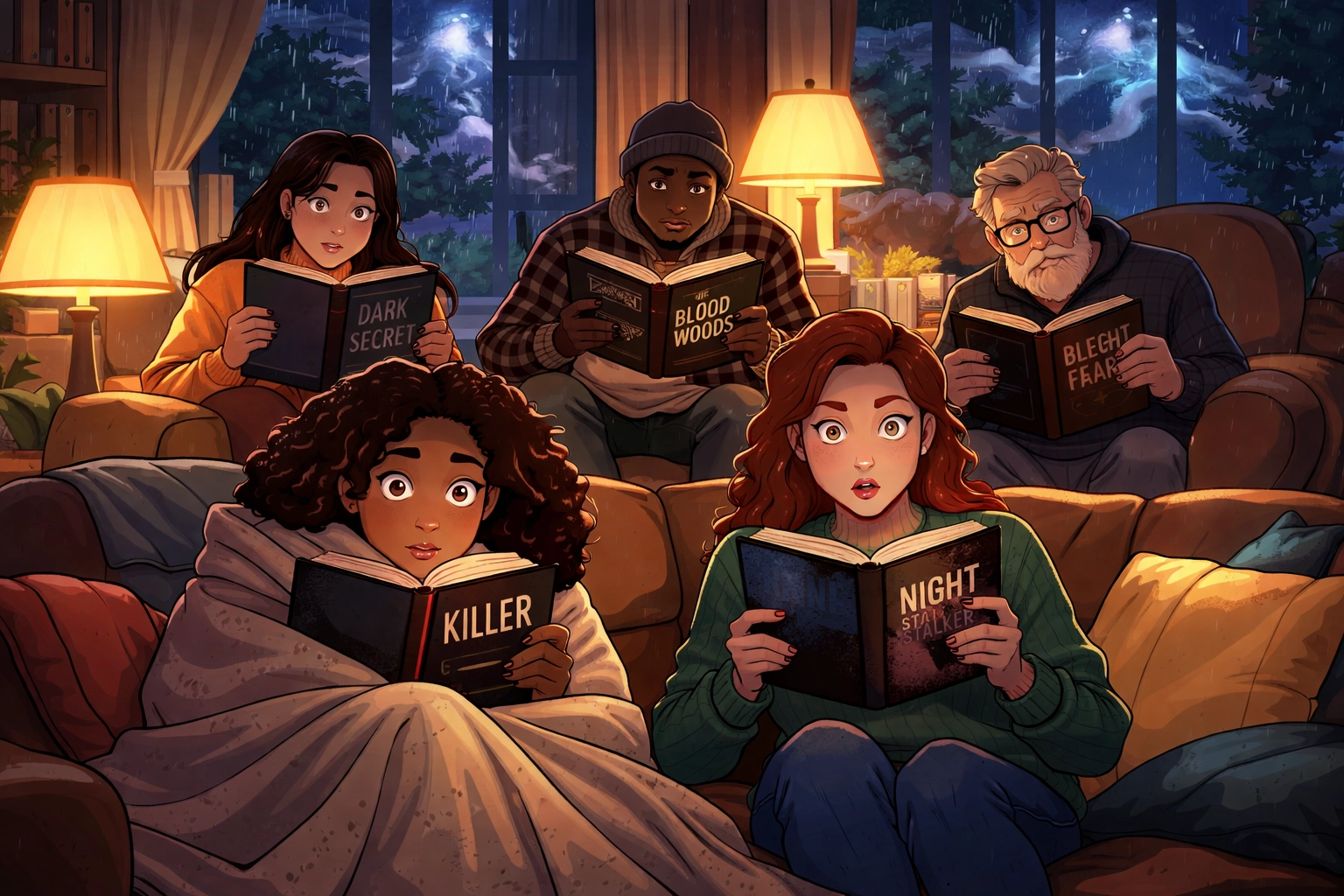
When you read a thriller, especially one with high stakes like bioweapon threats, you're experiencing danger from the safety of your couch. Your brain gets to practice fear responses without any actual consequences. Psychologists call this "cognitive rehearsal."
Think of it like a fire drill for your emotions.
You feel the tension. You worry about the characters. You watch things go horribly wrong… and then you watch them fight back.
And that last part? That's the magic.
The Power of Watching Someone Fight Back
Most real-world anxiety comes from feeling helpless. The news gives you problems without solutions. Doom-scrolling shows you everything that's broken without showing you anyone fixing it.
Thrillers flip that script.
You get heroes who do something. They're scared, they're outmatched, they're definitely in over their heads, but they show up anyway.
And when you read about characters fighting impossible odds and winning (or at least surviving), your brain takes notes.
It's not escapism. It's practice.
You're essentially telling your nervous system: "Hey, look. When things get bad, people can handle it. Maybe we can too."
Enter: The Rainsavers (And a Very Smart Orangutan)
Speaking of heroes who handle impossible situations…
Let's talk about The Rainsavers.
This isn't your typical save-the-world squad. There are no capes. No radioactive spider bites. Just a scrappy team of specialists trying to protect Earth's most threatened ecosystems, and occasionally stopping global bioweapon catastrophes along the way.
Meet the crew:
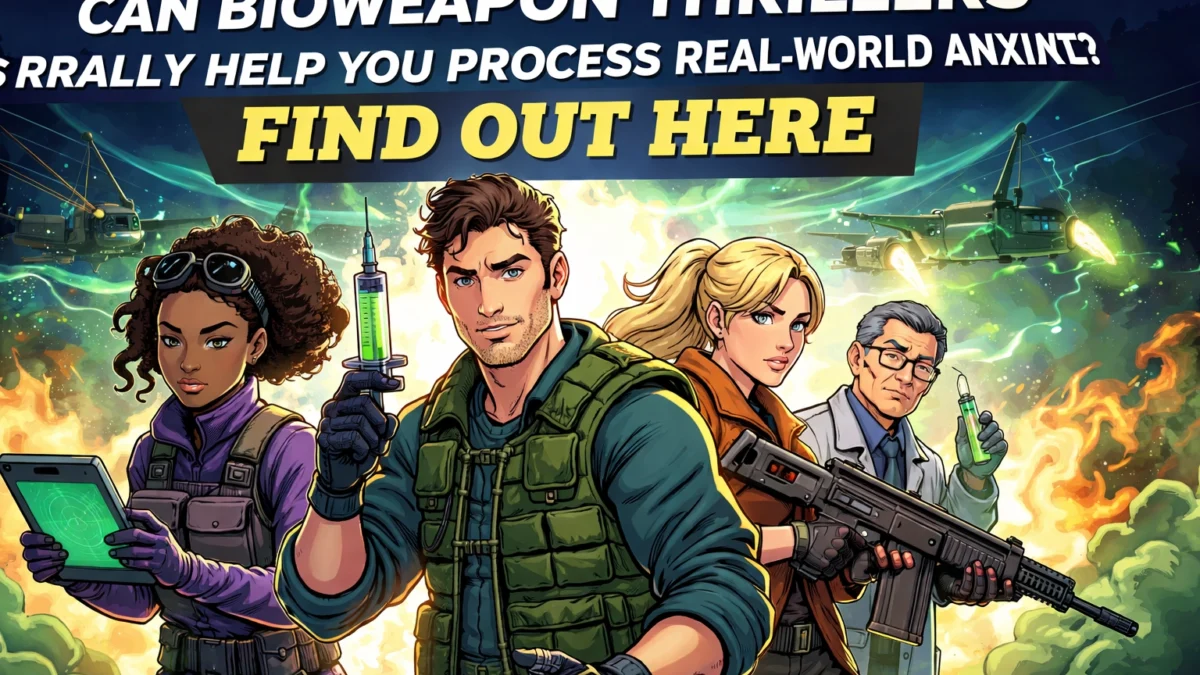
Tom "Primal" Swift – The leader. Former military, current eco-warrior. Tom's the guy who runs toward danger while making dad jokes to keep everyone calm. He's seen some stuff. He handles it by punching problems (strategically).
Alpha – Yes, he's an orangutan. Yes, he's a genius. Alpha is the team's secret weapon: brilliant, tech-savvy, and surprisingly good at reading people. If you've ever wanted a primate buddy who can hack a mainframe and also judge your life choices, Alpha's your guy.
Dr. Mubari – The team's medical and scientific expert. Cool under pressure, warm when it counts. Dr. Mubari keeps everyone alive, patches up wounds, and drops knowledge bombs about the ecosystems they're protecting. She's the reason anyone survives long enough for a sequel.
Jungle Dart – Stealth specialist. Silent, deadly, and absolutely done with everyone's nonsense. Jungle Dart moves through rainforests like a ghost and has a sixth sense for danger. Also has the team's driest sense of humor.
Sunbyte – Tech and communications genius. If it beeps, glows, or connects to the internet, Sunbyte can hack it. She's the youngest on the team but don't let that fool you: she's saved their lives more times than anyone wants to admit.
Together, they're a mismatched family that somehow works.
The "Black Rain" Threat: Book Two Gets Real

In Book Two of The Rainsavers series, the team faces their biggest challenge yet: Black Rain.
We're not talking about a regular storm here.
Black Rain is a bioweapon designed to devastate rainforest ecosystems from the inside out. Think engineered pathogens targeting specific plants and animals: a silent apocalypse that would ripple out and affect the entire planet.
The stakes? Massive.
The villains? Terrifyingly competent.
The Rainsavers? Outgunned, outfunded, and racing against the clock while wearing high-tech field respirators and praying Alpha can crack the code before it's too late.
It's tense. It's scary. It's exactly the kind of controlled-burn anxiety experience we were talking about earlier.
You get to feel the fear. You get to sit with the uncertainty. And then you get to watch a genius orangutan and his human friends absolutely refuse to give up.
Why This Matters Right Now (January 2026 Edition)
Look, we're not going to pretend fiction solves real problems.
Reading about bioweapons won't stop climate change. Rooting for The Rainsavers won't clean up the ocean.
But here's what it can do:
1. Remind you that action is possible.
In a world that often feels hopeless, watching characters take action: even fictional ones: can spark something. It's a reminder that doing something beats doing nothing.
2. Give your anxiety somewhere to go.
Instead of free-floating dread about vague future disasters, you get a specific story with a beginning, middle, and end. Your brain likes that. It's soothing in a weird way.
3. Build emotional resilience.
Every time you read about characters facing fear and pushing through, you're training your own emotional muscles. It's like going to the gym, but for your feelings.
4. Connect you with something bigger.
Stories create communities. When you read about eco-heroes fighting for the planet, you join a larger conversation about what matters. That's powerful.
The "Controlled Burn" Theory of Thrillers

Forest managers use controlled burns to prevent catastrophic wildfires. They intentionally set small fires under safe conditions to clear out underbrush and reduce fuel for bigger disasters.
Thrillers work the same way for your brain.
You experience fear in small, controlled doses. You burn off some of that anxious energy. And when you close the book, you're a little more prepared to handle whatever the real world throws at you.
It's not about avoiding fear. It's about practicing it.
And honestly? That's pretty healthy.
So, Should You Read Bioweapon Thrillers?
If you're someone who feels overwhelmed by real-world news but still craves stories with stakes…
If you want heroes who feel like real people (and one very real orangutan)…
If you need a book that lets you feel scared in a safe way and then reminds you that fighting back is always an option…
Yeah. You should probably check out The Rainsavers.
Start with Book One. Meet the team. Fall in love with Alpha (everyone does). And then buckle up for Book Two, where Black Rain changes everything.
Your Move
Real-world anxiety isn't going anywhere. The news will keep being the news.
But you get to choose what stories you let into your head. You get to decide which narratives shape how you see the world.
Why not choose one where a scrappy team of eco-heroes: and their genius orangutan: refuse to let the bad guys win?
Read Book One now at rainsavers.com and see how The Rainsavers blend heart-pounding action with the kind of hope we all need right now.
Your brain will thank you.
Got thoughts on how fiction helps you cope? We'd love to hear them. Drop by our contact page and say hi.
