Meta Description: Feeling overwhelmed by the news? Discover how environmental protection thrillers like The Rainsavers help combat eco-dread by turning anxiety into adventure and action in 2026.
Hey there, fellow Earth-dwellers. Steven G. Samuels here.
Let’s have a real talk for a second. It’s March 2022… wait, no, it’s 2026. (Time flies when you’re trying to save the world, right?) If you’ve looked at a screen or stepped outside lately, you’ve probably felt it. That heavy, sinking feeling in the pit of your stomach when you hear about another "unprecedented" weather event or a dwindling habitat.
They call it eco-dread. Or climate anxiety. Whatever the label, it’s that sense of powerlessness, the feeling that the world is big, the problems are bigger, and we’re just… well, small.
But here’s something that might surprise you. As the CEO of The Rainsavers, I spend a lot of time thinking about how stories impact our brains. And it turns out, reading a high-stakes, pulse-pounding environmental thriller isn't just a way to pass the time on your commute. It might actually be the secret weapon you need to fight back against that dread.
Let’s dive into why "scary" stories about the environment might actually be the best thing for your mental health right now.
The Paradox: Why Reading About Threats Makes You Feel Safer
It sounds backwards, doesn't it? If you're worried about the planet, why would you want to read a book where the planet is in danger?
The answer lies in narrative agency.
In the real world, environmental issues often feel like a giant, tangled mess of policy, chemistry, and economics. It’s overwhelming because there’s no clear "villain" to punch and no "stop" button to press.
But in an eco-adventure thriller, especially in the world of The Rainsavers, those abstract problems are personified. They become a plot. They become a mission. When you follow characters like Primal or Mortalis, you aren't just a passive observer of a tragedy. You are part of a team that is doing something about it.

1. Turning "What If" into "How To"
Eco-dread thrives on the unknown. It lives in the "what if everything goes wrong?" space.
Thrillers take that "what if" and turn it into a "how to." By exploring scenarios involving sci-fi tech, like the mysterious and powerful Red Mercury, or ancient mysteries clashing with modern threats, these stories provide a framework. They show that even the most daunting technological or environmental hurdle can be tackled with enough grit, teamwork, and a bit of "outside-the-box" thinking.
If you’ve been struggling with climate anxiety, you know that the worst part is the paralysis. Fiction breaks that paralysis. It reminds your brain that solutions are possible, even if they start in the imagination of an author.
2. Learning Without the Lecture
Let’s be honest: nobody wants to be lectured at. We get enough of that from the news.
One of the coolest things about the environmental thriller genre is how it sneaks in the science. You’re so busy wondering if the team is going to make it out of the crumbling glacier or stop the corporate saboteur that you don't realize you're learning about hydrology, atmospheric pressure, or ecosystem fragility.
As research suggests, eco-thrillers are designed to change our "Standard Operating Procedures." They make us hunger for a world where wild spaces thrive. By the time you finish one of our episodes, your perception of the world around you has shifted. You start seeing the environment not as a dying entity, but as a living system worth fighting for.
3. The Power of the Team (Goodbye, Lone Wolves)
In 2026, we’re seeing a big shift in fiction. The era of the "lone hero" who saves the day with a single punch is kind of over. Why? Because real problems: especially environmental ones: can’t be solved by one person.
At The Rainsavers, we lean heavily into team-based adventures. Whether it's the raw power of Primal or the calculated mystery of Mortalis, every character brings a specific skill to the table. This is huge for fighting eco-dread because it mirrors the real-world solution: Community.
When you read about a group working together to stop a disaster, it reinforces the idea that we don't have to carry the weight of the world on our own shoulders. We just have to play our part in the team. (Check out why team-based adventure series are taking over for more on this!)

4. Converting Anxiety into Adrenaline
Anxiety and adrenaline feel very similar in the body. Both involve a racing heart, quick breathing, and heightened focus.
The difference? Anxiety is "fear without a finish line." Adrenaline, in the context of a thriller, is "excitement with a resolution."
When you read an environmental thriller, you’re effectively "re-labeling" those physical sensations. You aren't shaking because you're scared of the future; you're shaking because the Rainsavers team is about to infiltrate a high-security facility to protect a vital water source!
This "arousal appraisal" helps your brain process stress in a healthier way. You get the release of the climax and the satisfaction of the resolution, which provides a much-needed emotional reset.
Meet the Heroes Fighting the Dread
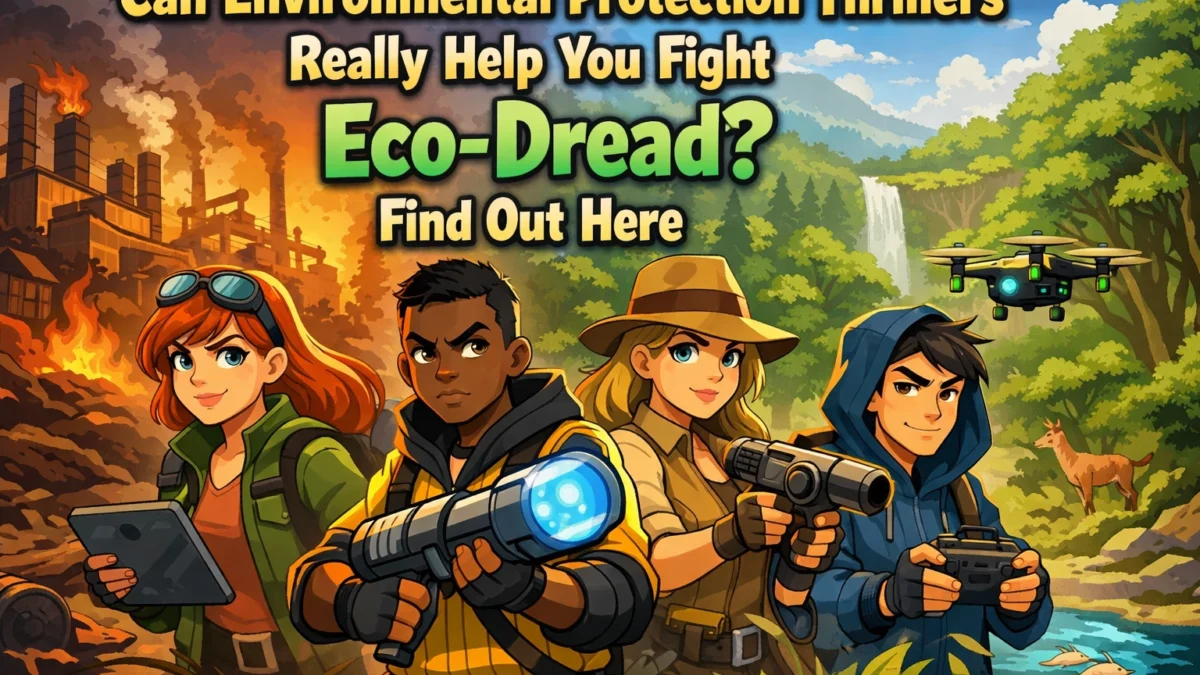
If you’re new to our world, you might be wondering who exactly is leading the charge. Our characters aren't your typical caped crusaders. They are grounded (mostly), gritty, and deeply connected to the earth they protect.
- Primal: Think of him as the raw force of nature. He doesn't just observe the environment; he’s part of it. When things get physical, Primal is who you want in your corner.
- Mortalis: Every team needs a strategist, but Mortalis brings something… different. He deals with the darker side of the mission, the stuff that happens in the shadows.
You can learn more about the whole roster on our characters page. Each one represents a different way of tackling the "dread": through action, through intelligence, or through pure resilience.

Why 2026 is the Year of the Eco-Hero
We’ve moved past the point where we can pretend environmental issues aren't part of our daily lives. In 2026, fiction has caught up to reality. We don't need stories about aliens invading from Mars (though that’s fun too); we need stories about how we protect our own backyard using the tech and the heart we have right now.
Mixing ancient technology with modern threats creates a unique kind of storytelling. It connects us to our past while preparing us for our future. It tells us that humanity has survived before, and with the right tools: and the right stories: we can do it again.
Tips for Using Fiction to Manage Your Eco-Anxiety
If you’re feeling particularly "dready" today, here’s how to use books to help:
- Schedule your "Worry Time": Instead of scrolling the news all day, give yourself 30 minutes to read an adventure chapter.
- Focus on the Solutions: Notice how the characters solve problems. It might inspire you to look for small, local ways to help in your own community.
- Join the Conversation: Fiction is better when shared. Check out our Down the Rabbit Hole contest or engage with our polls to see how other readers are feeling.
- Binge-Read for Catharsis: Sometimes you just need to see the "bad guy" lose. That’s what the 6-book Rainsavers series is for!

The Bottom Line
Environmental thrillers aren't just entertainment. They are a "Standard Operating Procedure" for the modern mind. They take the massive, scary, "eco-dread" monster and chop it down to size. They give us heroes to root for, villains to defeat, and: most importantly: a sense of hope that is grounded in action rather than wishful thinking.
So, if you’re tired of the doom-scrolling and ready for some heart-pounding adventure that actually makes you feel better about the planet, you’re in the right place.
Ready to jump in?
Explore the world of The Rainsavers and start your journey from dread to discovery.
Visit The Rainsavers Official Site
Stay curious, stay brave, and keep saving those raindrops.
: Steven G. Samuels
CEO, The Rainsavers
