Meta Description: Eco-thriller or eco-horror? Discover which climate fiction genre matches your reading style in 2026, plus why The Rainsavers might be exactly what you're craving.

INTERNAL MEMO
TO: You, the person scrolling at 2 AM looking for your next book obsession
FROM: Someone who's read way too much climate fiction in 2026
RE: The Great Eco-Genre Showdown (and why you don't have to choose)
Look, we need to talk.
Climate fiction is having a moment right now. Actually, scratch that, it's been having a moment for years, and in 2026, it's basically exploded into a full-blown literary renaissance.
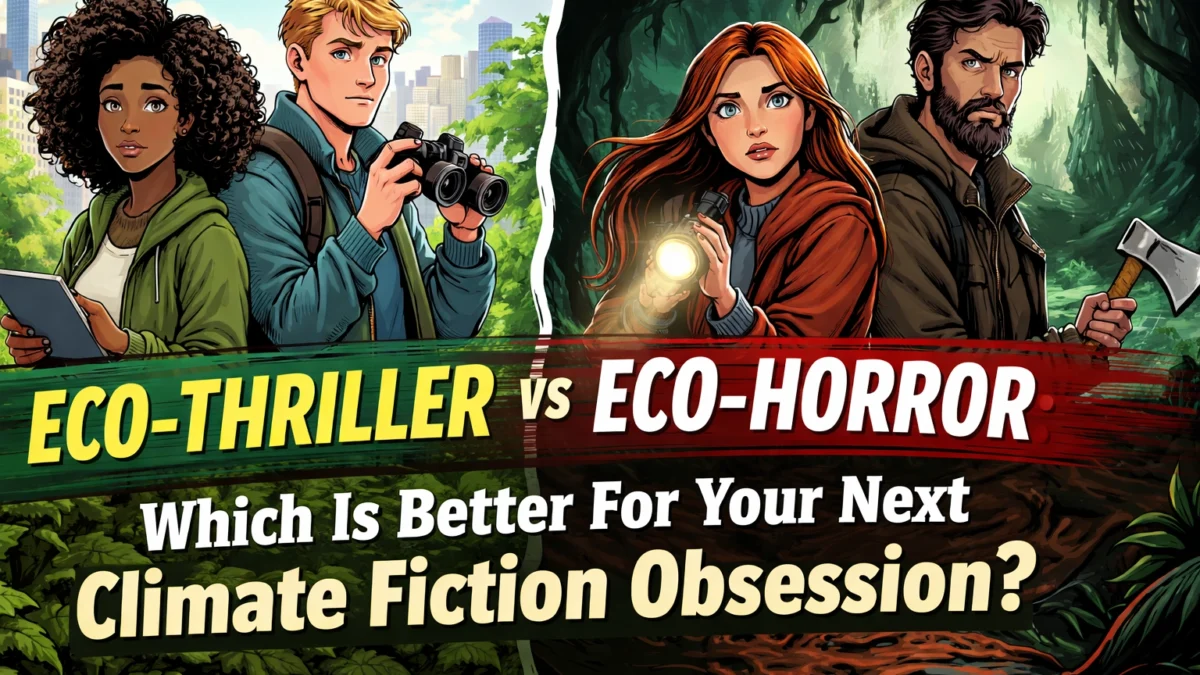
But here's where things get spicy: the genre has split into two very different vibes. On one side, you've got eco-thrillers, all action, heroics, and "we can fix this" energy. On the other, there's eco-horror, the creeping dread, the existential spiraling, the "oh no, what have we done" realness.
So which one deserves your precious reading time?
Grab your high-tech respirator mask (trust me, you'll need it for this journey), and let's break it down.
Wait, What Even IS the Difference?
Great question. Let's keep this simple.
Eco-Thriller: Fast-paced stories where characters actively fight to prevent environmental catastrophe. Think: racing against the clock, punching corporate villains (metaphorically… usually), and actually doing something about the problem.
Eco-Horror: Slower, moodier tales that ask uncomfortable questions about humanity's relationship with nature. Think: creeping forests that remember what you did, ancient ecosystems fighting back, and that unsettling feeling that maybe we're the real monsters.
One gives you hope. The other gives you nightmares.
Both? Absolutely valid choices.
The Eco-Thriller Experience: When You Want to Feel Like a Hero

Here's the thing about eco-thrillers in 2026: they're not just escapism. They're meaningful escapism.
The best eco-thrillers take real environmental issues, deforestation, bioweapons, corporate greed destroying ecosystems, and wrap them in a plot so gripping you forget you're technically learning something.
You'll love eco-thrillers if:
- ✅ You need protagonists who do something (no sitting around waiting for doom)
- ✅ Fast pacing is your love language
- ✅ You want to feel empowered, not paralyzed
- ✅ Team dynamics and found families make your heart sing
- ✅ You prefer your environmental messaging served with a side of adventure
The magic here is agency. Eco-thrillers tell you: yes, things are bad, but look, these characters are fighting back. And maybe, just maybe, that fight matters.
That's exactly the energy behind The Rainsavers. It's a 6-book adventure series that drops you into the Amazon rainforest with a team of unlikely heroes (including, yes, a genius orangutan named Alpha) facing down villains who want to exploit the planet's last wild places.
It's got the high-stakes action. The breathless pacing. The "one more chapter" problem.
But it's also got heart. Because what's the point of saving the world if you don't care about the people doing it?
The Eco-Horror Experience: When You Want to Feel… Unsettled
Now let's talk about the other path.
Eco-horror isn't interested in making you feel powerful. It's interested in making you think, and occasionally making you sleep with the lights on.
You'll love eco-horror if:
- ✅ You prefer psychological tension over action sequences
- ✅ Ambiguity is your aesthetic
- ✅ You want fiction that lingers (like, really lingers)
- ✅ You're comfortable with stories that don't tie everything up neatly
- ✅ You believe discomfort can be its own kind of catharsis
Eco-horror asks the question eco-thrillers sometimes avoid: What if we can't fix this?
It's not defeatist, exactly. It's more like… brutally honest. The evil in eco-horror often isn't a cartoon villain with a bioweapon. It's the slow accumulation of human choices. The hubris. The way we kept going even when we knew better.
Heavy? Yeah. But also weirdly cathartic for anyone who's ever felt climate anxiety and needed fiction that acknowledged the weight of it.
The Venn Diagram Situation
Here's a secret the bookish internet doesn't always admit:
The best climate fiction often lives in the overlap.

Think about it. The most compelling eco-thrillers have moments of genuine horror, scenes where the stakes feel viscerally terrifying, where nature itself seems to have turned alien and hostile.
And the best eco-horror? It usually has someone trying to fight back, even if the odds are impossible. Pure hopelessness doesn't actually make for great reading. We need that spark of resistance.
This is why series like The Rainsavers hit different. Sure, it's primarily an eco-thriller. Action-packed, team-based, rooted in hope and human (and orangutan) ingenuity.
But there are moments, deep in the rainforest, surrounded by bioluminescent plants and ancient mysteries, where the tone shifts. Where the jungle feels sentient. Where you realize the heroes aren't just fighting villains; they're reckoning with forces older and stranger than any human agenda.
That's the sweet spot. Thriller pacing. Horror atmosphere. Environmental stakes that actually matter.
Quick Quiz: Which Genre Is Your Match?
Because we can't resist a good quiz format.
1. When you read about environmental destruction, you want to feel:
A) Fired up to do something about it
B) The full weight of it, even if it's uncomfortable
2. Your ideal protagonist is:
A) A scrappy team of misfits who refuse to give up
B) A flawed individual slowly realizing the scope of the problem
3. By the end of a book, you want:
A) A sense of hard-won victory (even if not everything is fixed)
B) Questions that stay with you for weeks
4. Bioluminescent jungle scene: you see it as:
A) A cool setting for an epic chase sequence
B) Evidence that nature has its own terrifying agenda
Mostly A's: You're an eco-thriller person. You want action, hope, and characters worth rooting for. Start with The Rainsavers, seriously, it was made for readers like you.
Mostly B's: Eco-horror is calling your name. Lean into the dread. (But also maybe keep The Rainsavers on your list for when you need a palate cleanser? Even horror fans need hope sometimes.)
Mixed Results: Congratulations, you're a genre-fluid reader. The world is your oyster. Or your terrifying sentient rainforest. Same thing.
The 2026 Reading Verdict
Here's the honest truth: there's no wrong answer.
Both eco-thrillers and eco-horror are doing important work right now. They're processing our collective anxiety about the planet in different but equally valid ways.
Eco-thrillers say: Here's what courage looks like.
Eco-horror says: Here's what we're up against.
And the best climate fiction, the stuff that really sticks with you, finds a way to say both.
If you're looking for a series that balances high-octane adventure with genuine atmospheric dread, that gives you heroes worth loving while never letting you forget what's at stake…
Well, you know where to find us.
Your Next Move
Still can't decide? Here's a low-commitment experiment:
Read one chapter of an eco-thriller. Then one chapter of eco-horror. See which one makes you immediately reach for chapter two.
Or skip the experiment entirely and just dive into something that blends both.
Explore the dark side of the rainforest at The Rainsavers : where adventure meets atmosphere, and saving the world has never felt this intense.
Filed under: genre debates we'll probably have again next month, books that keep us up at night (for different reasons), reasons why fictional orangutans deserve more respect
