
Meta description: Discover why globe-spanning stakes make adventure fiction impossible to put down: and how The Rainsavers races from the Amazon to Antarctica, Giza, and the moon.
A rainforest in peril is already a big problem.
Add a secret bioweapon, mysterious German-era technology, red mercury crystals, an abandoned moonbase, and a villain determined to control an ancient Spirit Tree: and suddenly, the story has nowhere left to go but everywhere.
That’s the fun of The Rainsavers: the adventure begins in the Amazon, but it never stays there.
In 2026, readers have plenty of stories competing for their attention. The ones that keep us turning pages usually offer more than action. They combine personal danger with world-changing consequences, then place their characters in settings where every mile brings a new mystery.
Here’s why that globe-trotting scale makes high-stakes fiction so difficult to put down.
Big stakes begin with a personal mission
The fate of the Earth is a compelling idea. But by itself, it can feel abstract.
What makes a world-saving adventure work is giving that enormous threat a human face.
For Tom “Primal” Swift, the mission begins after a crash in the Amazon changes his life forever. An experimental serum gives him superhuman strength and heightened abilities, but it also gives him a responsibility he never requested: protect the rainforest and the people who depend on it.
Tom isn’t trying to save an imaginary planet from a distant danger. He is trying to defend a place that has already become part of his identity.
That personal connection gives the global stakes emotional weight. When the threat expands beyond the jungle, readers understand exactly what Tom is fighting to protect: and why giving up is not an option.
Of course, being able to lift impossible amounts of weight does not automatically make someone good at international crisis management. Fortunately, Primal has a team.
Meet the Rainsavers and discover why Tom needs more than muscle.

Every new location changes the rules
A globe-spanning adventure is not just a list of cool places. The setting should actively challenge the characters.
The Amazon is alive, dense, unpredictable, and filled with hidden paths. It rewards observation and local knowledge. Alpha’s intelligence, Jungle Dart’s tracking skills, and Dr. Mubari’s scientific expertise are just as important there as Primal’s strength.
Then the story moves to Antarctica in Tempest of the Crimson Skies.
The rules change immediately. The team is no longer navigating thick jungle or river systems. They are crossing frozen landscapes, investigating deep ocean caverns, and trying to survive an environment where exposure can be as dangerous as an armed enemy.
Antarctica creates isolation. There are fewer places to hide, fewer routes to escape, and far fewer convenient cafés where everyone can regroup over hot chocolate. Every decision matters because the environment refuses to be ignored.
That is one of the great strengths of setting-driven adventure fiction: the location becomes part of the conflict.

The journey itself becomes an escalation engine
In a strong serialized adventure, moving from one location to another should also mean moving from one level of danger to the next.
The Rainsavers builds its six-book arc around that kind of escalation:
- Book One: Primal Awakening begins with deforestation, corporate greed, and the fight to protect the Amazon.
- Book Two: Black Rain expands the conflict into an international chase involving exotic weapons, a mutating bioweapon, and German-era technology.
- Book Three: Tempest of the Crimson Skies sends the team into Antarctica in pursuit of red mercury crystals and a formula connected to the Spirit Tree.
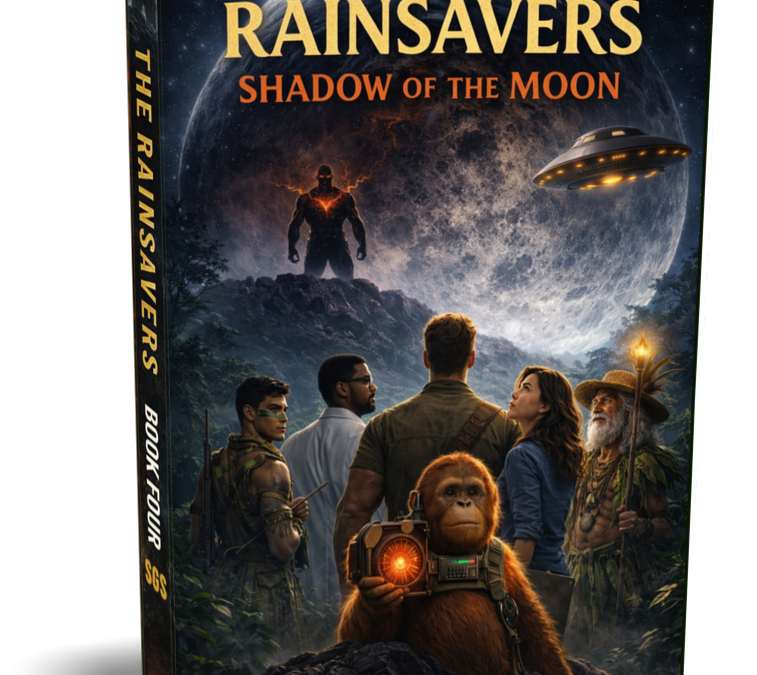
- Book Four: Shadow of the Moon launches the conflict off Earth, where an abandoned moonbase hides dangerous secrets.
- Book Five: Curse of the Spirit Tree brings the consequences back to the rainforest as Mortalis gains control of an ancient power.
- Book Six: Wrath of Mortalis turns the Amazon into the center of a final battle with consequences for life on Earth.
The geography keeps widening, but the core conflict remains clear.
The team is always trying to stop powerful people from exploiting nature, science, and ancient knowledge for control. The locations change. The threat evolves. The mission grows more dangerous.
That combination creates momentum. Readers are not simply asking, “What happens next?” They are asking, “Where can this possibly go next?”
The answer, apparently, is the moon.
Ancient mystery makes modern danger feel bigger
There is something immediately intriguing about combining the ancient with the futuristic.
A modern weapon can be frightening because we understand its destructive potential. An ancient mystery can be frightening because we do not understand it at all.
Put them together and the villain gains an advantage that feels impossible to predict.
In The Rainsavers, red mercury technology, ancient weapons, German-era research, and the Spirit Tree connect different eras of human ambition. The result is a threat that cannot be solved with one simple tool. The heroes need science, history, field experience, teamwork, and a willingness to ask very uncomfortable questions.
What was this technology designed to do?
Who built it?
Why was it hidden?
And why does Leonard West seem so determined to activate every dangerous machine he finds?
This ancient-meets-modern approach also gives the series a distinctive flavor. It blends pulp adventure, science fiction, espionage, environmental fiction, and cosmic exploration without requiring the story to choose just one lane.
If you enjoy stories where an old mystery suddenly becomes a present-day emergency, explore how The Rainsavers blends historical mysteries with modern threats.
The moon makes the danger feel cosmic
By the time the Rainsavers reach the abandoned moonbase in Shadow of the Moon, the story’s scale has become almost impossible to ignore.
The moon is more than a dramatic backdrop. It represents distance, isolation, and the limits of human control. On Earth, a hero might call for backup, find shelter, or disappear into a crowded city.
On the moon, there is nowhere to blend in.
An abandoned lunar base filled with forgotten technology and preserved scientists creates a perfect pressure cooker. The team is far from home, the environment is hostile, and the secrets they uncover are connected directly to the threat waiting back on Earth.
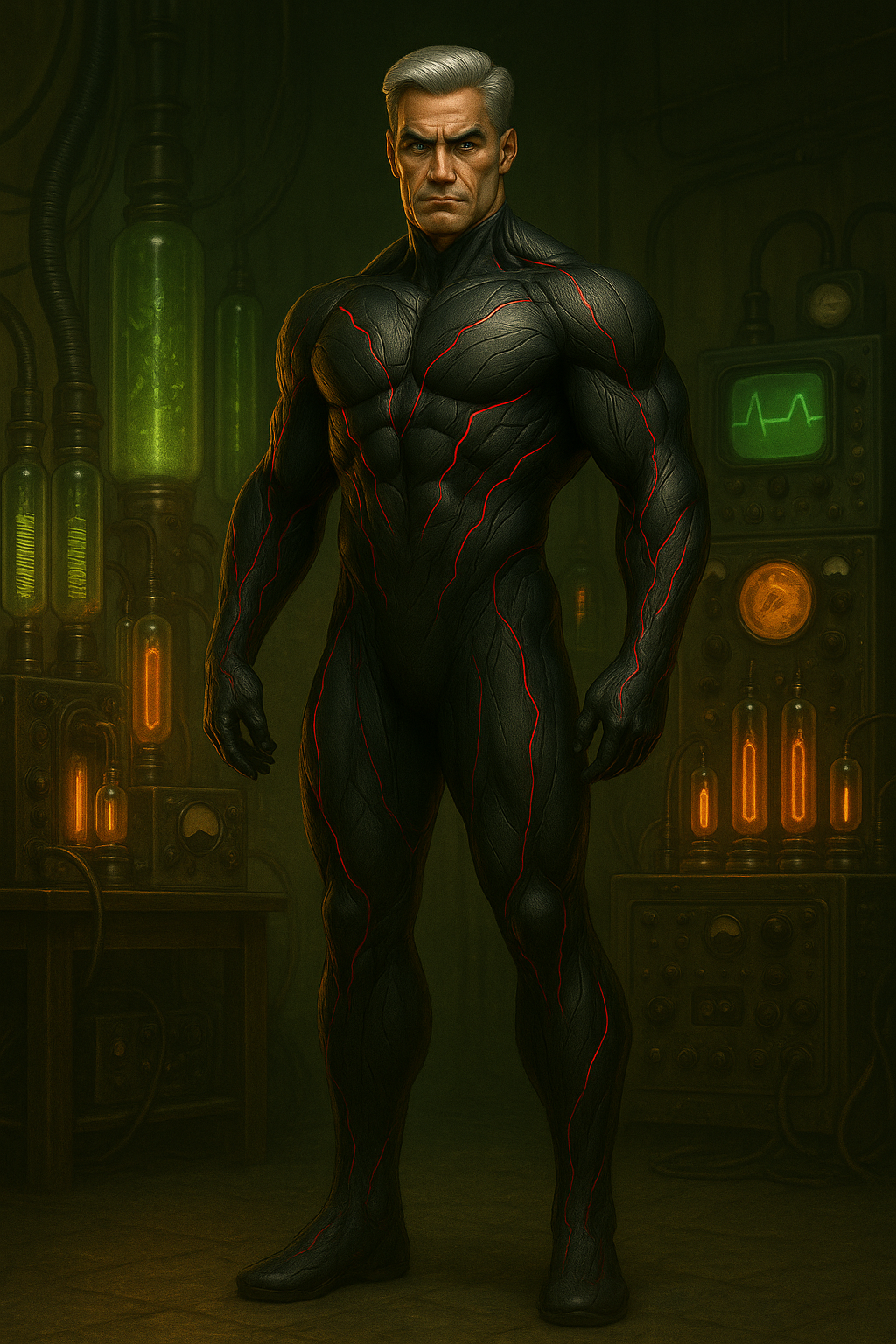
Then West uses Primal’s DNA to transform into Mortalis.
That twist makes the global conflict personal again. Mortalis is not simply another powerful villain. He is a dark reflection of Primal: someone using similar biological power in the pursuit of domination.
The biggest stories still come down to difficult choices
Global scale is exciting, but spectacle alone does not make a story unputdownable.
The emotional engine is choice.
In Curse of the Spirit Tree, Primal faces an impossible decision: destroy the tree or risk losing the rainforest entirely. That is not a problem that can be solved by punching harder, flying farther, or finding a larger laser.
It is a moral dilemma with no clean answer.
The same tension runs through the entire series. Characters must decide how much power is too much, whether scientific progress is worth the cost, and what they are willing to sacrifice to protect the living world.
Those questions keep the adventure grounded. Even when the team is racing from Antarctic ice to the Giza Pyramid and then to the dark side of the moon, the story remains about responsibility.
Who gets to control nature?
What happens when greed turns discovery into a weapon?
Can a team save the world without becoming the kind of force it is fighting?
The Rainsavers may encounter enormous machines and planet-sized threats, but the choices remain recognizably human.
Why readers keep chasing the next horizon
A globe-spanning adventure offers the pleasure of constant discovery. Every new location promises a fresh atmosphere, a new kind of danger, and another piece of the larger puzzle.
The Amazon brings environmental urgency.
Antarctica brings isolation and survival pressure.
Giza brings ancient mystery and civilization-sized consequences.
The moon brings cosmic distance and technological wonder.
Together, they create a story that feels larger with every book while staying connected to one central mission: save the Earth.
That is what makes The Rainsavers especially bingeable in 2026. It is not six unrelated adventures. It is one continuous saga that keeps widening the map: and raising the stakes.
Ready to see where the mission begins?
