Meta Description: Eco-fiction is dominating 2026 bookshelves. Discover why planet-conscious storytelling is the literary trend everyone's talking about: and why readers can't get enough.

Look around your local bookstore (or your Kindle library: no judgment). Notice anything different lately?
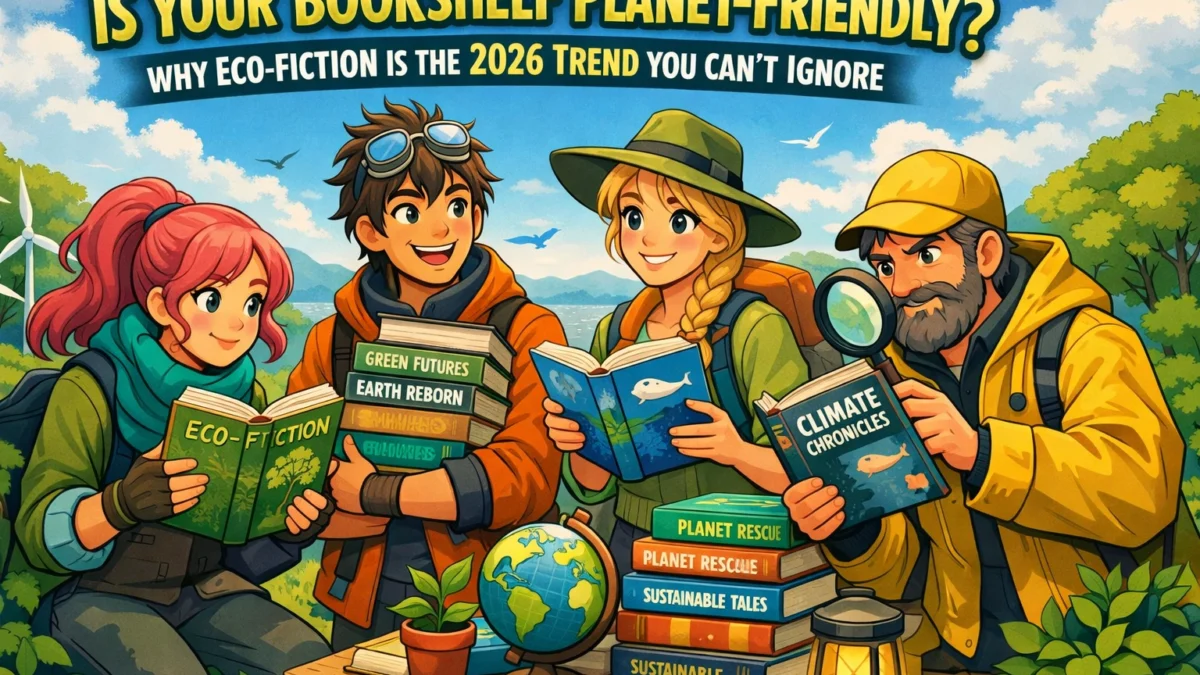
If you're seeing more novels with words like "climate," "ecosystem," or "environmental crisis" in their descriptions, you're not imagining things. Welcome to 2026, where eco-fiction has officially moved from niche category to mainstream obsession.
And honestly? It's about time.
What Even Is Eco-Fiction (And Why Should You Care)?
Eco-fiction isn't just stories that happen to have trees in them. It's fiction where the environment itself becomes a character: where nature, climate, and ecological systems drive the plot forward instead of just sitting pretty in the background.
Think less "they walked through a forest" and more "the forest itself is fighting back, and humanity needs to figure out why before it's too late."

These aren't your typical save-the-world adventure stories. Eco-fiction weaves environmental themes: climate change, pollution, biodiversity loss, resource wars: into narratives that make you think differently about our planet. But here's the thing: the best eco-fiction doesn't preach. It entertains first, enlightens second.
Why 2026 Is the Year Everything Changed
Eco-fiction has been lurking around the literary world for decades, but 2026 is when it exploded into the mainstream. Several things happened at once:
Climate anxiety hit critical mass. Let's be real: by February 2026, we're all thinking about environmental issues more than we did five years ago. Readers want stories that reflect their concerns without feeling like homework.
Publishers finally caught on. Spring 2026 release calendars are packed with eco-conscious titles. The gatekeepers realized this isn't a fad: it's what readers actually want to read.
The genre evolved beyond doom. Early eco-fiction leaned hard into dystopia and despair. Modern eco-fiction in 2026? It explores solutions, hope, and the messy, complicated ways humans might actually fix things. Turns out people prefer "here's how we might survive" over "we're all doomed, enjoy your apocalypse."

What Makes a Bookshelf Planet-Friendly in 2026
Here's where it gets interesting. A "planet-friendly" bookshelf isn't about whether you bought paperback or hardcover. It's about choosing stories that expand your understanding of ecological interconnectedness.
When you pick up eco-fiction, you're:
- Engaging with narratives that treat environmental challenges as central, not peripheral
- Supporting authors who refuse to separate human stories from environmental stories
- Training your brain to think systemically about how everything connects
The Rainsavers series exemplifies this perfectly. It's not a story about the environment: it's a story where environmental crisis drives every decision, relationship, and plot twist. The characters don't just care about saving the planet; their entire existence depends on understanding and protecting Earth's delicate systems.
The 2026 Reader: Smarter, Savvier, More Selective
Today's readers are done with superficial "green washing" in fiction. They can spot when an author tacked on environmental themes to seem relevant versus when those themes are genuinely woven into the story's DNA.

This is why series like The Rainsavers are resonating so hard right now. The six-book saga doesn't treat ecological disaster as a plot device: it treats it as the reality these characters navigate every single day. High-tech field gear? Check. Tactical team dynamics? Absolutely. But always grounded in the understanding that they're fighting for something bigger than themselves.
The characters wear respirators not because it looks cool (though it does), but because the air quality crisis is real in their world. They make decisions based on resource scarcity, ecosystem collapse, and the desperate race to preserve what's left of Earth's biodiversity.
Why Team-Based Eco-Adventures Hit Different
Solo hero stories had their moment. But 2026 readers are gravitating toward team-based narratives where diverse skill sets and perspectives combine to tackle impossible challenges. Because let's face it: environmental crises aren't solved by one genius in a lab. They require collaboration, compromise, and people from different backgrounds working together.
Sound familiar? The Rainsavers team embodies exactly this. No single character has all the answers. They need each other: their different expertise, their conflicts, their strengths and weaknesses: to have any hope of success.

This mirrors what readers instinctively understand about real-world environmental challenges. We're not waiting for a superhero. We need functional, flawed teams who figure things out together.
The Entertainment Factor: Eco-Fiction That Actually Thrills
Here's the secret sauce: the best eco-fiction is ridiculously entertaining first, thoughtful second.
Nobody wants a lecture disguised as a novel. They want:
- High-stakes action sequences
- Characters they genuinely care about
- Plot twists that make them miss their subway stop
- World-building that feels both alien and uncomfortably possible
The Rainsavers delivers all of this while never losing sight of its environmental core. It's proof you can write pulse-pounding adventure fiction that also makes readers think about humanity's relationship with the planet. The two aren't mutually exclusive: they're actually more powerful together.
What This Means for Your 2026 Reading List
If you're building your bookshelf right now (physical or digital), eco-fiction should absolutely be on your radar. Not because it's trendy, but because these stories reflect the world we're living in and the futures we're actively creating.
The genre has matured. It's moved past simple morality tales into complex, nuanced storytelling that respects readers' intelligence while delivering the escapism we all crave.
Start with something that doesn't feel like medicine. Start with something that grabs you by page one and doesn't let go until the final chapter: something that happens to make you think differently about environmental interconnectedness along the way.

Your Next Move
Ready to see what modern eco-fiction actually looks like when it's done right? When environmental themes merge seamlessly with tactical action, team dynamics, and the kind of page-turning plotting that makes you forget you're reading something meaningful?
Read Book One now and discover why thousands of readers are calling The Rainsavers the eco-adventure series that finally got it right. High-tech gear, impossible missions, and a team fighting to preserve what's left of Earth's future: all wrapped in a story you genuinely won't want to put down.
Your 2026 bookshelf is about to get a whole lot more planet-friendly. And way more entertaining.
