
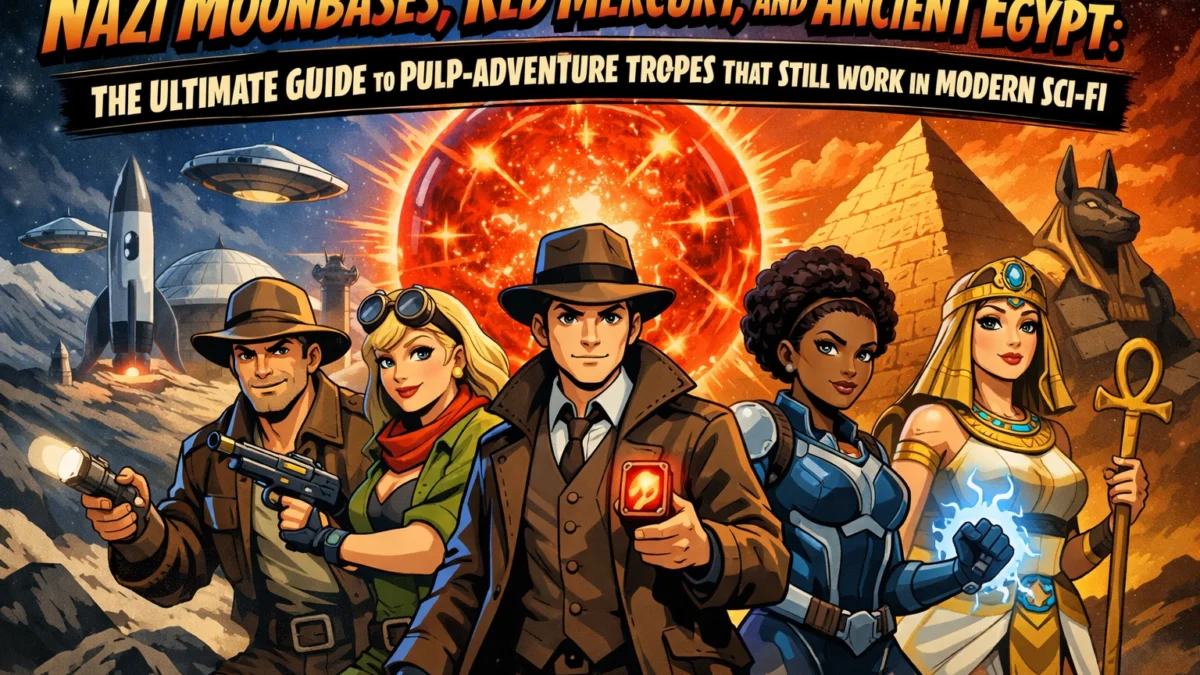
Meta Description: Nazi moonbases, red mercury, and ancient Egypt, pulp tropes that refuse to die. Here's why modern sci-fi still can't quit these wild adventure classics in 2026.

Look, we need to talk about something weird: it's 2026, and we're still obsessed with Nazi moonbases.
Not because we love Nazis (obviously), but because pulp-adventure tropes refuse to die, and honestly? That's a good thing. These gloriously ridiculous story elements have been kicking around since the 1920s, and they're still showing up in modern sci-fi. From streaming shows to novels to video games, writers keep reaching for the same wild ingredients our grandparents read about in dime-store magazines.
So why do these tropes work? And more importantly, how can modern storytellers use them without feeling like they're stuck in a time warp?
The Unholy Trinity of Pulp: What Makes These Tropes So Sticky?
Nazi Moonbases (a.k.a. The "Evil With Infrastructure" Trope)
There's something darkly satisfying about imagining history's worst villains fleeing to space with their tails between their legs. Nazi moonbases tap into our love of alternate histories, secret technology, and the idea that evil doesn't just disappear, it regroups somewhere weird.
In 2026, this trope evolves. Modern versions ask: "What if the bad guys did survive with advanced tech… and now they're back with climate-destroying weapons?" It's pulp with consequences.

Red Mercury (a.k.a. The "MacGuffin That Sounds Science-y" Trope)
Red mercury is the perfect fake substance. It sounds plausible enough to make you Google it (go ahead, we'll wait), but it's pure fiction, a Soviet-era urban legend about a magical material that could supposedly do everything from creating nuclear weapons to powering immortality serums.
Writers love red mercury because it gives characters something to chase without getting bogged down in actual chemistry. In modern sci-fi, we're seeing "red mercury" stand in for rare earth minerals, alien artifacts, or bioengineered compounds that might save or destroy the world.
Ancient Egypt (a.k.a. The "Mysterious Civilization That Knew Too Much" Trope)
Pyramids. Hieroglyphs. Gods with animal heads. Ancient Egypt is the OG adventure setting because it combines real history with just enough mystery to let your imagination run wild.
The 2026 version? Writers are pairing Egyptian mythology with climate science, genetic memory, and AI archaeology. Instead of just "cursed tomb," we get "ancient climate-control technology that could reverse desertification if only we could decode it."
Why These Tropes Still Hit Different in Modern Storytelling
1. They're Immediately Visual
Moonbases are cool. Glowing red substances are cool. Sand-covered temples are cool. These tropes give readers instant mental images without requiring three paragraphs of exposition.
2. They Come Pre-Loaded With Emotional Baggage
Everyone knows Nazis = bad, ancient civilizations = mysterious, and mysterious substances = dangerous. Writers can skip the setup and jump straight to the adventure.
3. They Work as Metaphors for Modern Anxieties
- Nazi moonbases → authoritarianism creeping back into power
- Red mercury → rare resources we'll fight wars over
- Ancient Egypt → indigenous knowledge we dismissed and now desperately need

The Modern Twist: How 2026 Writers Are Remixing Pulp
Here's where it gets interesting. The best modern sci-fi doesn't just use these tropes, it interrogates them.
Adding Real Stakes
Classic pulp was pure escapism. Modern versions ground these wild elements in actual consequences. At The Rainsavers, we blend pulp adventure with eco-thriller stakes: ancient technology isn't just mysterious, it's the key to planetary survival. Nazi-style villains aren't cartoons, they're corporations weaponizing climate change for profit.
Diverse Perspectives
Old pulp featured a lot of white dudes in pith helmets "discovering" civilizations that, uh, already existed. Modern stories flip the script: What if the archaeologist is Egyptian? What if the team escaping the moonbase includes the descendants of people those Nazis tried to eradicate?
Science That Doesn't Insult Your Intelligence
You can keep the fun of "red mercury" while actually researching what makes a compelling fictional substance. Modern readers will suspend disbelief, but they won't ignore basic physics… unless you make it really entertaining.

How to Use Pulp Tropes Without Making Your Story Feel Dated
Keep the Energy, Update the Ethics
Pulp's best quality is its pace. Things happen fast. Characters make decisions. The plot never stops moving. You can maintain that momentum while avoiding the colonialism and stereotypes that plagued old pulp fiction.
Mix Your Eras
Ancient Egyptian tech + 2026 climate science + 1940s-style adventure pacing = fresh. Don't be afraid to blend time periods in ways that feel unexpected.
Make Your MacGuffins Matter Emotionally
Red mercury is cool, but "the last sample of pre-pollution coral DNA that could restore ocean ecosystems" hits harder because readers care about oceans. Your MacGuffin should represent something real.
Let Your Heroes Be Messy
Classic pulp heroes were perfect specimens of square-jawed heroism. Modern audiences want characters who argue, make mistakes, and occasionally have no idea what they're doing. Your team of eco-adventurers should feel like real people, not action figures.
The Rainsavers Approach: Old-School Adventure Meets New-School Urgency
We're not shy about loving pulp tropes. Nazi-adjacent villains? Check. Ancient mysteries that could change everything? Absolutely. Mysterious substances with world-altering properties? You bet.
But we pair that classic adventure DNA with modern stakes: environmental collapse, corporate malfeasance, and heroes who are racing against time to prevent actual catastrophes: not just foiling vague "world domination" plots.
The result is stories that feel like the pulp adventures you grew up with (or wish you had), but tackle issues that matter in 2026. Expeditions to uncover lost technology. Conspiracies involving rare minerals. Ancient civilizations that understood climate science better than we do.

Quick Reference: When to Use These Tropes
Use Nazi Moonbases When: You need villains with resources, technology, and a history of being really evil. Perfect for stories about fascism making a comeback.
Use Red Mercury When: You need a MacGuffin that sounds scientific but gives you creative freedom. Great for spy thrillers, heists, and race-against-time plots.
Use Ancient Egypt When: You want mystery, visual spectacle, and the sense that modern civilization might not be as advanced as we think. Ideal for archaeological adventures with high stakes.
The Bottom Line
It's 2026, and pulp-adventure tropes aren't dead: they're evolving. Nazi moonbases, red mercury, and ancient Egyptian mysteries still work because they tap into something fundamental: our love of adventure, mystery, and the idea that hidden knowledge could change everything.
The trick is using these tropes intentionally. Keep the excitement, lose the outdated baggage, and ground your wild ideas in stakes that matter to modern readers.
Because at the end of the day, everyone wants to believe there's a secret moonbase somewhere, a mysterious substance that could change the world, and an ancient civilization that knew something we forgot.
Ready to see how classic pulp tropes meet modern eco-adventure? See how we blend both at The Rainsavers: where ancient mysteries and cutting-edge stakes collide.
