Meta Description: Spirit Trees or Red Mercury? We compare two fictional energy crises from The Rainsavers universe and why they hit different in 2026. Spoiler: one feels way too real.

Look, we've all read enough sci-fi to know that fictional power sources are basically just stand-ins for whatever we're anxious about in real life. Radioactive spiders? Cold War nuclear fears. Kyber crystals? Oil dependency but make it mystical.
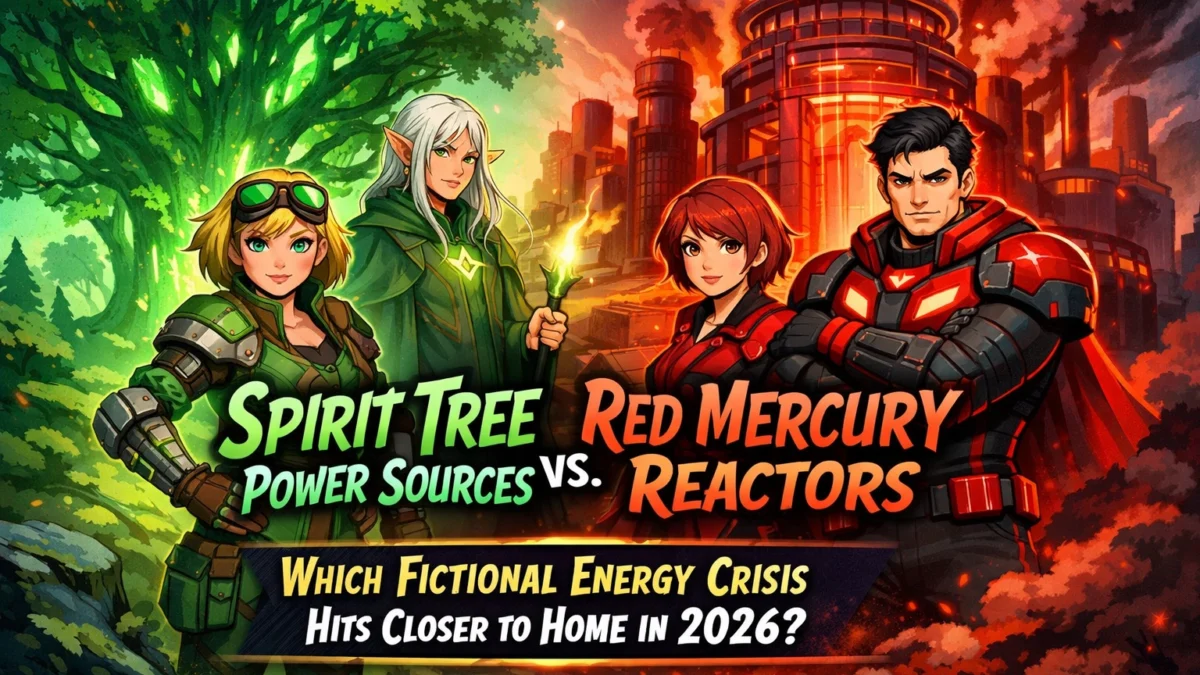
So when The Rainsavers dropped both Spirit Tree energy networks and red mercury reactors into the same universe, readers in 2026 are doing double-takes. Because honestly? One of these fictional crises feels like we're reading tomorrow's headlines.
Let's break down which fictional catastrophe hits closer to home, and why that matters for anyone who cares about adventure stories that don't ignore the room on fire around us.
The Spirit Tree Situation: Nature's Grid (And What Happens When You Unplug It)
Here's the setup: In The Rainsavers world, certain ancient trees act as bioelectric network hubs. They're not just pretty, they're powering entire ecosystems, filtering toxins, and keeping regional climates stable. Cut one down, and you don't just lose a tree. You lose the grid.

The terrifying part? The antagonists in the series aren't cartoon villains. They're corporations and governments making "economically rational" decisions to harvest Spirit Tree sites for short-term energy extraction. Sound familiar?
Why This Feels Like 2026
We're living through the weirdest climate year on record (again). The Amazon's tipping point debates aren't theoretical anymore, they're on the evening news between sports scores and pet adoption segments. When you read about Primal and the Rainsavers team literally fighting to protect bioelectric trees, it doesn't feel like fantasy. It feels like barely fictionalized documentary work.
The Spirit Tree concept taps into something we all know but can't quite articulate: that nature isn't just scenery. It's infrastructure. Mess with it, and the whole system crashes.
Relatability Score for 2026: 9.5/10 (Would be 10/10 but we still have some trees left)
Red Mercury Reactors: The "Clean Energy" That Absolutely Isn't
Now let's talk about red mercury. In the books, it's this hyper-efficient energy source that corporations push as the "solution" to all power problems. Compact reactors, incredible output, zero emissions at the source.
The catch? The extraction process is an ecological nightmare. The waste is catastrophic. And once a region commits to red mercury infrastructure, they're locked in, because the transition costs are designed to be impossible.

The 2026 Parallel Nobody Wants to Admit
Swap "red mercury" for basically any energy solution that gets marketed as a silver bullet while quietly offloading the real costs onto distant communities or future generations.
The books don't preach, but they show what happens when Mortalis Corporation controls both the narrative and the supply chain. Spoiler: it's not great for anyone except shareholders.
The Head-to-Head Comparison (Fictional Edition)
Let's get tactical about this:
Spirit Trees:
- Renewable? Yes (if you don't kill them)
- Scalable? Only where nature allows
- Weaponizable? Not really
- Side effects: Ecosystem collapse if destroyed
- Who controls it: Theoretically everyone, practically whoever has the firepower
Red Mercury Reactors:
- Renewable? Nope
- Scalable? Extremely (that's the problem)
- Weaponizable? Oh yes
- Side effects: Extraction zones become dead zones
- Who controls it: Mortalis Corporation and anyone who can afford the buy-in
The fictional choice is obvious, right? Protect the trees, reject the reactors, save the world.
Except in the books, just like in 2026, it's never that simple.
Why The Rainsavers Gets the Nuance Right
Here's what makes this series work: The characters don't get easy wins. They're not just punching bad guys and replanting forests while inspirational music swells.
They're navigating communities that need power. Governments that made deals a decade ago they can't back out of now. Activists who disagree on tactics. People who work for Mortalis not because they're evil, but because they have families to feed.

The Spirit Tree vs. Red Mercury conflict isn't a debate, it's a crisis with a countdown timer. And in 2026, when we're watching real-world versions of this play out across continents, the fictional version hits different.
It hits accurate.
The 2026 Reader Question: Which Crisis Would You Choose?
If you had to pick, in fiction or reality, which energy disaster would you rather navigate?
The slow-motion collapse of natural systems we've depended on for millennia, with all the cascading failures that come with it?
Or the quick-and-dirty "solution" that works brilliantly until it doesn't, leaving scorched earth and a tab somebody else has to pay?
The Rainsavers universe forces this choice on its characters constantly. No cop-outs. No deus ex machina tech that solves everything in Act Three.
Just messy, complicated decisions where every option has a cost, and somebody's going to pay it.
Why This Matters Beyond Fiction
Look, we all know fiction doesn't solve real problems. Reading about Spirit Trees won't plant actual forests. Getting invested in Primal's mission won't shut down exploitative extraction operations.
But stories shape how we think about problems. They give us frameworks. They let us test ideas in safe spaces before we have to make real decisions with real consequences.
And in 2026, when the gap between "science fiction scenario" and "Tuesday's cabinet meeting" is basically non-existent? Stories that engage with these tensions honestly matter more, not less.
The Rainsavers doesn't pretend to have all the answers. But it asks the right questions. And sometimes, that's more valuable than a hundred think-pieces telling you what to think.

The Verdict (For Fiction, Anyway)
Which fictional energy crisis hits closer to home?
Spirit Trees, hands down. Because we're living the slow realization that natural systems we took for granted are networked infrastructure we can't afford to lose.
Which one makes for better reading?
Both. The tension between them is where the story lives.
Which series should you start if you want action-packed climate fiction that doesn't feel like homework?
Oh come on, you know where this is going.
Your Move
The Rainsavers universe isn't subtle about its influences, and that's kind of the point. When the real world is writing plot twists faster than novelists can keep up, maybe the best fiction can do is hold up a mirror and say: "Yeah, this is wild, right?"
If you're ready for adventure stories that don't ignore the burning room, if you want characters who fight for ecosystems and get actual character development, if you're done with escapism that requires you to forget everything you know about how the world actually works,
Start with Book One at The Rainsavers and see which fictional energy crisis keeps you up at night.
Spoiler alert: It might be both.
