Meta Description: Why does corporate greed make such a perfect villain? Dive into the central conflict of The Rainsavers: where genuine teamwork battles the ultimate modern monster: profit-over-people. 2026's realest fight.

Here's the thing about 2026: we've all seen the villain origin story play out in real time. Not with radioactive spiders or alien invasions, but with quarterly earnings calls and "restructuring" announcements. Corporate greed isn't some abstract concept anymore: it's the boss who says "we're a family" while slashing benefits. It's the company that greenwashes while polluting. It's every hero's salary being called an "investment in yourself."
Which is exactly why The Rainsavers hits different.
The Most Relatable Superpower: Actually Working Together
Forget flying or super strength. In 2026, the most unbelievable superpower is a group of people who genuinely collaborate without someone hoarding power at the top.

The Rainsavers aren't just fighting bad guys: they're fighting the entire philosophy that says one person deserves all the glory (and all the profit) while everyone else gets pizza parties. The team dynamic isn't window dressing. It's the whole point.
Every member brings different skills. Nobody's "the chosen one." There's no lone wolf who swoops in to save the day while everyone else stands around looking impressed. That's the old playbook, and honestly? We're tired of it.
Real teamwork looks like:
- Shared decision-making (even when it's messy)
- Credit distributed across the actual people doing the work
- Different perspectives making the solution stronger, not slower
- Conflict that builds trust instead of breaking it
Sound radical? That's because in most stories: and most workplaces: it is.
Corporate Greed: The Villain That Keeps Winning IRL
Let's talk about why corporate greed makes such a perfect antagonist in 2026. It's not a person. It's a system. You can't punch it in the face. You can't outsmart it with a clever plan. It adapts. It rebrands. It calls itself "innovative" and "disruptive" while doing the same extractive nonsense with a new font.
The villains in The Rainsavers understand this. They're not cartoon bad guys twirling mustaches. They're sophisticated operators who know exactly how to exploit systems, manipulate narratives, and make profit-over-people sound like "good business sense."

Corporate greed's greatest hits:
- "Efficiency" (translation: fewer people doing more work for less money)
- "Synergy" (translation: we're merging and someone's getting fired)
- "Disruption" (translation: we found a new way to ignore regulations)
- "Stakeholder value" (translation: shareholders only, workers don't count)
The scariest part? These villains often win in the real world. They get bailouts. They get bonuses. They get profiles in business magazines calling them "visionaries."
Why This Conflict Actually Matters in Fiction
Here's where eco-adventure fiction becomes way more than escapism. When you write a series where teamwork genuinely defeats corporate greed, you're not just entertaining people: you're offering a blueprint.
Not a naive "hold hands and sing" blueprint. A real one. Where:
- Power gets shared even when it's uncomfortable
- Short-term profits get sacrificed for long-term survival
- Different expertise gets respected instead of ranked
- Collective action defeats individual accumulation

The Rainsavers shows what it looks like when people choose cooperation over competition, even when the system is rigged against them. Even when "going solo" would be easier. Even when corporate interests have more money, more lawyers, and more PR spin.
That's not fantasy. That's aspiration.
The 2026 Reality Check
We're living through the collision of these two forces right now. On one side: gig economy isolation, AI replacing collaboration, "founder mode" worship, billionaire space races while the planet burns. On the other: mutual aid networks, union organizing surges, community solidarity, people actually giving a damn about each other.
Fiction reflects this tension. The best stories in 2026 aren't about lone heroes or evil masterminds anymore. They're about collective liberation vs. concentrated extraction.
The Rainsavers lands squarely in that sweet spot: where environmental stakes meet economic justice, where saving the planet requires dismantling the systems destroying it, where heroism looks like solidarity instead of celebrity.
What Genuine Teamwork Looks Like Against Impossible Odds
Let's get practical. How does a team actually defeat corporate greed when the deck is stacked?
In The Rainsavers, teamwork means:
-
Nobody's expendable. The mission doesn't succeed by sacrificing the "minor characters." Everyone's survival matters.
-
Skills over hierarchy. The person with the right knowledge leads that moment, regardless of rank or seniority.
-
Transparency over secrets. Information gets shared, not hoarded as leverage. (Wild concept, right?)
-
Trust through accountability. Team members challenge each other because they respect each other, not despite it.
-
Collective wins. Victory isn't one person's trophy. It's everyone's survival.
This isn't the "teamwork" of corporate team-building exercises where you fall backward into someone's arms and call it trust. This is the messy, complicated, absolutely necessary kind of collaboration that happens when people realize they either work together or lose everything.
Why This Resonates Right Now
2026 audiences are done with billionaire saviors and genius CEOs. We've seen how that movie ends. We're hungry for stories where regular people with different skills come together and actually change things.
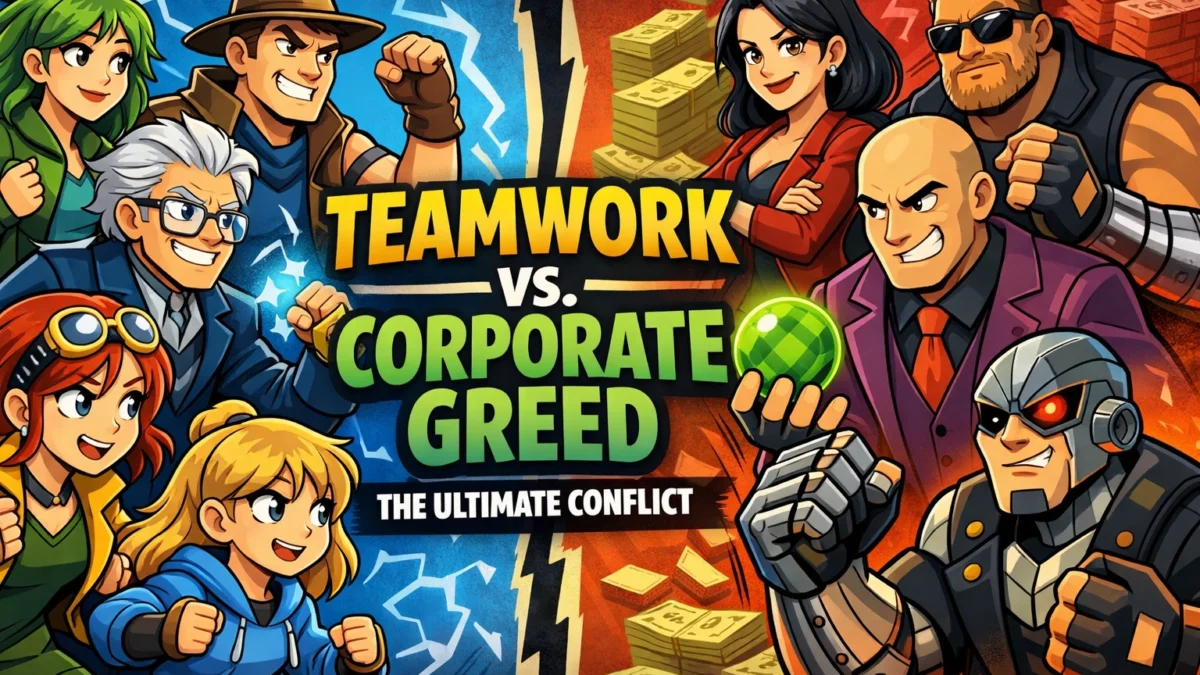
The central conflict of The Rainsavers: teamwork vs. corporate greed: isn't just a plot device. It's the fight of our generation. The question of whether we organize collectively or get picked off individually. Whether we prioritize people and planet, or quarterly profits.
And here's the beautiful part: in fiction, we get to see what happens when teamwork wins. Not through magic. Not through dumb luck. Through strategy, sacrifice, trust, and genuine human connection.
That's the kind of story 2026 needs.
Ready to See How This Plays Out?
The Rainsavers isn't subtle about its villains or its heroes. It's a full-throated argument for cooperation over extraction, for community over individualism, for survival over profit. And honestly? In 2026, that's the most radical thing you can write.
Read Book One now and see what happens when a team decides they're done playing by corporate rules: and writes their own instead.
