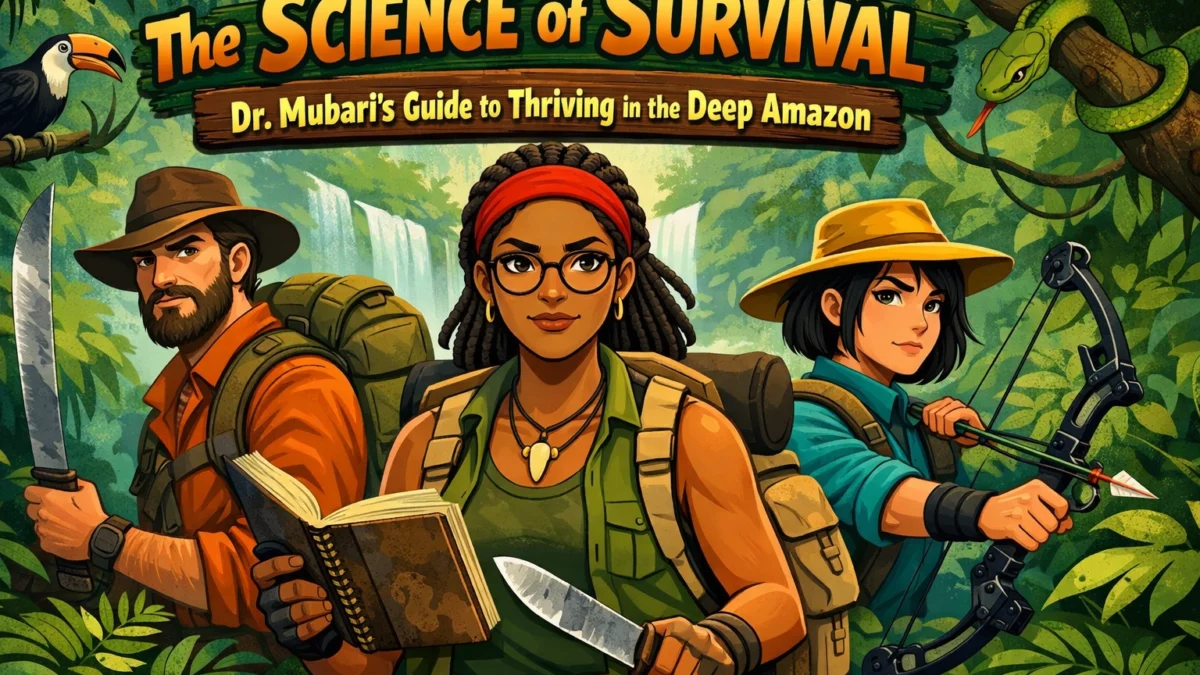
When Tom Harrison first ventured into the Amazon with Dr. Amara Mubari, he thought he was prepared. He had boots. A machete. Some kind of GPS thing his nephew helped him set up.
He was not prepared.
Fortunately, Dr. Mubari doesn't just carry a PhD in biogenetics, she packs enough high-tech survival gear to make a Navy SEAL jealous. And yeah, she's kept the entire Rainsavers team alive more times than anyone's bothering to count at this point.
So let's talk about how she does it. Because in 2026, surviving the Amazon isn't just about finding water and avoiding jaguars (though that's still on the syllabus). It's about merging cutting-edge science with ancient wisdom, and knowing which gadget to pull out when everything goes sideways.
The Gear That Saves Lives (Literally)
Dr. Mubari's backpack is basically a mobile laboratory, and she's not apologetic about it.

Bio-Scanner Mark VII: This baby can identify any plant, insect, or fungus within seconds. Poisonous berry or medicinal marvel? The scanner knows. It's literally saved Tom from three separate "I'm sure this is fine to eat" moments. The device syncs with a massive botanical database that Dr. Mubari personally updates: because of course she does.
Water Purification Pen: Looks like a thick marker, purifies water in under sixty seconds using UV-C and electrochemical oxidation. It's ridiculously simple. Dr. Mubari calls it "the thing that prevents everyone from spending a week in a hammock groaning about parasites."
Atmospheric Monitor: Tracks oxygen levels, toxins, and pollen counts in real-time. In the Amazon, air quality can shift dramatically based on what's decomposing nearby or what's blooming. This monitor has alerted the team to toxic spores twice in the past month alone.
Emergency Bio-Seal Patches: These high-tech bandages use bio-responsive polymers to stop bleeding and prevent infection. They're basically Star Trek medicine, except they exist now and Dr. Mubari insists everyone carry at least three.
Scenario #1: When Tom Touched The Thing
Here's how it usually goes:
Tom: "What's this plant do?"
Dr. Mubari: "Don't touch that: "
Tom: touches it
Dr. Mubari: ": it's covered in urticating trichomes that cause severe dermal inflammation."
This happened on Day 3. Tom's hand swelled up like a balloon animal. Dr. Mubari, completely unfazed, pulled out an enzymatic gel that broke down the plant proteins in minutes. She also gave Tom a lecture about identifying Mucuna pruriens (velvet bean) that somehow lasted the entire treatment process.
The lesson? Listen to the biogeneticist. She's not being dramatic: she's being accurate.

The Tech-Meets-Tradition Approach
What makes Dr. Mubari genuinely brilliant isn't just her gadgets: it's how she combines them with indigenous knowledge. She works closely with local guides who've been navigating these forests for generations, and she treats their expertise with the same respect she'd give a peer-reviewed journal.
When her bio-scanner identified a rare orchid with potential anti-inflammatory properties, she didn't just collect samples and run. She consulted with the community elders, learned the traditional uses, and documented everything with permission. That orchid data? It's now part of the scanner's updated database, tagged with cultural context and ethical sourcing protocols.
This is what survival looks like in 2026: high-tech tools plus high-respect collaboration.
Scenario #2: The Snake That Wasn't Trying to Kill Anyone
Snakes freak people out. Tom included. When a rainbow boa appeared near camp, Tom's first instinct was "eliminate threat."
Dr. Mubari's instinct? "Let me check the behavioral database."
Turns out, the snake was just passing through, totally non-aggressive, and actually beneficial for controlling rodent populations. Dr. Mubari used her thermal imaging monocular to confirm it wasn't agitated, then gently encouraged it to keep moving along.
The Thermal Monocular deserves its own shoutout here. It reads heat signatures in real-time, which helps distinguish between "curious animal" and "actively hunting predator." It's not about eliminating every perceived threat: it's about making informed decisions. The Amazon isn't trying to kill you. It's just… really good at doing its own thing, and you need to learn the difference.
The Portable Lab Setup
When the team needs to stay in one location for more than a day, Dr. Mubari sets up what she calls her "minimal viable workspace." It includes:
- A solar-powered analysis station that can run basic genetic sequencing
- Microscope attachment for her tablet (because regular microscopes are "too bulky and fragile")
- Sample storage unit with temperature regulation
- Satellite communication hub that uploads data even from the deepest canopy
This setup has identified three previously unknown species variants, diagnosed two team members with early-stage infections before symptoms appeared, and: most importantly: helped brew what Dr. Mubari insists is "scientifically optimized coffee."
Tom maintains that it tastes like mud water. Dr. Mubari maintains that Tom's palate is "uncalibrated."

Navigation When GPS Fails (And It Will)
Thick canopy. Magnetic anomalies. Solar interference. GPS in the Amazon is more of a suggestion than a guarantee. Dr. Mubari doesn't rely on it exclusively, which has saved the team multiple times.
Her navigation toolkit includes:
-
Star-mapping augmented reality glasses: At night, these identify constellations and calculate positioning. They're ridiculous and futuristic and Tom refuses to wear them because he "looks like a cyborg." He also keeps getting lost, so.
-
Traditional compass with declination adjustment: Because sometimes analog is superior.
-
Biodiversity markers: Dr. Mubari reads the landscape like a map. Certain plant distributions indicate proximity to water sources. Specific bird calls mean they're near a clearing. She's basically turned ecology into a navigation system.
The Medical Bay (That Fits In A Backpack)
Injuries happen. Infections happen faster. Dr. Mubari's medical kit is comprehensive enough to handle everything from venomous bites to broken bones.
The Smart Diagnostic Patch is the MVP here. Stick it on someone's arm, and it monitors vitals, blood chemistry, and inflammatory markers continuously. When team member Carlos developed a fever, the patch detected elevated white blood cells and abnormal protein markers before he felt seriously ill. Dr. Mubari identified a bacterial infection early enough to treat it with targeted antibiotics from her kit.
No helicopter evacuation needed. No week-long illness. Just fast science and faster treatment.
Scenario #3: The Night Everything Went Wrong
Three weeks into the expedition, multiple systems failed simultaneously. Tom's water purification pen died. The main GPS unit got crushed when someone (Tom) dropped a supply case on it. And a sudden storm knocked out satellite communication.
Dr. Mubari didn't panic. She:
- Redistributed her backup purification tablets while diagnosing the pen's failure (corroded battery contacts)
- Switched to star navigation and biodiversity tracking
- Used the emergency beacon protocol to upload compressed data during brief connectivity windows
- Set up rainwater collection using sterilization protocols
The team stayed safe, hydrated, and on-mission. Tom gained a newfound respect for redundant systems and the woman who insists on carrying them.

Why This Matters Beyond Fiction
Here's the thing about The Rainsavers: it's not just adventure fiction. It's a glimpse at what environmental science could look like when we combine innovation with ethics. Dr. Mubari represents the kind of scientist we need: tech-savvy, culturally respectful, and absolutely committed to preserving what she studies.
The gear in these stories? Most of it exists right now in 2026, or we're one innovation away from it. The approach? That's already happening with researchers worldwide who blend traditional knowledge with modern science.
Want to see how Dr. Mubari's expertise plays out across the full series? Want to watch Tom slowly transform from "guy who touches dangerous plants" to "guy who occasionally doesn't touch dangerous plants"?
Dive into The Rainsavers series now and explore how science, survival, and storytelling converge in the Amazon's most thrilling adventure.
Just remember: when Dr. Mubari says don't touch something, don't touch it.
Your hands will thank you.
