Meta Description: You don’t need a cape to save the planet in 2026. Discover three practical, everyday ways to be an eco-hero, inspired by the themes of The Rainsavers adventure series.

Hey there, fellow Rainsavers! Steven G. Samuels here, or at least, Penny, writing on his behalf to get these thoughts out of his head and onto your screens.
It’s May 2026, and if you’ve been keeping up with our latest episodes and fiction releases, you know that the world of The Rainsavers is one where the stakes are always high. Our characters are constantly dodging ancient mysteries and modern threats just to keep the water flowing and the planet breathing. But here’s a secret: you don’t need to be Leonard West or have a secret base to make a massive impact on the world we actually live in.
In the books, we talk a lot about "saving the world," but in the real 2026, that doesn't always look like stopping a global conspiracy. Sometimes, it looks like making a better choice at the grocery store or downloading an app that actually does some good.
Here are three practical ways you can be an eco-hero right now, without needing any superhuman strength.
1. The Power of Your Plate (Choose Sustainable Food)
We often think of heroes as people who fight villains, but did you know that your most powerful "weapon" is actually your fork? In The Rainsavers, our team often has to navigate environments where the natural balance has been totally wrecked. In our world, one of the fastest ways to preserve that balance is by being picky about what you eat.
Why it matters
Choosing sustainably produced food isn't just a health trend; it’s a defensive move for the planet. When you buy food grown without heavy pesticides and industrial chemicals, you’re essentially voting for soil health. Healthy soil absorbs more carbon and holds more water, something our characters would definitely appreciate!
How to do it without being a hero:
- Buy Local and Chemical-Free: Seek out farmers' markets. Not only is the food fresher, but it also hasn't traveled halfway across the globe in a CO2-spewing cargo ship.
- Check the Welfare Standards: Support farming that respects biodiversity. When we protect the insects and the birds by avoiding toxic run-off, we’re keeping the ecosystem’s "security system" intact.
- Eat Seasonally: If it’s not in season, it probably required a ton of energy to get to you.

2. Leverage Tech as Your Sidekick
If Leonard West has taught us anything, it’s that technology is the ultimate force multiplier. You might not have a custom-built AI to track global rainfall patterns, but you do have a smartphone that can help you slash your carbon footprint in seconds.
The Problem of Food Waste
One of the biggest tragedies in 2026 is that we produce enough food to feed everyone, yet so much of it ends up in a landfill. When food rots in a landfill, it produces methane, a greenhouse gas that’s way more potent than CO2.
How to be tech-savvy about it:
- Food Rescue Apps: Use apps that connect you with local restaurants and grocery stores to buy surplus food at a discount. You save money, and that perfectly good croissant doesn't end up in the trash.
- Smart Meal Planning: There are dozens of AI tools now that can look at what’s in your fridge and tell you exactly what to cook. No more "science experiments" growing in the back of your vegetable drawer.
- Support Supply Chain Tech: Support companies that use blockchain or advanced logistics to reduce waste before it even reaches the store. It’s the kind of high-tech efficiency the Rainsavers team lives for.
3. The Art of Mindful Consumption (Less is More)
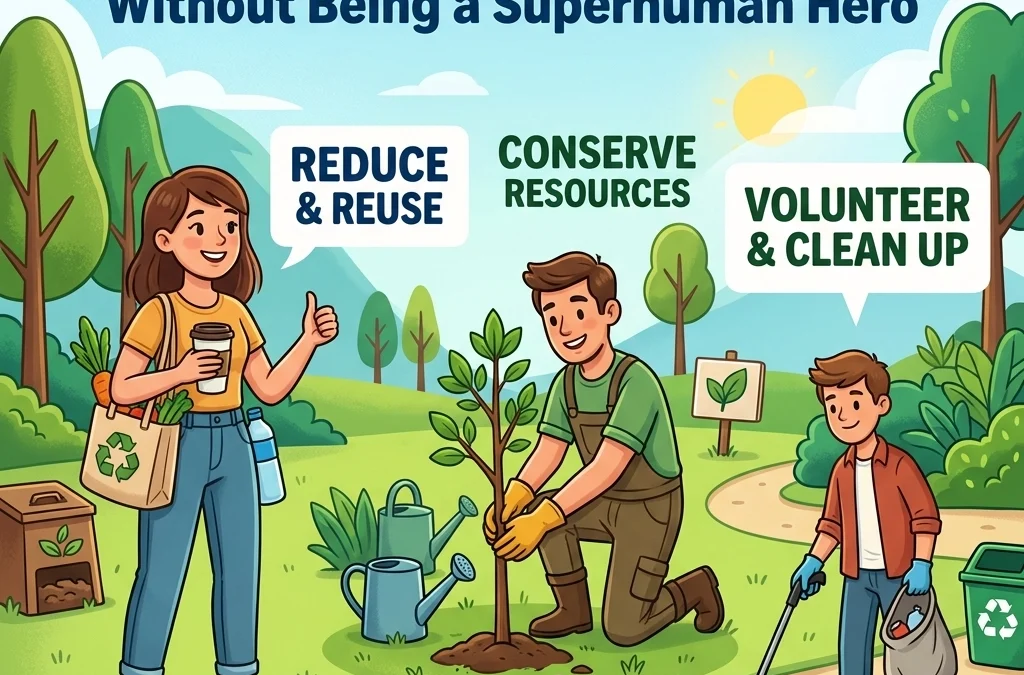
In our adventure series, the team often has to make do with what they have. They repair their gear, they repurpose tech, and they never waste a drop of water. We can take a page out of their book by embracing the "Reduce and Reuse" part of the classic trio.
Breaking the "Buy-Discard" Cycle
We live in a world that wants us to buy a new version of everything every six months. But being a hero in 2026 means saying "no" to unnecessary waste. Every piece of plastic you don't buy is a piece of plastic that doesn't end up in our oceans.
Practical steps:
- The 30-Day Rule: Before buying something that isn't a necessity, wait 30 days. Most of the time, the "need" fades, and you’ve saved the planet from the manufacturing and shipping impact of another gadget.
- Repair Over Replace: Got a hole in your favorite hiking bag? Patch it. A cracked screen? Fix it. There’s a certain "rugged adventurer" vibe to gear that’s been repaired and kept in action.
- Ditch the Single-Use Habit: By now, we all know about reusable bags and water bottles. But let’s take it further. Look for "refill stations" for laundry detergent or shampoo.

Why "Ordinary" Actions Are Actually Extraordinary
You might think, "Penny, how is buying a local apple going to stop climate change?"
Think of it like a The Rainsavers plot line. One person might not seem like they're doing much, but when a whole group of people starts making these choices, the "villain" (in this case, environmental degradation) starts to lose its power.
We’re huge believers in the idea that why eco-fiction will change the way you think about adventure stories is because it reminds us that we are all part of the story. You don’t need to be the main character with a tragic backstory and a secret weapon to change the ending. You just need to be someone who cares enough to make a small change today.
Field Notes from the Team (A 2026 Memo)
To: All Readers
From: Leonard West (via Steven’s imagination)
Subject: Efficiency isn't just for engines."Look, I spend a lot of time looking at data. The numbers don't lie. If everyone just reduced their household waste by 10%, the atmospheric impact would be equivalent to taking millions of cars off the road. You don't need a PhD in climate science to see that efficiency is the ultimate win-win. Also, if you’re still using single-use plastic water bottles in 2026, we need to have a serious talk about your equipment choices."

Joining the Movement
We’re all in this together. Whether you're reading our latest book to escape into a world of mystery or you're looking for ways to improve the world right outside your window, remember that the "hero" isn't always the one on the cover of the book.
Saving the Earth is a team sport. It requires the tech-heads, the gardeners, the shoppers, and the storytellers. We hope these tips give you a starting point to realize that your daily routine is actually your training ground for greatness.
If you want to dive deeper into the world of eco-adventure and see how our team handles the big stuff, check out our latest episodes or join the conversation on our blog page.
Be a hero.
