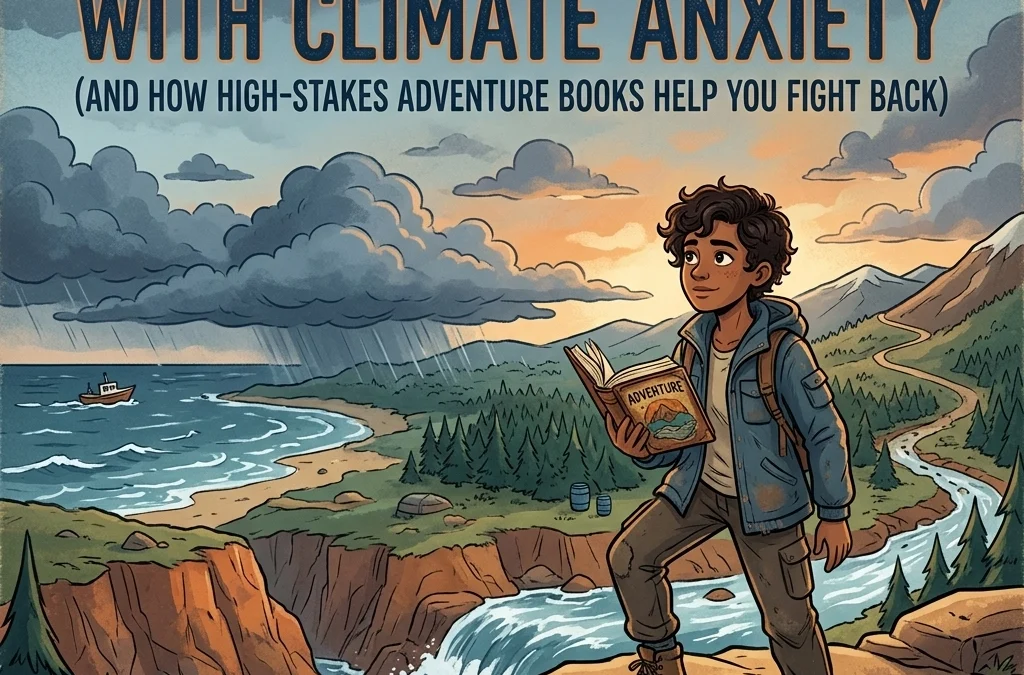
Meta Description: Are you paralyzed by climate dread? Discover the 7 common mistakes people make with climate anxiety and how high-stakes adventure fiction like The Rainsavers can transform "doom-scrolling" into "eco-hope" and real-world agency.
It’s May 2026, and if you’ve spent any time on the internet lately, you know the vibe. The headlines are heavy, the weather patterns are "unprecedented" for the tenth time this year, and that low-humming buzz in your chest? That’s climate anxiety.
We’ve all been there. You want to help, you want to care, but the sheer scale of the environmental crisis feels like trying to stop a tidal wave with a plastic beach bucket. According to the latest mental health trends of 2026, "eco-paralysis" is at an all-time high. People are either burning out or tuning out.
But here’s the thing: you might be approaching your anxiety all wrong. At The Rainsavers, we believe that stories aren’t just an escape, they’re a training ground. High-stakes adventure books can actually rewire your brain to move from "hopeless" to "heroic."
Let’s look at the seven biggest mistakes you’re making with climate anxiety and how diving into a world like The Rainsavers can help you fight back.
1. You’re Doomscrolling Like It’s Your Full-Time Job
We call it the "Information Trap." You think that by reading every terrifying report and watching every viral clip of a melting glacier, you’re "staying informed." In reality, you’re just overloading your nervous system.
Why it’s a mistake: Constant exposure to unbounded catastrophe leads to burnout. Your brain can’t process a problem that has no ending and no clear "win" condition.
How adventure books help: High-stakes fiction provides a contained conflict. When you read a series like The Rainsavers, you’re still facing high stakes, lives are on the line, the environment is at risk, but the story has a structure. You see a specific problem, a clever response, and a resolution. It teaches your brain that even when things are dire, there is a path forward. It turns "the world is ending" into "we have a mission to complete."
2. You Think You Have to Be a "Perfect" Environmentalist
This is the "All-or-Nothing" fallacy. You feel like if you aren’t living a zero-waste, carbon-neutral, perfectly sustainable life, you’re part of the problem. That guilt? It’s paralyzing.
Why it’s a mistake: Perfectionism is the enemy of progress. Climate change is a systemic issue, not just an individual one. Shaming yourself for using a plastic straw while the world burns just makes you want to give up entirely.
How adventure books help: Look at our characters. Alpha the orangutan or the rest of the team, they aren't perfect superheroes. They’re flawed, they make mistakes, and sometimes their plans go sideways. Adventure stories normalize the "messy middle." They show that you don’t have to be a saint to be a hero; you just have to show up and try again after you fail.

ALT text: Alpha the orangutan using high-tech gear to monitor rainforest recovery.
3. You’re Treating Anxiety as a Logic Problem, Not a Nervous System Problem
You try to "think" your way out of dread. You look at more charts, more data, and more statistics. But anxiety lives in the body, not just the spreadsheet.
Why it’s a mistake: You can’t rationalize away a fight-or-flight response. When your heart is racing because of a climate headline, a graph about carbon parts-per-million isn't going to calm you down.
How adventure books help: Immersive fiction acts as guided regulation. When you read an intense action scene in The Rainsavers, your adrenaline spikes, but then the characters find a way out, and your body experiences the "release." You’re essentially practicing how to move through fear and come back to a state of calm. This builds "emotional muscle memory" for when real-world news hits.
4. You’re Trying to Carry the Weight of the World Alone
A lot of climate anxiety stems from feeling isolated. You look around and wonder, "Does anyone else care as much as I do?" This loneliness makes the problem feel ten times heavier.
Why it’s a mistake: No one person can "save the planet." When we isolate, we lose the collective power that actually drives change.
How adventure books help: We’ve talked about this before, team-based adventure series are taking over because they reflect the truth of our era. In The Rainsavers, the mission succeeds only when the tech genius, the strategist, and the field experts work together. Reading about a team reminds you that you’re allowed to have a specific role. You don't have to be the whole solution; you just have to be a part of the team.
5. You’ve Forgotten How to Imagine a Better Future
If your only input is "climate doom," your imagination becomes a wasteland. You can only see the end of the world, never the beginning of something new.
Why it’s a mistake: If we can’t imagine a world where we’ve succeeded, we won’t have the motivation to build it. We need "eco-hope" to fuel our actions.
How adventure books help: Eco-fiction changes the way you think. It shows worlds where technology and nature find a balance, where heroes fight for lush jungles and clean water. By seeing Alpha monitor a thriving Amazon through a high-tech respirator, you aren't just seeing a cool sci-fi image, you're seeing a vision of recovery. Adventure books give your imagination the blueprints for a future worth fighting for.
6. You’re Stuck in Abstract Dread Instead of Concrete Action
"The planet is warming" is an abstract concept. It’s hard to know what to do with that on a Tuesday morning.
Why it’s a mistake: Abstract dread has no handles. You can't grab it, so you can't move it. It just sits on you.
How adventure books help: Adventure plots are masterclasses in turning stakes into steps. The world is in danger? Okay, step one: infiltrate the facility. Step two: recover the data. Step three: find the ally. Fiction trains you to break down overwhelming problems into "mini-quests." When you close the book, you can apply that same logic to your life. Don't "fix the climate": instead, go to one meeting, sign one petition, or plant one native garden. Treat it like a mission.
7. You’re Forgetting That Rest is a Survival Tactic
You feel guilty for having fun. You feel like reading a "fun" book is a waste of time when there is so much work to be done.
Why it’s a mistake: If you stay "on" 24/7, you will crash. Burnout is the number one reason people stop caring about the environment. Rest isn't a luxury; it's maintenance.
How adventure books help: Reading a high-stakes adventure is the ultimate way to recharge. It’s exciting, it’s engaging, and it provides "off-duty" time for your brain while still keeping your values aligned. You’re not reading fluff; you’re reading stories about resilience, courage, and protecting the Earth. It’s fuel for your soul.
Why "Eco-Hope" is the Ultimate Weapon
In 2026, the most radical thing you can do is refuse to be hopeless. Climate anxiety is real, but it doesn't have to be the end of your story.
By shifting your focus from the endless cycle of "doom-scrolling" to the focused, high-energy world of eco-adventure, you’re doing more than just entertaining yourself. You’re training your brain to see solutions where others see dead ends. You're learning that a team: even one led by an orangutan with a high-tech scanner: can do the impossible.
The world needs you energized. It needs you imaginative. And it needs you to know that the fight is far from over.
Fight back with eco-hope: Read Book One now.
Explore the World of The Rainsavers
Want more behind-the-scenes content?
- Check out our latest episodes.
- See how we’re redefining heroes in our modern eco-hero blog post.
- Got a question for the team? Contact the Author.
