
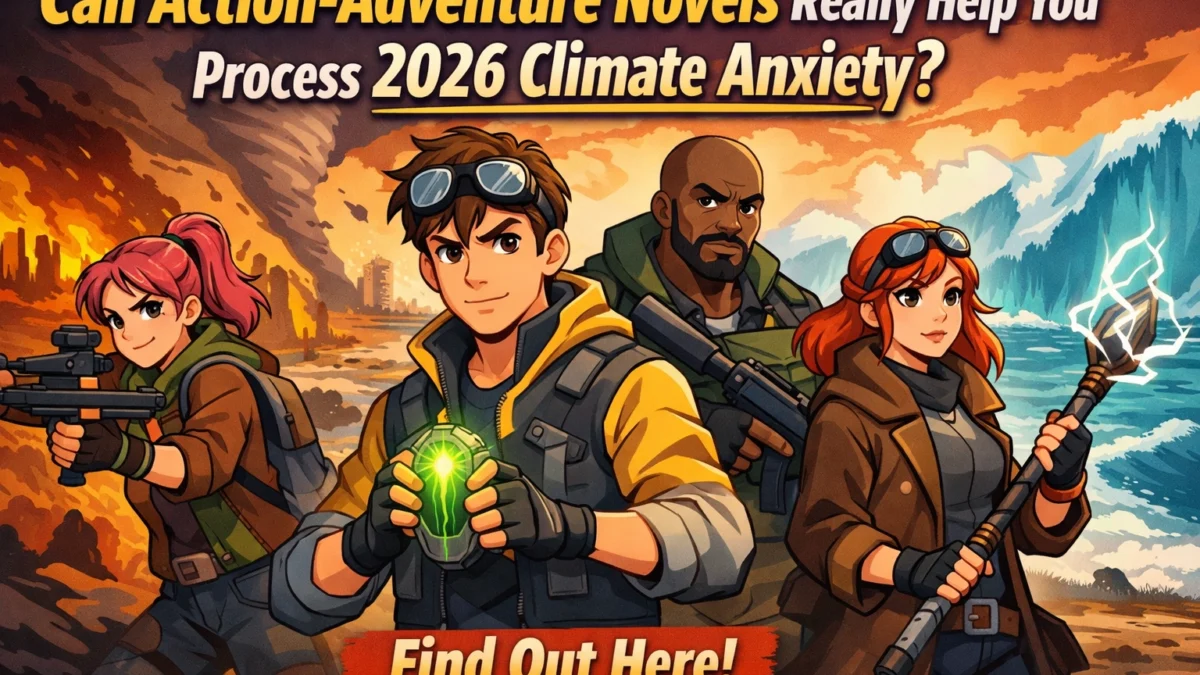
Meta Description: Feeling the weight of 2026’s climate shifts? Discover how high-octane action-adventure fiction like The Rainsavers can actually soothe your mind, spark hope, and help you process eco-anxiety through narrative transportation.
Hey everyone, Steven G. Samuels here.
If you’ve stepped outside lately, or just looked at your weather app, you know that 2026 has been… a lot. We’re living through a time where "record-breaking" temperatures and "unprecedented" storms are just Tuesday’s news. It’s no wonder that "climate anxiety" has moved from a niche buzzword to a daily reality for most of us.
When the world feels heavy, the traditional advice is to "unplug." Put down the phone, stop the doom-scrolling, and maybe go for a walk. But here’s the thing: we can’t walk away from the planet. So, how do we process that low-level hum of dread without losing our minds?
Surprisingly, the answer might be found in a high-octane, pulse-pounding action-adventure novel.
At The Rainsavers, we’re obsessed with stories that don’t just acknowledge the state of the world but dive head-first into the chaos with a grin and a plan. Today, let’s talk about why reading about global stakes can actually make your personal world feel a lot more manageable.
The Magic of "Narrative Transportation"
Ever gotten so lost in a book that you forgot you were sitting on a crowded bus or hiding in your breakroom? Scientists call this "narrative transportation." It’s that mental state where you are so absorbed in a story that you begin to mirror the characters’ thoughts and feelings.
In 2026, our brains are constantly in "high alert" mode. We’re scanning for threats, worried about the future, and feeling a bit helpless. When you engage with a story, specifically a well-crafted adventure, your brain gets to "practice" dealing with these threats in a safe environment.
By following heroes who face massive environmental challenges, you aren’t just escaping reality; you’re mentally simulating how to survive it. This isn’t just escapism; it’s a mental workout that builds emotional resilience.

Image Description: A serene but high-tech jungle setting at dusk. Dr. Mubari, a focused scientist in sleek tactical gear, is reviewing a holographic map projected from a wrist device. Beside her stands Alpha, a massive, intelligent orangutan also wearing a light, tech-integrated harness. They are surrounded by lush, bioluminescent flora, suggesting a world where nature and advanced technology coexist. No superhero logos visible.
Why Action Beats Dystopia (Every Single Time)
For a long time, "Cli-Fi" (climate fiction) was synonymous with "Dystopia." You know the ones: the world has ended, everyone is miserable, and the main character spends three hundred pages looking for a clean glass of water.
While those books have their place, they can actually increase climate anxiety. They confirm our worst fears without offering a way out.
Action-adventure is different. It’s built on the foundation of agency.
In an action-adventure story, the world might be at a breaking point, but the characters are doing something about it. They are hacking systems, exploring ancient ruins for solutions, and working as a team to stop the "unavoidable."
When you read about a character taking a stand, your brain doesn’t just see a hero, it sees a possibility. It moves you from a state of paralyzing fear to a state of "energized" purpose. This is why we focus so much on why eco-fiction will change the way you think about adventure stories.
Meet the Anxiety-Busters: Dr. Mubari and Alpha
A big part of processing anxiety is realizing you don't have to carry the weight of the world alone. That’s why the team dynamic is so vital in our books.
Take Dr. Mubari. She’s the brilliant mind who understands the data. She sees the melting ice caps and the shifting currents not as "the end," but as a series of problems that need solving. She represents the human intellect, the part of us that stays calm and looks for the exit strategy.
And then there’s Alpha. Alpha isn’t just an orangutan; he’s the bridge between the human world and the wild. He has the strength we wish we had and an intuitive connection to the planet that we’ve sometimes lost in our tech-heavy lives.
When Dr. Mubari and Alpha work together, they represent the perfect balance: human ingenuity and natural power. Seeing them navigate high-tech jungle missions helps readers feel that even the biggest problems can be tackled if you have the right partner. You can learn more about their backstories on our characters page.

Image Description: A close-up action shot of Dr. Mubari and Alpha swinging through a dense, high-tech forest canopy. Dr. Mubari is using a motorized grapple line, her expression determined. Alpha is keeping pace with ease, his harness glowing with a soft blue light. The background shows a glimmering, futuristic city in the distance, partially reclaimed by greenery.
The Science of Hope in 2026
Recent research (yes, we keep up with the boring stuff so you don't have to!) suggests that positive portrayals of climate-friendly action actually encourage readers to adopt similar behaviors.
Think about it: if you see a hero using advanced tech to save a rainforest or stop a flood, you start to view those solutions as "cool" and "attainable" rather than "expensive" and "impossible."
The Rainsavers stories are designed to give you that "hope hit." We don’t shy away from the scary stuff: our villains have some pretty intense motivations, as we discuss in Ancient Mysteries vs. Modern Threats: but we always make sure there’s a path forward.
We want you to close our books feeling like you could take on a hurricane, or at least start that community garden you’ve been thinking about.
How to Use Adventure Novels to De-Stress
If you’re feeling the 2026 "eco-jitters," here’s how to use fiction as a tool:
- Schedule "Adventure Time": Instead of checking the news before bed, give yourself 30 minutes with a high-stakes novel. Let the narrative transportation take over.
- Look for the "Team": Pick stories that feature groups working together. It reminds your subconscious that you aren't the only one worried about the planet. Check out our thoughts on why team-based adventure series are taking over.
- Focus on the "How": Pay attention to how characters solve problems. It turns your "worry brain" into a "solver brain."

Image Description: A first-person POV shot looking down at a hand holding a high-tech tablet showing a Rainsavers ebook. In the background, a cozy 2026 apartment window looks out onto a rainy, neon-lit street where drones fly between buildings. The contrast between the cozy interior and the busy, high-tech exterior creates a sense of peaceful focus.
The Rainsavers Mission
At the end of the day, we’re a publishing company that loves a good explosion and a well-timed quip. But we also care deeply about the world we’re living in. We believe that by telling stories of "modern eco-heroes," we’re helping our readers process the real-world challenges of today.
We’re not just writing books; we’re creating a space where it’s okay to acknowledge the stakes are high, but it’s also okay to have fun while we try to save the day.
If you're looking for a reading list that actually makes you feel better about the future, you've come to the right place. We even put together a list of 10 adventure series that will save your reading list to get you started.
Ready to Dive In?
Climate anxiety is real, but it doesn't have to be paralyzing. Let Dr. Mubari and Alpha show you how to turn that fear into action (and have a little fun along the way).
See how we blend high-stakes adventure with real-world hope: See how we blend both at rainsavers.com.
Stay curious, stay brave, and keep reading.
: Steven G. Samuels, CEO, The Rainsavers
