Meta Description: 2026 is the year of the eco-hero. Discover why environmental thrillers are redefining the "good guy" and how The Rainsavers are leading the charge in a world where the planet fights back.
Welcome to April 8, 2026. If you look out your window today, the world might look a little different than the sci-fi movies of the early 2000s predicted. We don’t have flying cars in every driveway, but we do have something much more intense: a planet that’s decided it’s tired of playing nice.
At The Rainsavers, we’ve been watching the tide turn, literally and figuratively. The stories we tell are changing because the world we live in demands it. Gone are the days when a hero was just someone in a bright suit punching a giant purple alien. In 2026, the real heroes are the ones standing between a fragile ecosystem and total collapse.
The Death of the Invincible Archetype
Let’s be honest: the "invincible" hero is getting a bit stale. It’s hard to relate to someone who can shrug off a nuclear blast when most of us are just trying to figure out how to keep our basements from flooding during the next "once-in-a-century" storm that happens every three weeks.
In 2026, the thriller genre has taken a hard turn toward realism. We’re seeing a shift where the "enemy" isn't a mustache-twirling villain with a doomsday device. Often, the enemy is the environment itself, uncontrollable fires, rising tides, and the "merciless conditions" that remind us humans aren't always at the top of the food chain.
When nature is the antagonist, the hero has to change. You can’t outpunch a wildfire. You can’t throw a shield at a drought. To survive 2026, heroes need brains, grit, and a deep connection to the earth they're trying to save.

Why Environmental Thrillers are the New Frontier
Why are we so obsessed with these stories right now? It’s simple: high stakes. There is no higher stake than the air we breathe and the water we drink.
Environmental protection thrillers, or "Eco-Thrillers" as the cool kids are calling them, place characters in positions where their survival depends on their ability to work with nature rather than against it. This creates a unique brand of tension that you just don't get in a standard police procedural or a space opera.
At The Rainsavers, we focus on this exact intersection. Our stories aren't just about "saving the trees." They are about the high-octane, pulse-pounding reality of living on a planet that is actively pushing back.
Character Spotlight: Primal and the Weight of the Wild
If you’ve been following our character arcs at https://rainsavers.com/characters, you know we don't do "perfect."
Take Primal, for example. In the landscape of 2026 fiction, Primal represents the raw, unfiltered side of environmental protection. He’s not a diplomat. He’s not a scientist with a lab coat and a clipboard. He is someone who understands the visceral language of the wild.
Primal changes the hero narrative because his motivations aren't rooted in "justice" in the legal sense. His justice is ecological. If you mess with the balance, the balance messes back. Readers are gravitating toward characters like Primal because he feels like a response to the frustrations we all feel. He’s the personification of nature’s last stand.
Character Spotlight: Mortalis and the Cost of Survival
On the flip side, we have Mortalis. While Primal is the heart of the wild, Mortalis is the grit of human survival. In 2026, we’ve realized that being a hero often means making the "least-worst" decision.
Mortalis isn't interested in glory. He’s interested in the next ten minutes. In environmental thrillers, the timeline is always compressed. When the oxygen scrubbers fail or the red mercury levels spike, you don't have time for a monologue. Mortalis represents the tactical side of the environmental fight, the specialized skills required to navigate a world that has become a literal minefield of ecological disasters.

The Role of Tech: Red Mercury and Beyond
You can’t have a 2026 thriller without some seriously cool (and slightly terrifying) tech. While we steer clear of magic, we love the "fringe science" that feels just five minutes away from reality.
Enter Red Mercury. In our universe, this isn't just a mythic substance; it’s a catalyst for change, a high-stakes tech element that can either be the key to restoration or the trigger for total devastation.
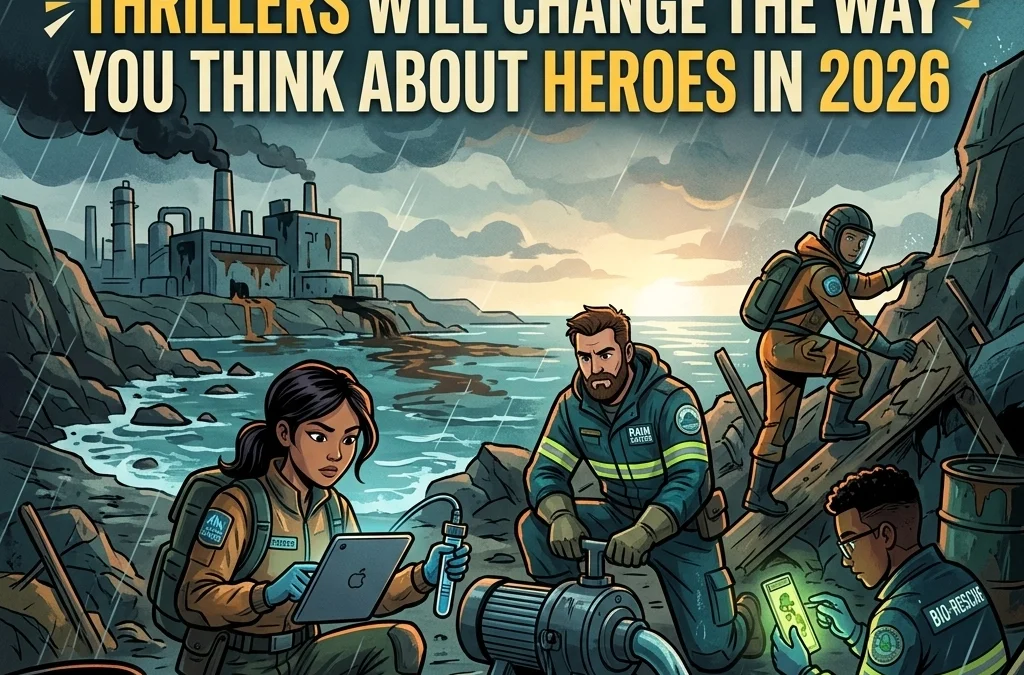
The heroes of 2026 have to be tech-savvy. They aren't just using gadgets to track bad guys; they’re using advanced sensors to detect atmospheric shifts or deploying bio-remedial drones to stop a chemical spill in its tracks. The thriller aspect comes from the fact that this tech is often experimental, temperamental, and highly sought after by those who would rather profit from the collapse than prevent it.
The Team Dynamics: No One Saves the World Alone
One major shift we’ve seen (and championed) is the move away from the "Solo Hero." Let’s face it, if the planet is dying, one guy in a mask isn't going to fix it.
As we discussed in our post Why Team-Based Adventure Series are Taking Over, the hero of 2026 is actually a collective. The Rainsavers operate as a unit because environmental threats are systemic. You need the muscle, you need the brains, you need the tech expert, and you need the person who knows how to talk to the local communities.
This team-based approach makes for much better storytelling. It allows for internal conflict, diverse perspectives on how to "save" the world, and the kind of camaraderie that only comes from staring down a category-6 hurricane together.

Real Threats Make for Better Villains
In 2026, the "villain" has evolved. While we still have our fair share of corporate greed-heads and eco-terrorists, some of the most compelling "villains" are the ancient mysteries we’ve accidentally unearthed.
When the permafrost melts, what comes out? When we dig too deep for minerals to power our "green" tech, what do we wake up? We love exploring the concept of Ancient Mysteries vs. Modern Threats.
It changes the way you think about heroes when the hero realizes that the "villain" is actually just a biological force doing exactly what it was evolved to do. It forces a level of empathy and strategic thinking that a standard "good vs. evil" story lacks.
The "Oops" Factor: Keeping it Real
At The Rainsavers, we like to keep things a bit messy. Real life in 2026 is messy. Even our best characters have "oops" moments.
Maybe Primal accidentally releases a swarm of invasive beetles while trying to stop a logging operation. Maybe the Red Mercury tech glitches and turns a localized rainstorm into a week-long deluge. These moments make the heroes more human. They remind us that even when you’re trying to save the world, you’re probably going to trip over your own boots at least once.
This "Field Notes" style of storytelling, where not everything goes according to plan, is what keeps readers coming back. It’s relatable. We’ve all tried to do something good and ended up making a bit of a localized mess, right?

Why You Should Care in 2026
You might be asking, "Steven, Penny, why does this matter for my reading list?"
Because stories are how we process the world. When you read an environmental protection thriller, you’re practicing for the future. You’re seeing characters navigate the very real anxieties we all feel about the climate, but with the volume turned up to eleven and a side of high-tech weaponry.
These stories don't just change how you think about heroes; they change how you think about yourself. They ask the question: What would you do if the world stopped providing and started demanding?
Join the Adventure
If you’re tired of the same old hero tropes and want something that feels relevant to the world we’re living in right now (or the one we're heading toward fast), it’s time to dive into the world of The Rainsavers.
We’ve got everything from deep-dive character spotlights to tips on how to survive a week in the new wilderness. And hey, if you’re feeling lucky, you should definitely check out our Down the Rabbit Hole Contest: it’s a wild ride, and we’d love to have you along.
The world of 2026 is unpredictable, dangerous, and incredibly beautiful. Our heroes reflect that. They aren't perfect, they aren't immortal, but they are exactly what we need right now.
Ready to see the new face of heroism?
Explore our latest episodes and books at https://rainsavers.com and join a community that’s looking toward the future, one thriller at a time. Whether you're here for the tech, the characters, or just to see how many things Primal can accidentally knock over, we're glad you're here.
Stay dry (if you can),
The Rainsavers Team
