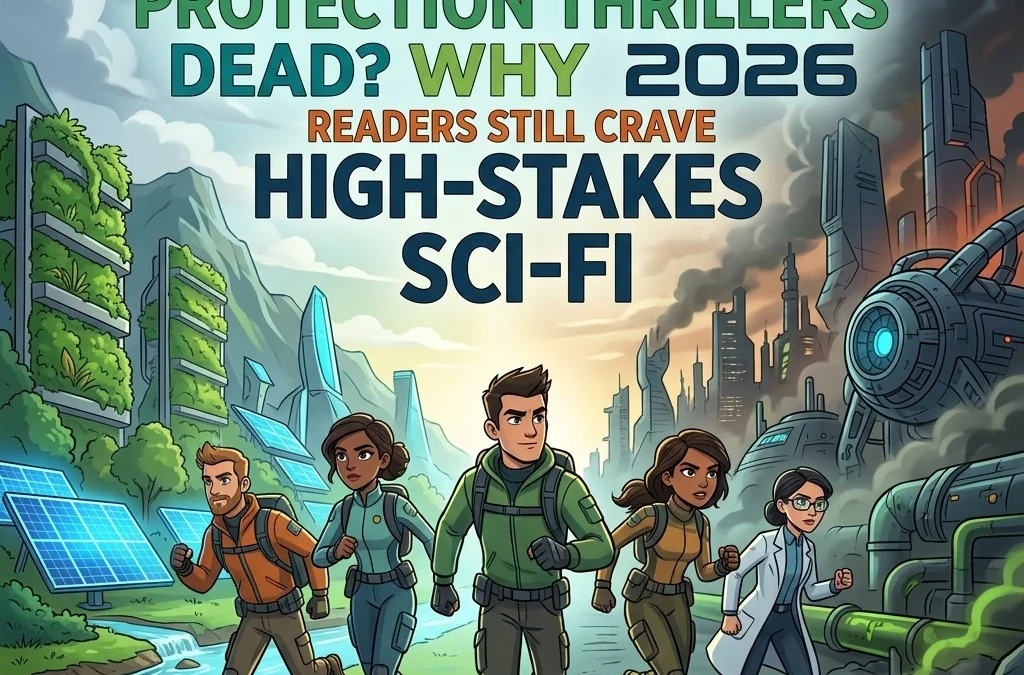
Meta description: Discover why high-stakes science fiction and environmental protection thrillers are more relevant than ever in 2026.
A quick 2026 vibe-check (in the form of a totally real “publisher memo”)
To: Anyone who’s ever said “Do people still read eco-thrillers?”
From: The part of the internet that won’t stop doomscrolling
Subject: The genre isn’t dead. It’s evolving. And it’s kind of… inevitable.
If you’ve been hearing that environmental protection thrillers are “over,” I get it. The logic goes like this:
- Real-world headlines already feel like a thriller
- People are exhausted
- So who wants more high-stakes danger in their fiction?
And yet… in 2026, readers are still showing up for stories where:
- the rainforest is a battleground,
- science is both the weapon and the cure,
- and saving the planet requires a little teamwork and a lot of grit.
Not because people want to feel worse, but because they want stories where the threat is real and the characters fight back.
If you’re new around here: we’re The Rainsavers, and we write eco-adventure sci-fi with a protective streak and a page-turner heartbeat. You can poke around the world anytime at https://rainsavers.com.
“Dead genre” myths we should probably recycle already
Let’s put a few common claims in the bin (respectfully):
Myth #1: “Readers don’t want climate stories anymore.”
Readers don’t want lectures. They do want:
- momentum
- mystery
- consequences
- characters who act instead of just react
When the theme is baked into the conflict, when it forces choices, it doesn’t feel like homework. It feels like stakes.
Myth #2: “Environmental thrillers are too bleak.”
Only if the story forgets the secret ingredient: agency.
In 2026, a lot of readers aren’t looking for “everything is doomed” fiction. They want:
- a problem that feels big
- a team that feels real
- a win that feels earned (even if it costs something)
Myth #3: “Sci-fi took over, so eco-thrillers got replaced.”
Or… they fused.
High-stakes sci-fi is basically the perfect delivery system for environmental protection thrillers because it lets you explore:
- near-future tech
- corporate-scale threat
- surveillance, automation, extraction
- “we can fix it” inventions that also create new problems
Eco-thriller DNA + sci-fi engine = faster, sharper, scarier (in the fun way).
What 2026 readers actually crave (and why eco-sci-fi delivers)
Here’s the pattern we keep seeing in reader conversations: people aren’t asking for less intensity. They’re asking for better payoff.
They want thrills with a point
Not a message. A meaningful conflict.
- What’s the cost of progress?
- Who gets protected, and who gets sacrificed?
- What happens when the “solution” is controlled by the wrong hands?
They want “team energy,” not lone-wolf perfection
A solo hero is fun, but team-based survival hits different. It’s messier, funnier, more human.
If you like the “found family under pressure” vibe, you’ll probably also like our take on team adventure. (Related reading: https://rainsavers.com/are-solo-hero-stories-dead-why-team-based-adventure-series-are-taking-over)
They want a setting that feels alive
The rainforest isn’t just a backdrop. It’s:
- strategic terrain
- a mystery box
- an ally
- a threat
- sometimes the only thing telling the truth
And that “alive setting” is exactly why rainforest adventures keep sticking. (More on that idea: https://rainsavers.com/why-rainforest-adventures-will-change-the-way-you-think-about-superhero-origins)
The Rainsavers cast, introduced like a mission briefing (because… obviously)
If environmental protection thrillers are “dead,” someone forgot to tell the people gearing up for this kind of mission.
For character bios and deeper lore, you can browse https://rainsavers.com/characters, but here’s the quick, story-forward rundown.
Tom “Primal” Swift , the powerhouse with consequences
Tom Swift didn’t become “Primal” because it was cute branding. He became Primal because something went wrong, big wrong, and the aftermath changed him into the team’s blunt-force survival advantage.
He’s the kind of hero who feels 2026-real:
- tough, but not invincible
- determined, but not unbreakable
- the guy you want on your side when the jungle stops being romantic and starts being tactical
Character deep dive: https://rainsavers.com/meet-primal-the-crash-that-turned-tom-swift-into-the-rainsavers-powerhouse
Alpha , the genius orangutan (and not a sidekick, thanks)
Alpha isn’t a mascot. Alpha is an asset, brains, instincts, and problem-solving that doesn’t follow human assumptions.
Alpha brings something modern eco-thrillers need more of: respect for nonhuman intelligence and the uncomfortable truth that humans aren’t always the smartest ones in the room.
Character deep dive: https://rainsavers.com/meet-alpha-orangenius-the-genius-orangutan-who-can-save-the-team
Dr. Mubari , the science mind with field-level urgency
Dr. Mubari is the kind of character who makes environmental protection thrillers work in 2026: a scientist who understands that “publish the paper” isn’t enough when people are actively exploiting what you’re studying.
This is science with stakes, not science as set dressing.
Jungle Dart , raised by the rainforest, armed with instinct
Jungle Dart brings the “you don’t know this terrain like I do” energy, in the best way. Where some characters bring tech, Jungle Dart brings:
- lived knowledge
- speed and stealth
- a protective relationship with the rainforest that isn’t abstract
Character deep dive: https://rainsavers.com/meet-jungle-dart-the-teen-protector-raised-by-the-rainforest
Sunbyte , hacker-nurse energy (aka: competent under pressure)
Sunbyte is what happens when care meets code. A hacker and a nurse is a pretty perfect 2026 combo: someone who can patch a wound and patch a system, sometimes in the same hour.
Sunbyte’s presence also keeps the story grounded in the real tension of modern eco-conflict: the battle isn’t only in the jungle. It’s in networks, logistics, databases, and machines.
Character deep dive: https://rainsavers.com/meet-sunbyte-the-hacker-nurse-taking-on-the-machines-behind-deforestation
Featured image concept (for this post)

Alt text: A tactical explorer in the Amazon rainforest wearing a high-tech field respirator.
Direction note for the featured image: tactical expedition scene, character-forward framing, high-tech field respirator, rainforest setting; avoid known superhero likenesses/logos.
Why “environmental protection thriller” hits harder now than it did five years ago
This isn’t internet panic. It’s story math.
1) The villains don’t need lasers anymore (but lasers are allowed)
In older thrillers, the villain sometimes had to be cartoonish to feel threatening. In 2026, the scariest antagonists are often:
- patient
- well-funded
- legally insulated
- invisible until it’s too late
That doesn’t mean stories have to be depressing. It means the cat-and-mouse game gets smarter, and the heroes have to be smarter too.
If you like the tension of mixed motivations (ancient mystery meets modern threat), you’ll probably enjoy this theme discussion:
https://rainsavers.com/ancient-mysteries-vs-modern-threats-which-makes-better-villain-motivation
2) “The environment” isn’t a vague concept anymore
Readers don’t think of nature as a postcard. They think of it as:
- supply chains
- health outcomes
- data
- geopolitics
- personal risk
So a thriller about protecting ecosystems doesn’t feel niche, it feels like the main plot line of the era.
3) Tech makes the chase more cinematic
High-stakes sci-fi lets you escalate in ways that feel fresh:
- drones vs. canopy cover
- sensors vs. stealth
- AI patterning vs. human improvisation
- biotech solutions that can be used for healing, or harm
That last part is key: the best eco-sci-fi isn’t “technology bad.” It’s “technology is power… so who’s holding it?”
A mini “reader self-test” (because quizzes are cheaper than therapy)
If you answer “yes” to three or more, eco-thrillers are not dead for you:
- Do you like stories where the setting feels like another character?
- Do you want action that’s tied to something bigger than ego?
- Do you enjoy science that creates plot problems, not just plot gadgets?
- Are you into team dynamics (banter + conflict + loyalty under stress)?
- Do you like villains who feel plausible?
- Do you want a story that’s intense, but not hopeless?
If that’s you, welcome. You’re basically the reason this genre keeps evolving instead of disappearing.
So… are environmental protection thrillers dead?
Nope. They’re adapting.
In 2026, the most bingeable environmental protection thrillers tend to look like this:
- eco-adventure pacing
- sci-fi escalation
- team-based problem solving
- a real-world emotional core
- enough hope to keep you turning pages
That’s the lane we write in at The Rainsavers: and we’re building a world where protecting the planet is the mission, but the story is still a wild ride.
If you want more posts like this, you can explore our eco-adventure hub here:
https://rainsavers.com/category/eco-adventure-environmental-heroes
Curiosity-first CTA (aka: if you’re even a little tempted)
Want to see how we blend environmental protection thriller tension with high-stakes sci-fi momentum?
See how we blend both: and if you’re ready to jump in:
Read Book One now at https://rainsavers.com.
