
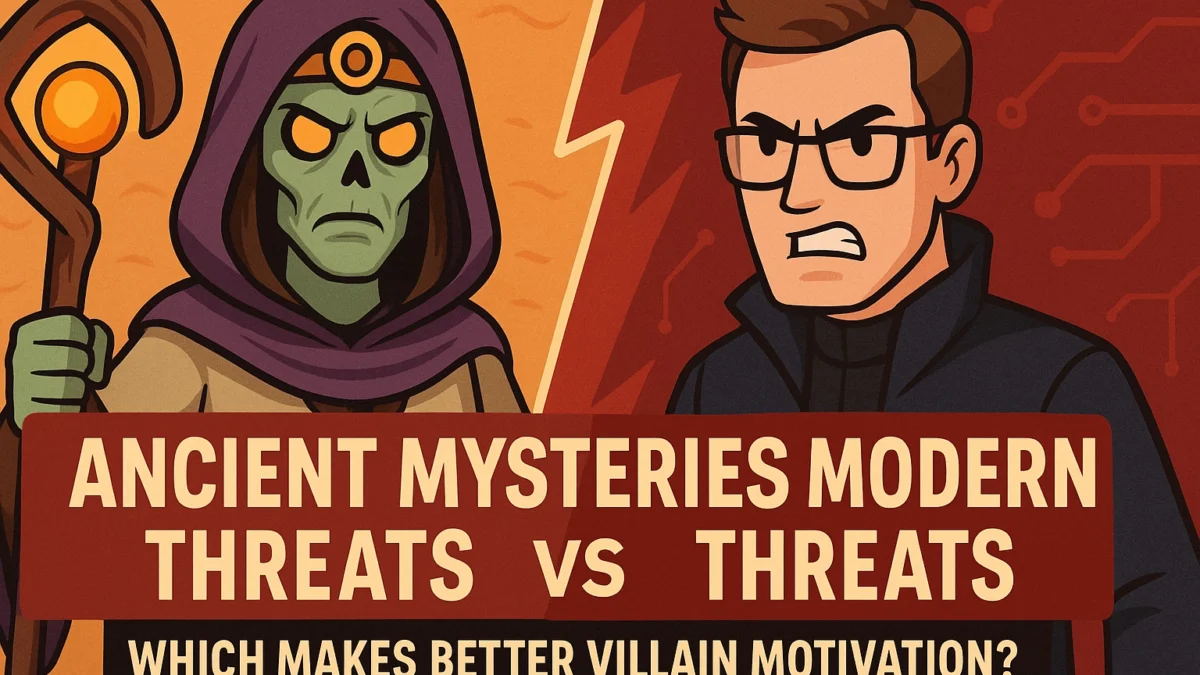
Every great adventure story needs a villain worth fighting. But what makes readers actually care about stopping them: dusty old secrets or tomorrow's headlines?
The answer isn't as simple as picking one over the other. The best villains of 2026 understand something crucial: ancient mysteries and modern threats aren't competing forces. They're fuel for each other.
Take Leonard West, better known as Mortalis, the mastermind villain driving The Rainsavers series. This guy didn't just stumble onto some old artifact or wake up one morning deciding to destroy the environment. His story shows exactly why mixing historical obsessions with cutting-edge dangers creates the kind of villain that keeps you reading past midnight.
Why Ancient Mysteries Alone Fall Flat
Pure ancient mystery villains feel outdated in 2026. Readers today aren't easily impressed by "I found this mystical crystal that gives me power." We've seen it. We've moved on.
The problem isn't the mysteries themselves: it's when they exist in a vacuum. A villain motivated solely by uncovering lost Atlantean technology or awakening sleeping gods feels disconnected from the world we actually worry about. Climate change, political corruption, technological overreach: these are the fears that make us check the news at 2 AM.
Ancient mysteries work best as amplifiers, not main events.
Modern Threats: Immediate But Predictable
On the flip side, villains driven purely by modern concerns often feel like tomorrow's newspaper headlines. Environmental extremists, rogue AI developers, corrupt politicians: they're relevant, sure, but they can also feel like we've seen this movie before.
The strongest modern threat villains tap into specific contemporary anxieties, but they need something deeper to feel truly memorable. That's where the ancient element becomes essential.

The Mortalis Formula: How to Blend Both Perfectly
Leonard West started his villain journey in familiar territory: covert operations and stolen technology. But what makes him fascinating is how his modern expertise led him to ancient obsessions: and how those obsessions now drive his modern-day schemes.
Here's his evolution:
Stage 1: The Modern Foundation
Mortalis began with cutting-edge military tech. Nazi experiments, black site operations, advanced weaponry: all thoroughly modern concerns that immediately establish stakes readers understand.
Stage 2: The Ancient Hook
But West didn't stop at conventional weapons. His pursuit of power led him to red mercury, mysterious substances, and technologies that blur the line between science and legend. These aren't just MacGuffins: they're the keys to power that modern threats alone couldn't provide.
Stage 3: The Fusion
Now Mortalis operates fusion reactors beneath ancient pyramids. He's not just another eco-terrorist or tech villain: he's someone who understands that the most dangerous secrets are the ones that connect our past to our future.
This progression feels natural because it mirrors how real obsessions develop. People don't usually start with ancient mysteries: they arrive there through modern pursuits.
Why This Mix Works for Today's Readers
The research backs this up: effective villains reflect the fears and anxieties of their time. But 2026 readers aren't just worried about one thing: we're dealing with multiple layered concerns.
We fear both technological overreach AND the idea that we've lost crucial knowledge from the past. We worry about environmental collapse AND the possibility that ancient civilizations faced similar challenges without leaving us the answers.
Mortalis embodies this complexity. His modern capabilities make him an immediate threat, while his ancient knowledge makes him unpredictable. Readers can't just wait for the government or technology to save the day: this villain operates outside conventional solutions.

The Stakes Escalation Factor
Here's what really makes the ancient-modern combination powerful: it creates stakes that escalate in unexpected ways.
When Mortalis started with stolen military tech, the heroes could theoretically call in backup, use official channels, or rely on superior firepower. Standard adventure story solutions.
But when he gained access to technologies that predate recorded history: power sources that shouldn't exist, knowledge that contradicts what we thought we knew about human development: suddenly the rulebook goes out the window.
The Rainsavers can't just report him to the authorities because the authorities don't have protocols for dealing with someone who's tapped into pre-flood civilizations while simultaneously hacking modern fusion reactors.
This is why readers stay engaged. The heroes are fighting on two fronts: stopping immediate environmental threats while also preventing someone from weaponizing humanity's lost heritage.
Making It Feel Real in 2026
The key to pulling off this blend successfully is grounding everything in recognizable anxiety. Readers might not believe in ancient astronauts, but they absolutely believe that:
- Powerful people hide important information
- Advanced technology exists beyond public knowledge
- Environmental destruction might be irreversible
- Our understanding of history is incomplete
Mortalis leverages all these fears. His ancient knowledge feels plausible because it builds on modern secrecy. His modern threats feel urgent because they're amplified by forces beyond current scientific understanding.

The Character Psychology That Hooks Readers
What makes this villain type really work is the psychology behind the obsession. Ancient mysteries don't drive people to villainhood by themselves: they attract people who are already looking for ultimate power or knowledge.
Leonard West didn't become Mortalis because he found some artifacts. He became obsessed with those artifacts because he was already the kind of person who believed he deserved unlimited power. The ancient elements didn't corrupt him: they gave his existing corruption a direction and amplification system.
This psychological realism is what separates compelling villains from cartoon antagonists. Readers recognize the mindset: the person who starts with legitimate concerns (environmental protection, technological advancement) but gradually becomes convinced that only extreme measures: and secret knowledge: can solve the problem.
Why Teams Need This Kind of Villain
The ancient-modern fusion villain also works perfectly for team-based stories like The Rainsavers. No single hero could realistically counter both cutting-edge technology and ancient mysteries. You need diverse skill sets, different perspectives, and multiple approaches.
This creates natural character moments and team dynamics. Some characters handle the technological threats while others research historical connections. Everyone brings something essential to the table because the villain operates across multiple domains of knowledge and power.
The Future of Adventure Villains
Looking ahead, the most memorable villains will continue blending contemporary fears with deeper, more archetypal concerns. Ancient mysteries provide the mythic weight that makes conflicts feel significant beyond immediate plot concerns, while modern threats ensure the stakes feel personally relevant.
The Mortalis approach: starting with recognizable modern dangers and allowing them to uncover deeper, older secrets: creates villains that feel both timely and timeless.
Ready to see how this ancient-modern villain formula plays out against a team that's prepared for both? Leonard West's story is just getting started, and The Rainsavers are the only ones standing between his obsessions and a world that isn't ready for either his modern capabilities or his ancient knowledge.
Read Book One now at rainsavers.com and discover the adventure that started it all.
Meta Description: Ancient mysteries or modern threats: which creates better villains? The Rainsavers' Mortalis proves the best antagonists blend both for maximum impact in 2026 fiction.
Featured Image ALT Text: A menacing figure in tactical gear stands between glowing ancient artifacts and high-tech computer screens, representing the fusion of old and new threats.
