Meta Description: COP30 meets in Belém this November. As the world turns to the Amazon, readers are diving into climate fiction that blends eco-action with high-stakes adventure. Here's why Amazon-set novels like The Rainsavers matter right now.
Alt text: Wide atmospheric shot of the Amazon rainforest canopy at dawn with a high-tech field respirator resting on a tactical map in the foreground
Okay, real talk: when world leaders meet in Belém, Brazil this November for COP30, the Amazon rainforest won't just be a backdrop, it'll be the story. And while diplomats debate carbon targets and funding mechanisms, a growing number of readers are turning to fiction to process what's actually at stake.
Climate fiction (or "cli-fi" if you're into the shorthand) has exploded in 2026, and Amazon-set adventure novels are leading the charge. Why? Because they don't just lecture you about deforestation stats, they drop you into the canopy with characters who are doing something about it.
Here's the thing about this moment we're in.
Why the Amazon (and COP30) Hit Different Right Now
COP30 isn't just another climate conference. It's happening in the heart of the Amazon, in a city that's both a gateway to the rainforest and a symbol of everything we stand to lose. The timing matters. The location matters. And readers are responding by reaching for stories that mirror this urgency.

The Rainsavers series gets this exactly right. Set in a near-future Amazon where eco-vigilantes face off against corporate interests, bioweapon conspiracies, and the kind of shadowy tech that feels ripped from tomorrow's headlines, it's the kind of series that makes you think while keeping you up past midnight.
Book One drops you straight into the jungle with a team that's equal parts scientists, operatives, and activists, people who know the Amazon isn't just scenery. It's a character. It's alive. And it's under siege.
What Makes Amazon-Set Adventures Work in 2026
1. The setting is inherently high-stakes. You can't write a boring scene in the Amazon. There's too much happening, biologically, politically, and (in the case of The Rainsavers) conspiratorially. Every chapter feels like the clock is ticking because, well, it is.
2. Eco-action beats eco-anxiety every time. Nobody wants to read 300 pages of climate doom. Readers in 2026 want stories where people fight back, and win, at least sometimes. Amazon-set adventures deliver that agency in spades.
3. It's timely without feeling preachy. The best climate fiction doesn't lecture. It shows. When your protagonist is navigating illegal logging operations or uncovering a conspiracy involving stolen Indigenous artifacts and experimental bioweapons (yes, that's The Rainsavers), the stakes are baked in. You don't need a TED Talk: you need to see what happens next.

The Rainsavers Formula (and Why It's Catching On)
If you're new to the series, here's the elevator pitch: imagine a six-book arc that blends eco-thriller pacing with pulp adventure DNA. Think: covert ops in the rainforest, ancient mysteries colliding with cutting-edge tech, and a team dynamic that actually feels earned.
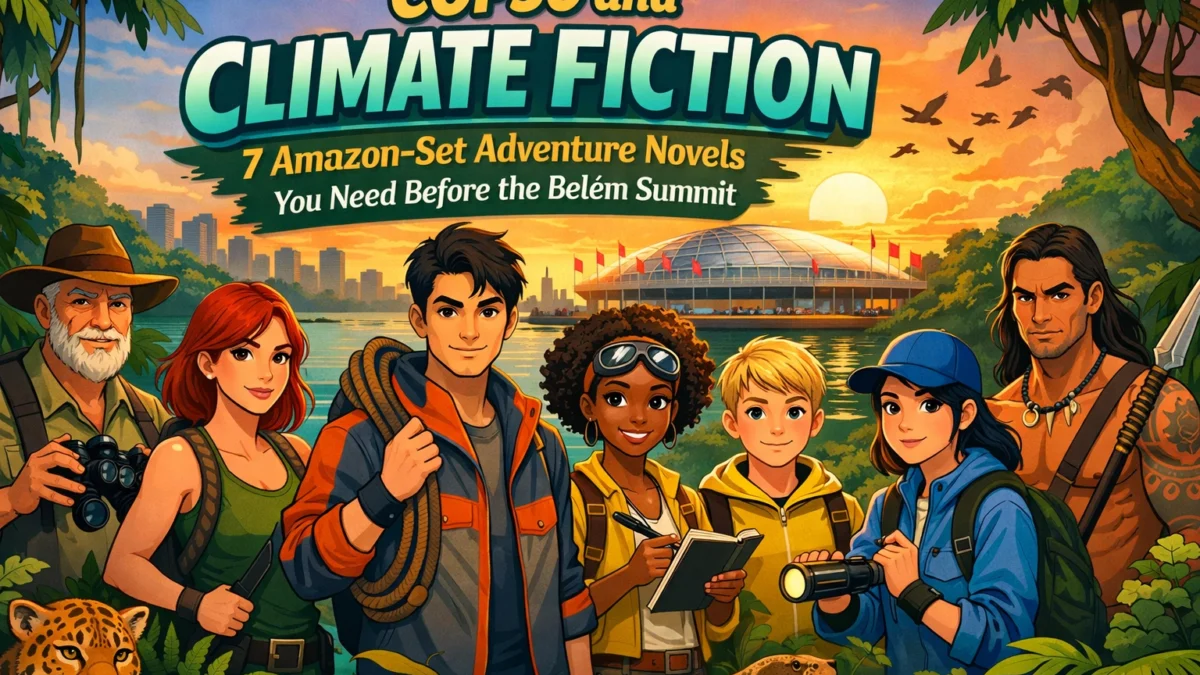
The core team: Alpha, Sato, Zara, and the rest: aren't superheroes. They're specialists. Field operatives. People with actual skills (and flaws) who are trying to stop very real threats in a world that's running out of time.
And the villains? Let's just say The Rainsavers doesn't shy away from making corporate greed, nationalist movements, and rogue science the bad guys. Because sometimes the monsters are human.
What makes it work is the balance. You get eco-hope (the rainforest can be saved, and these characters are doing it) mixed with legitimate tension (there are people who would rather see it burn). It's hopepunk without being naive.
Why Readers Are Binge-Reading Series Right Now
Here's something interesting: standalone novels are great, but readers in 2026 are gravitating toward series. And not just trilogies: long-form, multi-book arcs that let you live in a world for a while.
The Rainsavers delivers six books of escalating stakes, character development that actually pays off, and mysteries that thread through the entire arc. By the time you hit Book Six, you're not just invested in whether the team succeeds: you're invested in them.

Plus, there's something satisfying about diving into a completed series. No waiting. No cliffhangers that take years to resolve. Just pure, binge-ready adventure.
What COP30 and Fiction Have in Common
Both are about imagining what's possible.
COP30 will bring together policymakers, scientists, and activists to hammer out agreements that could reshape how we approach the climate crisis. It's high-level, it's necessary, and (let's be honest) it's going to be full of bureaucratic language that makes your eyes glaze over.
Fiction does something different. It makes the stakes personal. It puts you in the jungle with the people who are risking everything. It shows you what a world without the Amazon might look like: and what a world that fights to save it could become.
The Rainsavers isn't just entertainment (though it absolutely is that). It's a reminder that the Amazon's future isn't inevitable. It's contested. And the people fighting for it: whether fictional operatives or real-world activists: are the ones writing the next chapter.
The Bottom Line
If you're looking for climate fiction that doesn't depress you, that delivers genuine thrills, and that actually respects the Amazon as more than a backdrop, start with The Rainsavers.
Book One sets the stage. Book Two raises the stakes. By Book Three, you're hooked. And by the time COP30 kicks off in Belém this November, you'll understand why this series has become the go-to recommendation for readers who want their eco-fiction with a side of adrenaline.

The summit will debate policy. The Rainsavers will show you what's worth saving: and who's willing to fight for it.
Read Book One now and see why Amazon-set adventure is having a moment in 2026.
