
Meta Description: Real-world rainforest conservation tips inspired by The Rainsavers fictional superhero team. From tech solutions to Indigenous wisdom, here's what eco-heroes can teach us in 2026.
Look, I get it. You probably didn't wake up this morning thinking, "I wonder what a gorilla-powered eco-warrior could teach me about saving the Amazon?" But here we are in 2026, and somehow fiction is giving us better conservation playbooks than most corporate sustainability reports.
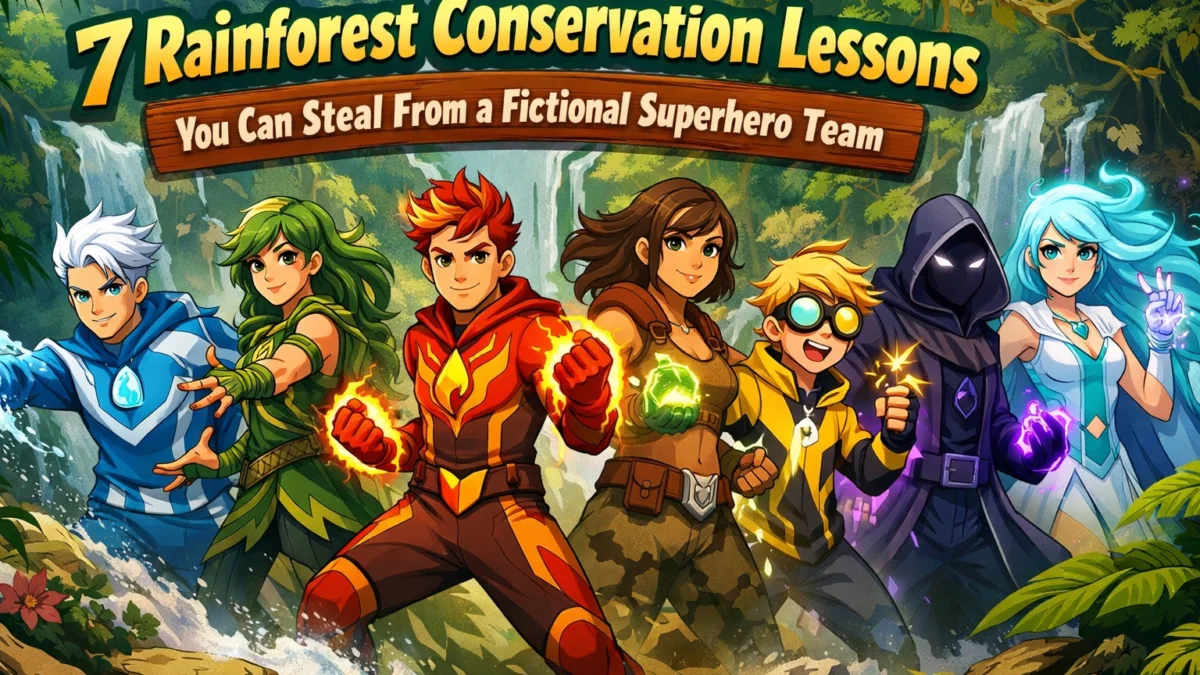
The Rainsavers: a fictional team of rainforest defenders battling Nazi holdouts, rogue tech, and eco-disasters: might be made up, but their strategies? Surprisingly legit. Let's break down seven conservation lessons you can actually steal from these pulp adventure heroes.
1. Local Knowledge Beats Satellite Data Every Single Time
In the series, Primal (the gorilla-human hybrid with forest superpowers) doesn't rely on fancy gadgets to track threats. He knows the jungle. He reads the canopy shifts, listens to animal behavior, and can sense ecological imbalance before any drone spots it.
The Real-World Steal: Indigenous communities and local forest dwellers hold generations of ecological knowledge that satellite imagery can't replicate. In 2026, the most successful conservation projects partner with local communities as leaders, not consultants. They're not assistants to the mission: they ARE the mission.
Want to support real rainforest protection? Fund organizations that put Indigenous land rights first. It's not sexy tech, but it works.

2. Villains Love Paperwork (So Should You)
The Rainsavers spend half their time fighting bureaucratic corruption and illegal logging permits. Mortalis, the team's strategist, has this whole speech about how "evil doesn't announce itself with a manifesto: it hides in clause 7, subsection B."
The Real-World Steal: Forest destruction is usually technically legal thanks to loopholes, outdated regulations, or straight-up bribery. Real-world conservation heroes dig through land-use policies, cross-reference satellite deforestation data with logging permits, and expose discrepancies.
Organizations like Global Witness and Rainforest Foundation track this stuff. Supporting their work means funding the unsexy, tedious research that actually stops chainsaws.
3. Technology Is Only As Good As The Hands Using It
Red mercury, Nazi-era wonder-tech, experimental serums: The Rainsavers universe is packed with dangerous science falling into the wrong hands. The team constantly battles corporations weaponizing research for profit instead of protection.
The Real-World Steal: In 2026, we've got drones, AI forest monitoring, genetic biodiversity mapping, and carbon credit blockchain systems. Cool, right? Except when tech gets monopolized by corporations gaming carbon offset markets or when "eco-tech" startups greenwash without actual impact.
The lesson? Push for open-source conservation technology and transparent data. If a company won't share their methodology, they're probably selling hopium, not solutions.

4. Build Your Squad (Lone Heroes Are Exhausting)
Primal can't save the rainforest alone. He needs Mortalis's tactical genius, Alpha's raw power, Dr. Zara's scientific expertise, and a rotating cast of specialists. They're a team, not a solo savior story.
The Real-World Steal: Conservation burnout is real. Whether you're an activist, researcher, or just someone who cares a lot, trying to save the planet solo will wreck you.
Join coalitions. Support collaborative efforts. Share resources. In 2026, the strongest movements are networks: scientist-activist partnerships, Indigenous-led alliances, youth climate groups connecting globally. Your squad doesn't need superpowers; it needs shared commitment and complementary skills.
5. Follow The Money (Especially When It's Dirty)
Every Rainsavers mission eventually traces back to some shady corporation funneling profits through shell companies. The team has learned: if you want to stop deforestation, track the financial incentives keeping it profitable.
The Real-World Steal: Illegal logging, land grabs, and resource extraction are businesses. They have investors, supply chains, and customers. Cutting off their money flow works better than fighting them tree-by-tree.
Support campaigns targeting banks that finance deforestation. Pressure retailers to audit their supply chains (looking at you, beef and palm oil industries). In 2026, consumer boycotts and shareholder activism are legitimate conservation tools.

6. Rewilding Is A Long Game (Not A Photo Op)
There's a running gag in the series where rookie eco-heroes show up wanting to "plant a million trees by next week!" and Primal just side-eyes them like, "Cool. Did you check if those are native species? Who's maintaining them? What about the soil microbiome?"
The Real-World Steal: Planting trees is trendy (and great for Instagram), but real rewilding takes decades of careful ecosystem restoration. It's not about tree quantity; it's about biodiversity, soil health, water systems, and long-term stewardship.
If you're donating to reforestation projects, ask: Are they planting native species? Are local communities involved? What's the 10-year survival rate? If they can't answer, your money might be growing a tree graveyard.
7. Adapt or Get Wrecked
The Rainsavers don't follow a playbook: they improvise constantly. Old strategies stop working. New threats emerge. The team's survival depends on learning fast and pivoting faster.
The Real-World Steal: Climate change is accelerating everything. What worked for conservation in 2015 might not work in 2026. We're seeing species migrate to new habitats, disease patterns shift, and fire seasons rewrite themselves.
Adaptive management is the future. That means conservation plans that adjust in real-time based on ecological feedback, not rigid 50-year blueprints written by people who won't be around to see them fail.
Support organizations embracing adaptive, responsive approaches. Flexibility isn't weakness: it's survival.

The Not-So-Secret Lesson: Fiction Reminds Us What's Worth Fighting For
Here's the thing about The Rainsavers that makes it more than just pulp adventure: it gives us characters who don't give up. They face impossible odds, corrupt systems, and literal Nazi holdouts with experimental death tech: and they keep fighting.
That's not escapism. That's a reminder.
Real-world conservation in 2026 feels overwhelming. The Amazon is still under threat. Climate tipping points loom. Governments drag their feet while corporations greenwash their PR. It's exhausting.
But the fictional team's lesson is simple: you show up anyway. You use the tools you have. You build your coalition. You adapt. You fight smarter, not just harder.
And sometimes: just sometimes: you actually win.

Your Move
So what's your play? You don't need superpowers or a secret rainforest base (though both sound cool). You need:
- A cause that speaks to you
- A community to join
- A plan to stay in it for the long haul
If you want to see how The Rainsavers crew keeps pulling off the impossible, grab the series and see how eco-adventure fiction can reframe how you think about real-world problems. Because in 2026, we need all the inspiration we can get: even if it comes from a fictional gorilla-man and his ragtag team of rainforest defenders.
Ready to dive into the adventure? Start reading The Rainsavers series here and see what conservation lessons (and wild plot twists) you can steal for yourself.
