Meta Description: High-tech DNA thieves or corporate villains? We break down which antagonist creates better stakes in modern adventure fiction, and why The Rainsavers uses both to maximum effect.
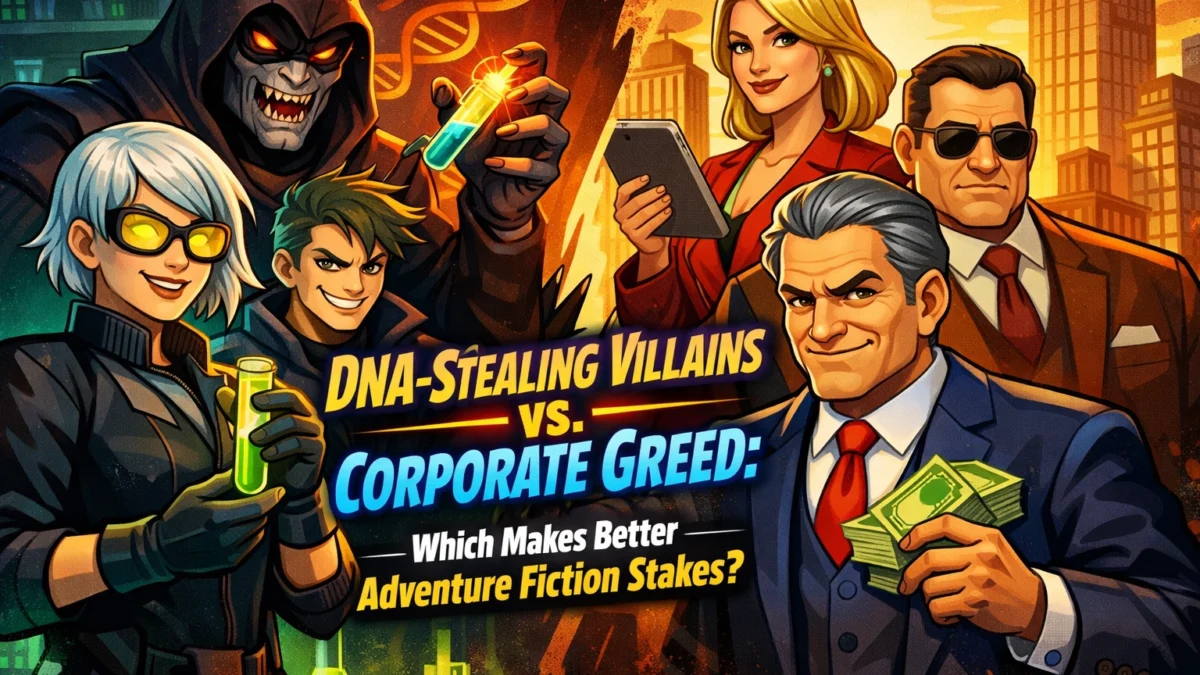
Let's settle this once and for all: What makes a better villain in 2026 adventure fiction, some masked mastermind stealing genetic codes in a high-tech lab, or a suit-wearing executive quietly destroying ecosystems for quarterly profits?
Spoiler alert: It's complicated. And honestly? That's what makes it fun.
The Case for DNA-Stealing Tech Villains
There's something undeniably thrilling about a villain who operates in the shadows with futuristic gadgets and sinister scientific plots. DNA theft hits different because it's personal. We're talking about stealing the literal building blocks of life, your identity, your ancestry, your genetic future.
In adventure fiction, these villains give us:
Immediate visual tension. Think high-security labs, glowing vials, countdown timers on extraction devices. The stakes feel urgent and visceral. When a character's DNA is at risk, readers instinctively understand the threat without needing a economics degree.
Clear hero-vs-villain dynamics. Tech villains usually have a specific plan: steal the genetic code, weaponize it, profit from it, or use it to create something terrifying. Heroes can identify the bad guy, track them down, and stop the plot. It's clean. It's satisfying. It's what we grew up expecting from adventure stories.
Sci-fi coolness factor. Let's be honest, gene-splicing technology, biometric locks, and covert extraction missions just sound cool. They give your story that near-future edge that keeps pages turning.

The Case for Corporate Greed Villains
But here's where it gets interesting. In 2026, corporate greed hits different too, because we're living it.
Corporate villains bring a different kind of dread to adventure fiction. They're not cackling in secret lairs. They're signing contracts in boardrooms. They're not stealing DNA in the dead of night, they're legally purchasing the land where rare species live and bulldozing it by Tuesday.
What makes corporate antagonists compelling:
They're terrifyingly real. Readers don't need suspension of disbelief when the villain is a corporation prioritizing profit over environmental destruction. We see it in the news. We feel it in our communities. That familiarity makes the stakes feel immediate even when the action is subtle.
Moral complexity. Corporate villains aren't always twirling mustaches. Sometimes they're well-meaning executives who genuinely believe they're creating jobs or progress. Sometimes they're middle managers caught in systems they can't control. This gray area makes for richer storytelling.
Systemic stakes. While tech villains threaten individuals or specific targets, corporate antagonists threaten entire systems, ecosystems, communities, ways of life. The scale is bigger. The consequences ripple farther.

Why Not Both? (The Rainsavers Approach)
Here's the thing adventure fiction in 2026 has figured out: you don't have to choose.
The best stories layer their villains. They understand that high-tech threats and corporate greed aren't separate problems, they're interconnected. A corporation funding illegal genetic research? A tech mogul using stolen DNA to patent life-saving treatments while Indigenous communities lose access to their ancestral lands? Now we're cooking.
The Rainsavers series leans hard into this layered approach. The threats facing our team of environmental defenders aren't one-dimensional. They're facing adversaries who use cutting-edge technology and exploit legal loopholes. Villains who steal genetic secrets from ancient organisms and lobby governments to strip environmental protections.
This dual-threat model creates something essential for modern adventure fiction: stakes that feel both urgent and systemic.
When you're reading about DNA theft in Book One, you're immediately hooked by the ticking clock, stop the villain before they extract what they came for. But as the series unfolds, you realize the DNA theft is part of a much larger corporate machine. The villain in the lab is scary. The board of directors funding them? That's the real nightmare.
What Actually Makes Better Stakes?
So which is better? After six books of research (okay, six books of writing research), here's what I've learned:
DNA-stealing villains win on immediate tension. If you want readers gripping the page, heart racing, staying up past midnight because they need to know what happens next: tech villains deliver. The specificity of the threat (steal the sample, crack the code, extract the sequence) creates clear objectives and countdown-clock urgency.
Corporate villains win on sustained dread. The best kind of villain isn't just someone you defeat in Chapter 27. It's someone whose presence haunts the entire series. Corporate antagonists create ongoing pressure because even when you stop one executive, another takes their place. Even when you expose one project, another gets funded. The system persists.
Combining both wins at everything. When you layer high-tech villainy with corporate backing, you get the best of both worlds. Immediate action sequences and long-term narrative stakes. Personal danger and societal consequences.
The question isn't which is better. The question is: are you brave enough to use both?

The 2026 Reader Knows the Difference
Here's what's changed in adventure fiction: readers in 2026 are sophisticated. We've lived through enough real-world corporate scandals and tech overreach that we can smell a one-dimensional villain from a mile away.
We want villains who reflect the complexity of actual threats. We want stories that entertain us and make us think. We want to see heroes tackle problems that feel relevant: not just explosions for the sake of explosions (though explosions are still great, don't get me wrong).
Modern adventure fiction works best when it acknowledges that the scary tech villain probably has a LinkedIn profile and quarterly earnings calls. When it shows us that environmental destruction isn't always explosions and oil spills: sometimes it's paperwork and permits and plausible deniability.
That's the secret sauce. That's what keeps series like The Rainsavers feeling fresh across six books.
Your Next Adventure Awaits
So whether you're Team Tech Villain or Team Corporate Greed: or like us, Team Why-Not-Both: the real winner is good storytelling that keeps you guessing.
Want to see how DNA-stealing conspiracies and corporate environmental crimes collide in one action-packed series? Dive into The Rainsavers and discover why the best adventure fiction doesn't make you choose between villain types: it throws them all at you at once.
Because the only thing better than a great villain? Multiple great villains working together while a team of eco-defenders tries to stop them all.
Now that's stakes worth reading about.
