Meta description: Hopepunk isn't just a trend, it's the genre readers crave in 2026. Discover why optimistic eco-adventures are dominating fiction and how stories built on hope are reshaping how we see heroes.
The Vibe Check: Why Is Everyone Suddenly Obsessed with Hope?
Okay, let's be real.
If you've scrolled through any book recommendation thread, wandered into a bookstore, or asked a friend what they're reading lately, you've probably noticed something weird happening.
People are done with bleak.
Grimdark had its moment. Dystopias ruled the 2010s. We got it, the world can be terrible, humanity is flawed, and sometimes the good guys lose in horrifically detailed ways.
But here we are in 2026, and readers are collectively saying: What if stories made us feel like we could actually do something?
Enter hopepunk. And its eco-adventure-loving cousin that's absolutely dominating bookshelves right now.
Wait, What Even Is Hopepunk?
Quick crash course for anyone who missed the memo.
Hopepunk is a genre (or maybe a philosophy?) that emerged around 2017 as a direct middle finger to grimdark fiction. The core idea is radical in its simplicity:
Hope and kindness are acts of resistance.
That's it. That's the whole thing.
Hopepunk stories don't pretend the world is perfect. They're not naive utopias where everyone holds hands and problems evaporate. The world can still be messy, broken, even dystopian. But the characters choose hope anyway. They choose action. They choose each other.
It's not about ignoring darkness, it's about lighting a match and doing something with it.

Why 2026 Is the Year Hopepunk Went Mainstream
Here's where it gets interesting.
For years, hopepunk was a niche label. A Tumblr discourse thing. Something writers and readers whispered about in forums.
But 2026? The floodgates opened.
Three reasons this is happening right now:
1. Climate Anxiety Hit Critical Mass
We've spent years absorbing apocalyptic climate narratives. Floods. Fires. Extinction-level doom. And while those stories served a purpose (awareness matters!), readers are exhausted by despair without direction.
People don't want another story that says "we're doomed."
They want stories that say, "We're in trouble, and here's what it looks like when people fight back."
2. Team-Based Heroes Feel More Real
The lone wolf hero? Struggling. Hard.
Readers in 2026 are gravitating toward stories where the heroes can't do it alone. Squads. Crews. Found families of misfits pooling their skills because no single person has all the answers.
That tracks with real life, right? Climate action, community organizing, actual change, it happens in groups.
3. We Needed Stories That Model Solutions
Here's the sneaky power of optimistic fiction: it gives us templates.
When you read about characters who see a problem, freak out for exactly two pages, then actually do something creative about it, your brain files that away. It becomes imaginable. Possible.
Fiction shapes how we think about the future. And in 2026, we're hungry for futures worth imagining.
The Eco-Adventure Twist: Where Hopepunk Meets the Rainforest
Hopepunk is the philosophy. But the aesthetic dominating right now? Eco-adventures.
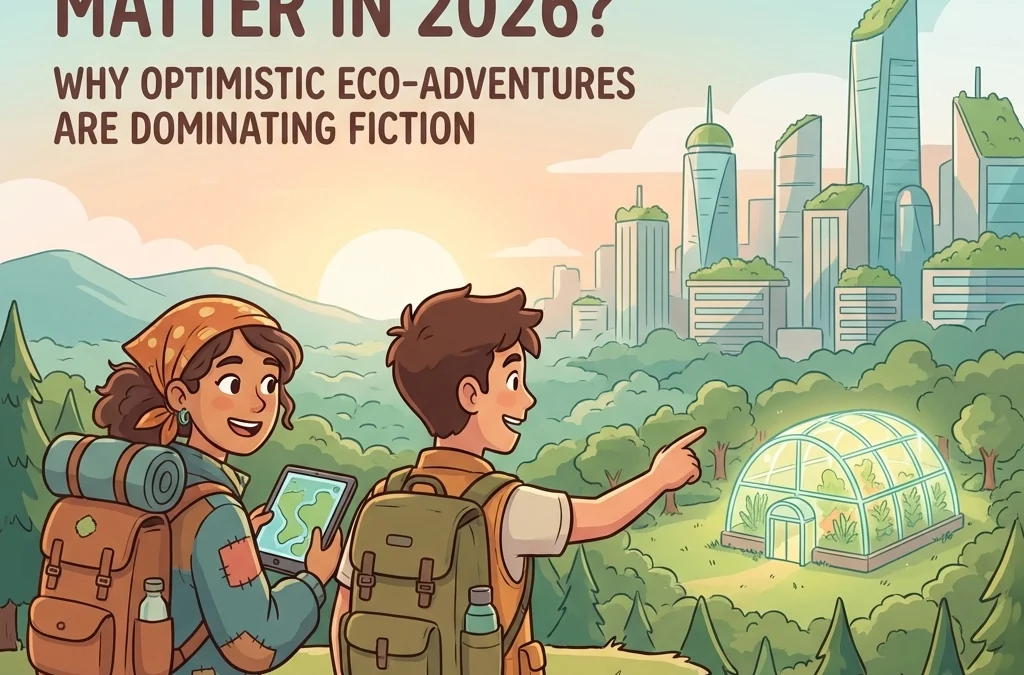
Think: lush jungles. Ancient mysteries. High-tech field gear. Heroes who look like they could survive a monsoon and still crack jokes around the campfire.
There's something magnetic about stories that combine environmental stakes with action-packed adventure. It's not preachy. It's not a lecture. It's fun, and the planet-saving stuff comes baked in.

This is where genres like solarpunk and eco-fiction intersect with hopepunk. The focus isn't just "hope as resistance", it's hope with a specific mission. Protect something. Save something. Build something better.
And readers? They're eating it up.
What Makes an Eco-Adventure Actually Work?
Not every book slapping "environmental" on the cover earns the hype. The stories resonating in 2026 share a few key ingredients:
Stakes that feel personal. It's not about saving an abstract "planet." It's about saving this river, this species, these people.
Characters who are competent but flawed. Nobody wants a perfect hero lecturing them. Give us the genius who panics under pressure. The leader who makes terrible jokes at the worst moments. The powerhouse who's secretly terrified.
Action that drives the message. Show, don't preach. Let the environmental themes emerge through what characters do, not what they monologue about.
A sense of wonder. The best eco-adventures remind us why nature is worth protecting in the first place. Dense canopies. Hidden temples. Creatures that seem impossible until you see them.
Where The Rainsavers Fits In
Look, we're biased. We'll own that.
But The Rainsavers was built for exactly this moment.
A team of misfit heroes, no capes, no superpowered brooding loners, taking on threats that blend ancient mysteries with modern environmental stakes. Set in the Amazon. Powered by found-family dynamics and the kind of high-tech field gear that makes you want to go buy a tactical backpack immediately.
It's hopepunk in action. Eco-adventure with teeth. And it's designed to leave you feeling like doing something might actually matter.
If you've been craving stories that don't make you want to curl up in existential dread, this is your invitation.
See what makes The Rainsavers different, read Book One now.
The Bigger Picture: Fiction as Fuel
Here's the thing about hopepunk that critics sometimes miss.
It's not escapism. Not really.
Escapism implies running away from reality. Hopepunk is about running toward a version of reality that could exist if enough people believed it was possible.
That's different.
The stories we consume shape us. They give us language for experiences we haven't had yet. They let us rehearse courage, practice resilience, imagine collaboration.
In 2026, as climate conversations shift from "awareness" to "action," the fiction we're drawn to is shifting too. We don't need more warnings. We need models. Blueprints. Stories that show us what it looks like when ordinary people, flawed, scared, funny, determined people, choose hope anyway.
So, Does Hopepunk Really Matter?
Short answer: Yes.
Longer answer: It matters because we're at a crossroads, culturally and environmentally. The stories we tell ourselves about what's possible shape what becomes possible.
Grimdark served its purpose. It held a mirror to our worst tendencies.
But mirrors don't build anything.
Hopepunk: especially the eco-adventure variety flooding bookshelves in 2026: is handing us a hammer. A weird, slightly chaotic, found-family-wielding hammer.
And honestly? That's exactly what we need right now.
Your Turn
What's the last book that made you feel like action was possible? Drop into the comments or find us online: we're always hunting for more optimistic adventure recommendations.
And if you're ready to dive into a series that blends all of this: team dynamics, environmental stakes, ancient mysteries, and relentless hope: you know where to start.
Read The Rainsavers Book One and see why readers are calling it their new comfort-action obsession.
