Meta Description: Corporate greed or ancient tech? We compare two unstoppable villain archetypes using The Rainsavers series. Discover which threat makes your adventure series truly unforgettable in 2026.

You're three chapters into a new adventure series when it hits you: the villain is boring. Another cackling madman with zero depth. Another "destroy the world because I'm evil" cardboard cutout.
Here's the thing about 2026 fiction, readers are done with one-dimensional bad guys. We've seen too many Marvel phases, survived too many apocalypse plots. Now? We want villains we can understand, even if we'd never agree with them.
So when you're choosing your next binge-read, the villain matters just as much as the hero. Maybe more.
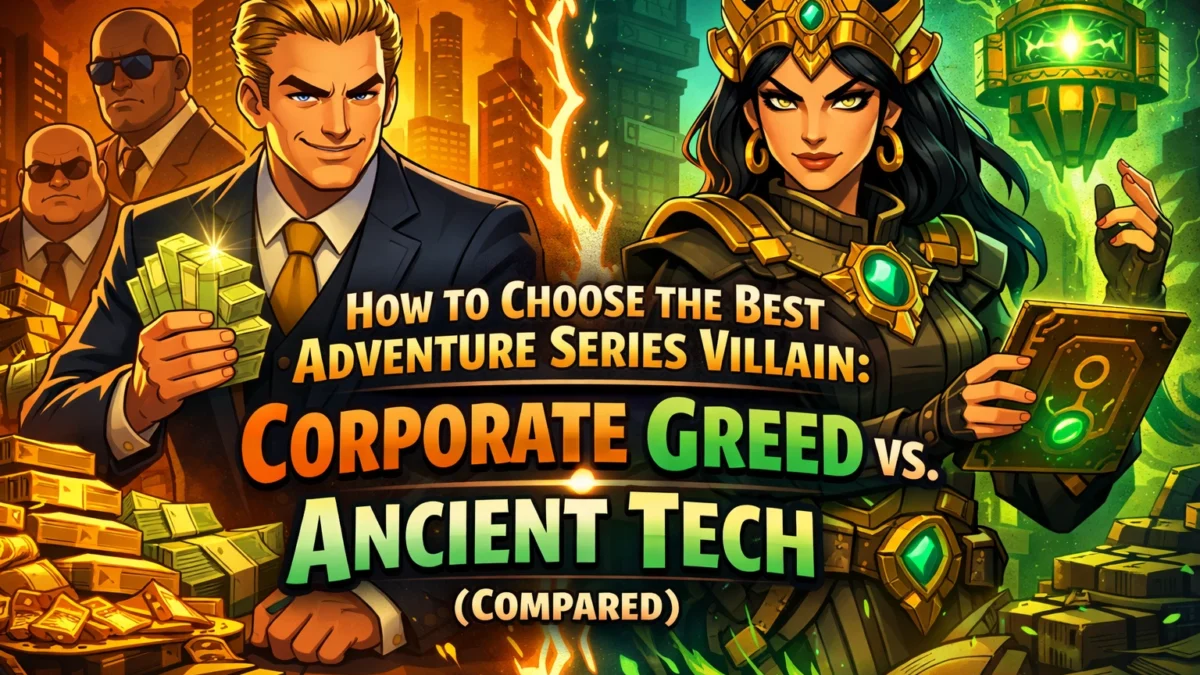
Today we're breaking down two of the most compelling villain archetypes in modern adventure fiction: Corporate Greed versus Ancient Tech. And we're using real examples from The Rainsavers series to show you exactly what makes each one work (and why the best series don't make you choose).
The Corporate Greed Villain: Meet Bossman
Let's start with the suit-and-tie nightmare.
Bossman from The Rainsavers isn't your typical mustache-twirling CEO. Sure, he runs a massive corporation. Yes, he's willing to destroy entire ecosystems for profit. But here's what makes him genuinely terrifying: he thinks he's the good guy.

Why Corporate Greed Hits Different in 2026
Corporate villains work because they're uncomfortably real. Every time you scroll past another climate disaster headline, you're seeing this archetype play out in real time. The genius of using greed as a primary motivation is that it doesn't require elaborate backstory, we've all watched companies choose profit over people.
Bossman represents the Abusive Authority Figure archetype. He manipulates systems, exploits resources, and genuinely believes his wealth accumulation serves a greater purpose. The rainforest getting destroyed? That's just "progress." Indigenous communities displaced? "Unavoidable collateral damage."
What makes this work:
- Immediate relatability (we've all dealt with corporate BS)
- Stakes feel personal and global
- No superpowers needed, money is the superpower
- Reflects actual 2026 anxieties about climate collapse
The challenge: Making greed feel fresh when we've seen "evil corporation" done to death. The key? Get specific. Bossman isn't just generically greedy, his particular brand of rainforest exploitation creates unique conflicts for our heroes.
The Ancient Tech Villain: Enter Leonard West
Now flip the script entirely.
Leonard West brings something else to the table: obsession with ancient power. This guy isn't motivated by quarterly earnings: he's chasing pre-Inca technology that could reshape reality itself.
Why Ancient Tech Creates Unstoppable Antagonists
The ancient tech villain operates on a completely different wavelength. Leonard West fits the Mastermind archetype: someone who's "several steps ahead" and uses superior intellect to orchestrate complex schemes that span continents.
What makes Leonard fascinating is that his motivation almost makes sense. Ancient civilizations left behind technology we can barely understand. Shouldn't someone try to unlock those mysteries? The problem is what happens when ambition eclipses ethics.

What makes this work:
- Injects mystery and historical intrigue
- Creates intellectual conflict (not just physical)
- Expands story possibilities beyond modern settings
- Taps into our obsession with lost civilizations
The challenge: Keeping it grounded. Ancient tech can easily slide into fantasy territory. The Rainsavers solves this by rooting Leonard's quest in actual historical mysteries: the Andes, hidden chambers, artifacts that might have existed.
Head-to-Head: Which Villain Type Wins?
Here's the honest comparison:
Corporate Greed (Bossman)
- ✅ Instantly relatable
- ✅ No explanation needed for motivations
- ✅ Reflects real 2026 concerns
- ❌ Can feel predictable if not executed well
- ❌ Limited story scope (usually Earth-bound, contemporary)
Ancient Tech (Leonard West)
- ✅ Introduces mystery and discovery
- ✅ Allows for global adventure and historical deep-dives
- ✅ Creates intellectual chess matches
- ❌ Requires more world-building
- ❌ Can feel disconnected from real stakes
But here's where it gets interesting…
Why The Rainsavers Refuses to Choose
Most adventure series pick one villain type and commit. Corporate thriller or archaeological mystery. Pick a lane.
The Rainsavers says: why not both?
Bossman wants to exploit the rainforest for immediate profit. Leonard West wants to excavate ancient pre-Inca sites for reality-bending technology. Their goals intersect: and that intersection creates something more dangerous than either threat alone.

When corporate greed meets ancient power, you get:
- Layered conflict (heroes fighting on multiple fronts)
- Unpredictable alliances (will the villains team up or compete?)
- Stakes that scale (from local communities to potential worldwide catastrophe)
- Thematic richness (modern exploitation meeting ancient wisdom)
This is how 2026 adventure fiction operates. We're past the era of single-note villains. Readers want complexity, intersection, and threats that feel both immediate and epic.
What This Means for Your Next Series Choice
When you're browsing for your next binge-read, look for series that understand this balance. The best adventure fiction in 2026 doesn't present you with corporate boards or ancient temples: it shows you how they collide.
Check out the full character roster at The Rainsavers to see how Bossman and Leonard West create threat dynamics that keep escalating across six books. From the Amazon to Antarctica to literally the Moon, these villains force the heroes to fight smarter, not just harder.
Your Villain Checklist
Before diving into a new series, ask yourself:
Does the villain have clear, understandable motivation? (Even if you disagree with their methods, do you get why they're doing this?)
Do their goals create escalating stakes? (Book one threats should feel different from book six threats)
Can they adapt? (Static villains get boring fast)
Do they challenge the heroes in multiple ways? (Physical threats are fine, but intellectual and moral challenges hit harder)
Both Bossman and Leonard West pass these tests. More importantly, their combined presence creates a threat ecosystem that keeps you guessing.
The 2026 Villain Formula
We're living in an era where fiction needs to work harder. Streaming content drops daily. Attention spans are fractured. Your adventure series needs villains that justify the time investment.
Corporate greed grounds the story in reality. Ancient tech expands possibilities into the epic. Together? They create the kind of unstoppable narrative engine that powers six-book series without running out of steam.
The Rainsavers proves you don't need to choose between relevant, modern stakes and globe-trotting archaeological mystery. You just need writers willing to let these elements crash together and see what happens.
Ready to see how we blend both villain types into one high-stakes series? Start with Book One at The Rainsavers and watch corporate exploitation meet ancient power in the Amazon rainforest. Spoiler: things escalate quickly.
Next up: we're breaking down why team-based heroes beat solo operators every time. Subscribe to catch that post.
