
Meta Description: Ever wonder what gear actual eco-adventure heroes pack for extreme missions? From jungle humidity to polar ice, here's the survival kit breakdown our characters swear by in 2026.
![[HERO] Expedition specialist in high-tech field respirator standing before tactical gear spread, character-focused survival equipment display](https://cdn.marblism.com/_DhDTStXUDZ.webp)
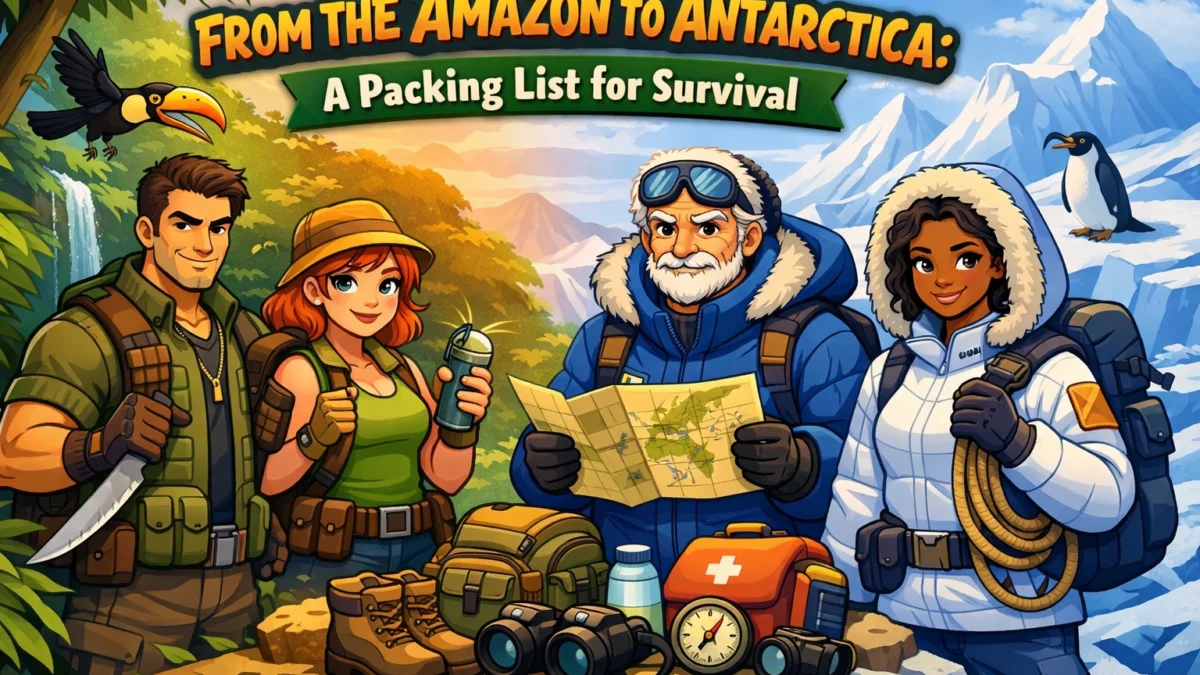
Look, we're not saying our characters from The Rainsavers are survival experts by choice. But when your job involves chasing environmental crises across every climate zone on Earth, you learn pretty fast what gear actually matters, and what's just dead weight.
So here's the thing: 2026 packing lists look wildly different than what you'd find in a 2015 adventure guide. Climate chaos means you might hit the Amazon during a freak cold snap, or Antarctica during an unseasonal melt. Our heroes pack for chaos, not comfort.
The "Oh Crap, We're Going Where?" Essentials
The Universal Core (Stuff You Never Leave Behind)
- Breathing gear first. Sounds obvious until you're dealing with volcanic ash plumes or wildfire smoke in places that shouldn't have wildfires. High-tech field respirators aren't just for pandemics anymore.
- Shelter that adapts. Forget the old single-use tents. Modern eco-heroes use modular sil-nylon systems that reconfigure from jungle canopy cover to snow anchors in under 10 minutes.
- Water purification that actually works. Not those survival-show gimmicks. Real-deal filtration for when "pristine" glacial melt turns out to have microplastics and worse.
The golden rule our team learned the hard way? If it weighs more than 25% of your body weight, someone else is carrying it. No exceptions.

Amazon Loadout: When Everything's Trying to Kill You (Or Just Make You Miserable)
Tropical missions are humidity management challenges disguised as adventures. Here's what keeps you alive when the rainforest decides you're the problem:
Clothing Philosophy: Quick-Dry or Die Trying
- Lightweight synthetics that actually dry overnight (because nothing ever really dries)
- Long sleeves in loose fits, keeps bugs off without turning you into a walking sauna
- Those fancy moisture-wicking base layers everyone swears by? Yeah, they're worth it.
The Bug Situation
Let's be real: insects in 2026 are different. Climate shifts mean species migration, new behaviors, more aggressive swarms. Pack:
- Head nets that don't fog up your respirator
- DEET alternatives that don't melt your gear
- A sense of humor (not optional)
Footwear Reality Check
Durable, reinforced, waterproof boots with drain ports. If your feet can't handle constant wet-dry cycles, you're done by day three.
Antarctica Adaptation: When Cold Becomes the Enemy
Now flip the script entirely. Same mission urgency, opposite survival priorities.

The Layering System That Actually Makes Sense
Four layers max, because more than that and you're too bulky to move efficiently:
- Base layer: Merino wool or high-grade synthetics (200g/m² density minimum)
- Mid-layer: Fleece that breathes, you'll be sweating more than you think
- Insulation: Down or synthetic puffer, depending on how wet conditions get
- Shell: 3-layer Gore-Tex Pro with pit zips for when you're moving hard
The Extremity Problem
Your core can be toasty while your fingers freeze off. Pack:
- Arctic-rated mitts (not gloves, mitts keep fingers together for shared warmth)
- Multiple sock systems: regular synthetic, heavy fleece, sleeping-specific
- Neck gaiters that actually stay put
- Goggles rated for snow blindness protection
Boots That Won't Fail You
Winter boots with removable liners are non-negotiable. Frozen feet aren't just uncomfortable, they're mission-ending. Some of our characters swear by Neos overboots as backup.
The Gear Nobody Talks About (But Everyone Needs)
Here's where real-world survival diverges from movie montages:
Navigation in 2026
- Yes, bring paper maps (satellites fail, batteries die, EMPs happen)
- GPS trackers with solar backup
- Old-school compass, analog never crashes
Fire & Heat Sources
- Waterproof matches AND backup firestarters
- Portable stove systems that work in both extreme cold and high altitude
- Hand warmers for emergency situations (double as morale boosters)
The First Aid Reality
Individual first aid kits (IFAKs) in 2026 include stuff your grandparents never dreamed of:
- Altitude sickness meds
- Broad-spectrum antibiotics for mystery infections
- Snake bite protocols for species moving into new territories
- Psychological support supplies (yes, that's a thing now)

What Changed Since 2020: The Uncomfortable Truth
Our characters' packing lists reflect a harder world:
Solar Everything
When you can't guarantee power infrastructure anywhere on Earth, solar panels become essential survival gear, not optional tech accessories.
Multi-Environment Versatility
Climate unpredictability means packing for temperature swings that would've been impossible 10 years ago. A mission to the Arctic might hit unexpected warm fronts. Amazon expeditions face freak weather events that require cold-weather backup gear.
Durability Over Weight
Yeah, ultralight sounds great until your gear falls apart in month two of a six-month mission. Our team learned to prioritize Cordura nylon construction (500 denier minimum) over shaving ounces.
The Pack Weight Philosophy
Here's the math: adult human, 150 pounds = 37.5-pound maximum pack weight. Sounds reasonable until you're actually choosing between extra water purification capacity and another week's worth of fire-starting supplies.
Priority Breakdown:
- Breathing/air quality gear
- Shelter systems
- Water access tools
- Fire/heat sources
- Navigation equipment
- Food (yes, last: you can survive weeks without food, but only days without water)
What We Learned the Hard Way
Electronics fail. Even the ruggedized stuff. After a few months of extreme temperature cycling and humidity exposure, count on your devices giving up. Paper backups aren't paranoia: they're pragmatism.
Waterproofing is non-negotiable. Pack rain covers, dry bags, waterproof stuff sacks: assume everything will get wet eventually because it will.
Mental preparation matters more than gear. You can have the perfect packing list and still crack under pressure. The best survival tool is the space between your ears.

The 2026 Reality Check
Look, our characters aren't Instagram expedition influencers with unlimited budgets and sponsor deals. They're working with finite resources, making hard choices about what gear actually saves lives versus what looks cool in photos.
The planet's changing faster than gear manufacturers can adapt. Today's "extreme environment" becomes next year's normal Tuesday. Packing for survival in 2026 means accepting uncertainty as the baseline and building redundancy into every system.
Your Mission Starts Now
Think you can handle the gear requirements our eco-adventure heroes deal with every mission? Want to see how they actually use this stuff when environmental crises explode across continents?
Read Book One now and follow the team as they pack, deploy, adapt, and occasionally lose critical gear at the worst possible moments. Because real adventure isn't about having perfect equipment: it's about making impossible choices with whatever you've got left.
The Amazon to Antarctica pipeline isn't a vacation route. It's where environmental heroes prove what they're made of, one survival decision at a time.
Ready to see survival gear in action? The Rainsavers series puts you right in the field with characters who know that the right equipment means the difference between mission success and catastrophic failure.
