Meta Description: Hopepunk or doompunk? One keeps you up doom-scrolling, the other lets you sleep. Here's why The Rainsavers blends fierce hope with real stakes, and why that matters in 2026.
It's 2:47 AM. You've just finished another climate thriller where humanity collapses, the oceans rise, and the last human survivor eats expired tuna from a bunker while mutant fungi take over downtown Manhattan.
You close the book. Stare at the ceiling. Wonder if you should've just watched cat videos instead.
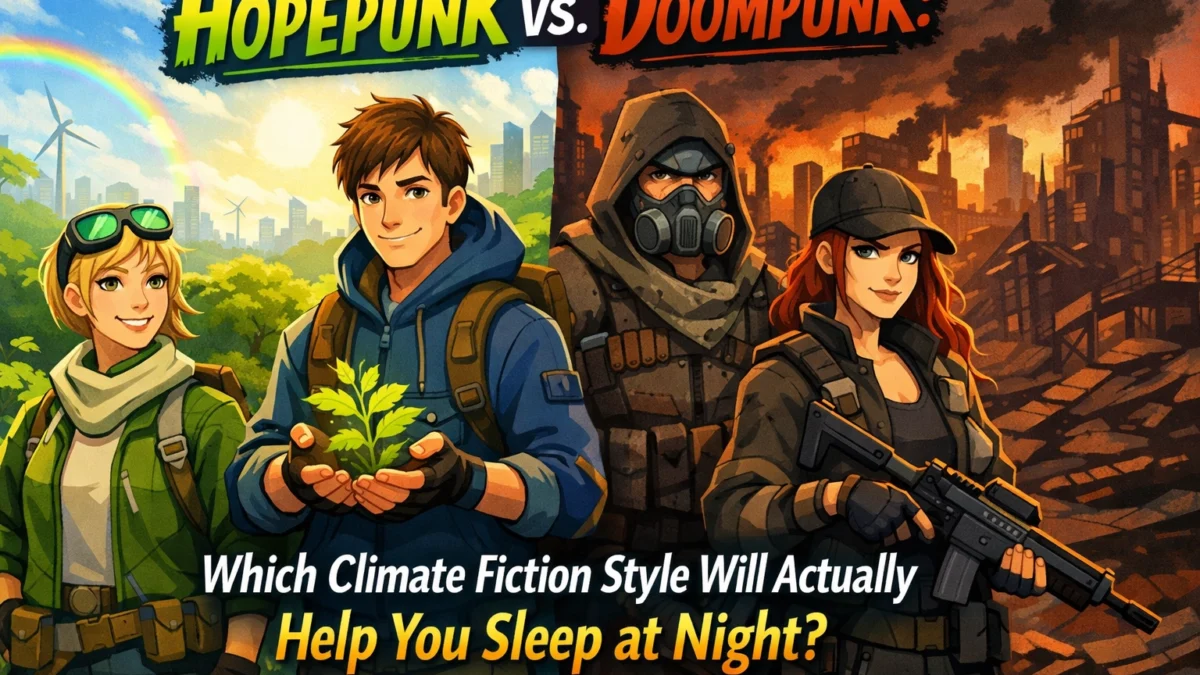
Welcome to the great climate fiction sleep study of 2026: hopepunk versus doompunk. One helps you rest easy. The other keeps you awake Googling "how to build an underground bunker in a studio apartment."
Let's break it down.
What Even Is Doompunk?
Doompunk is climate fiction's goth cousin. It's apocalyptic, fatalistic, and convinced that humanity's basically toast. Think: crumbling cities, resource wars, every government on Earth giving up simultaneously, and protagonists who survive on bitterness and canned beans.
It's not wrong, exactly. Climate change is real, and the stakes are high. But doompunk leans hard into inevitability. The message? We're doomed, might as well watch it burn.
Great for atmospheric vibes. Terrible for your cortisol levels at midnight.

Enter Hopepunk: Weaponized Kindness in Tactical Gear
Now hopepunk, coined back in 2017 by Alexandra Rowland, doesn't pretend everything's fine. It's not solarpunk's utopian cousin showing up with organic kombucha and zero emissions by 2030. Hopepunk knows things are messy. It just refuses to give up.
Here's the difference: Hopepunk characters fight back.
They don't wait for a lone Chosen One to save the day. They build coalitions. They argue about packing lists, crack jokes while defusing bioweapons, and choose radical kindness even when it's inconvenient. Caring becomes rebellion.
And yes, some things get lost along the way. People mess up. Plans go sideways. But the point is they keep trying, and that's the story.
The Rainsavers: When Hopepunk Wears a Respirator
Let's talk Tom Swift. Brilliant engineer, hopeful to a fault, and the kind of guy who genuinely believes a well-designed water purification system can change the world. In most doompunk stories, Tom would be the tragic optimist who gets crushed by Act Two.
But in The Rainsavers? Tom's hope is tactical. He's not naive, he's building solutions while standing in the wreckage. He knows the stakes. He's seen corporate greed, environmental collapse, and a shadowy organization trying to turn the Amazon into a bioweapon testing ground.
And yet he keeps showing up. With blueprints. And duct tape. And a weirdly infectious belief that teamwork might actually work.

Then there's Alpha, the AI sidekick who turns existential dread into one-liners. When Tom's stressing about oxygen levels in a remote research station, Alpha's cracking jokes about "suboptimal atmospheric conditions" and asking if anyone packed snacks.
That's hopepunk energy. Acknowledge the danger, then defuse it with humor and action. Don't let the doom win.
Why Doompunk Keeps You Awake (And Not in a Good Way)
Here's the problem with pure doompunk: it traps you in waiting mode.
If collapse is inevitable, what's the point? You finish the book feeling helpless, then spend three hours researching whether your city has a disaster preparedness plan. (Spoiler: it doesn't.)
Doompunk scratches the anxiety itch but offers no relief. It's like doomscrolling in narrative form, validating your fears without giving you a single tool to process them.
By 3 AM, you're wide awake, wondering if you should start hoarding batteries.
Why Hopepunk Actually Helps (Even When It Gets Messy)
Hopepunk doesn't promise everything works out. But it gives you agency back.
When Tom and the team face impossible odds, a genetically modified fungus spreading through the rainforest, corporate mercenaries blocking their path, supply lines cut off, they don't collapse into fatalism. They improvise. They collaborate. They argue about the best route through the jungle, then actually take the route.
That's the difference. Hopepunk says: "Yes, it's bad. Now what are we doing about it?"
And that question, now what, is what lets you sleep at night. Because it reminds you that action exists. That small choices matter. That caring isn't foolish; it's resistance.

The Rainsavers' Secret: Blending Both
Here's where it gets interesting. The Rainsavers doesn't pretend the Amazon's not on fire (literally and metaphorically). It doesn't skip over corporate greed, corrupt officials, or the very real threat of environmental collapse.
It just refuses to stop there.
Tom's team operates in a world where things are falling apart, but they're also building things back up. They're purifying water, protecting biodiversity, and occasionally blowing up illegal mining operations with strategically placed charges. (Hey, hopepunk doesn't mean passive.)
The stakes are real. The losses hurt. But the story doesn't end with "and then we all died horribly."
It ends with: "We're still here. We're still fighting. Pass the bug spray."
So Which One Helps You Sleep?
Look, if you enjoy 2 AM anxiety spirals, doompunk's your genre. It's cathartic in a bleak, validating way. Sometimes you need to sit with the fear.
But if you want to close the book, take a breath, and think "okay, that was intense but I feel… oddly hopeful?" That's hopepunk.
It acknowledges the mess without making despair the endgame. It gives you characters who care fiercely, act imperfectly, and keep showing up even when things look grim.
Because here's the truth in 2026: we're living in a world that needs both.
We need stories that don't sugarcoat the stakes. But we also need stories that remind us action is possible, that cooperation beats lone-hero narratives, that kindness isn't weakness, and that sometimes the best rebellion is just refusing to give up.
The TL;DR for Sleep-Deprived Readers
Doompunk: Humanity's toast, everything's collapsing, see you in the bunker.
Result: Existential dread, 3 AM Wikipedia binges, no solutions.
Hopepunk: Things are bad, but we're fighting back with science, teamwork, and tactical compassion.
Result: You close the book thinking, "Huh. Maybe we've got a shot."
The Rainsavers: Both. Real stakes, real losses, real hope. Plus a sarcastic AI and a guy who thinks duct tape fixes everything. (It usually does.)

Your Move
Want climate fiction that doesn't make you want to crawl under the covers and never emerge? Stories where the good guys actually do something: even if it's messy, imperfect, and involves way too many arguments about packing lists?
See how we blend both. Tom's waiting. Alpha's got jokes. The Amazon's not saving itself.
Sleep well. Or don't: but at least you'll have hope-fueled insomnia instead of doom-fueled panic.
Your call.
