
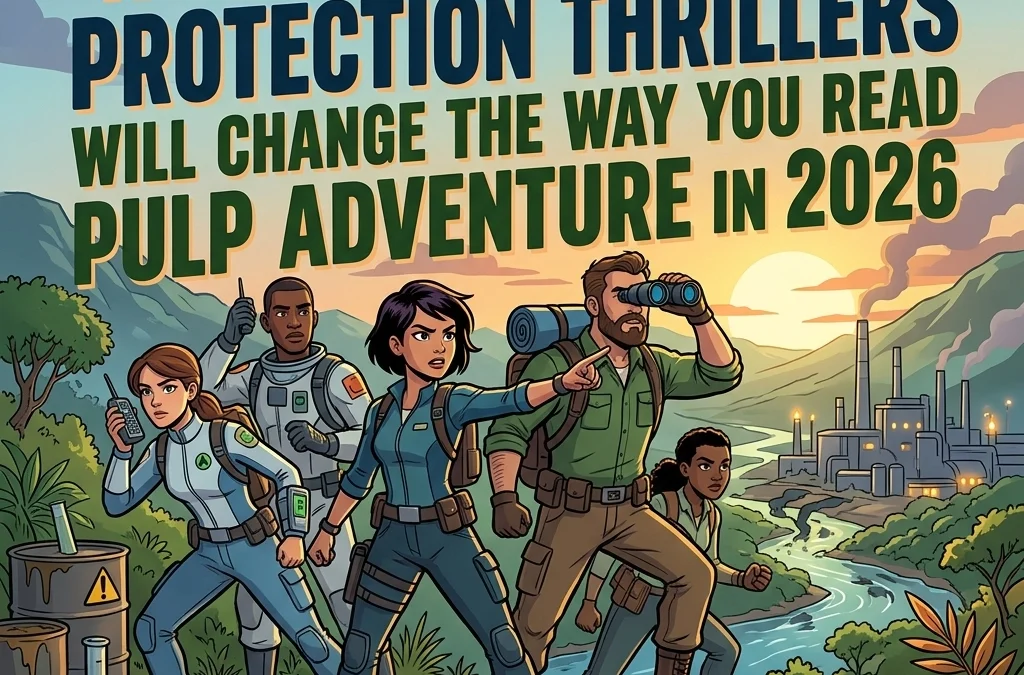
Meta Description: 2026 is the year pulp adventure grows up. Discover how environmental protection thrillers like The Rainsavers are redefining the genre for a new generation of readers.
Hey there, adventure seekers! Steven G. Samuels here, CEO of The Rainsavers. It’s Friday, April 3rd, 2026, and I’ve been thinking a lot about how much our bookshelves have changed in just a few short years.
Remember the old pulp stories? The ones from the mid-20th century where a guy in a fedora punched his way through a jungle to find a golden statue, usually leaving a trail of destruction behind him? Those stories were fun, don't get me wrong. They gave us that rush of adrenaline we all crave. But as we move deeper into 2026, those old tropes are starting to feel a bit… well, dusty.
The world has changed. Our threats are bigger, more complex, and a lot more global. That’s why we’re seeing a massive shift toward Environmental Protection Thrillers. This isn't just a sub-genre anymore; it’s the new backbone of pulp adventure.
Here is why this shift is happening and why it’s going to change the way you read forever.
The Stakes Are Finally Real
In the old days, if the hero didn't find the "Lost City of Whatever," the only real consequence was that a museum didn't get a new exhibit. In 2026, the stakes in our stories, and specifically in The Rainsavers series, are much higher.
We’re talking about the survival of the planet. When our characters are racing against time, they aren't just looking for gold. They are trying to stop ecological collapse, prevent the weaponization of ancient weather-tech, or protect the last bastions of untamed nature.
When the stakes are real, the tension is higher. You aren't just rooting for the hero to win; you’re rooting for the world to keep spinning. It turns a "fun read" into an "unputdownable obsession."

From Solo "Strongmen" to Eco-Teams
One of the biggest changes in 2026 is the death of the "lone wolf" hero. We’ve talked about this before, why team-based adventure series are taking over.
Environmental protection isn't something one guy with a big chin and a holster can do alone. It takes a village, or in our case, a highly specialized team. Our readers are gravitating toward characters like Primal and Mortalis.
- Primal represents that raw, grounded connection to the earth. He’s the muscle, but his strength comes from a deep respect for the environment he protects.
- Mortalis brings the mystery and the edge. He handles the threats that come from the shadows, the stuff that shouldn't exist but does.
When you have a team, you have dynamics. You have conflict, humor, and a variety of skills. You can check out our full roster of characters here. This team-up approach makes the adventure feel more modern and a lot more relatable.
Science Meets Mystery (Hello, Red Mercury!)
Modern pulp isn't just about punching villains; it’s about the "weird science" that defines our decade. In 2026, we’re obsessed with tech that feels like magic.
Take Red Mercury, for example. Is it a myth? Is it the ultimate clean energy source? Or is it a weapon that could tear the atmosphere apart? Mixing these sci-fi elements with ancient environmental mysteries creates a unique flavor of thriller that the old pulps just couldn't touch.
We love exploring the idea of ancient technology vs. modern threats. It asks the question: Did the ancients know something about protecting the Earth that we’ve forgotten? And more importantly, Can we get it back before the bad guys do?

Dealing with Climate Anxiety Through Action
Let’s get real for a second. It’s 2026, and climate anxiety is a real thing. We see the headlines every day. Reading a story where the characters actually do something about it is incredibly cathartic.
If you’re struggling with climate anxiety, jumping into a Rainsavers book is like taking a deep breath of fresh air. It’s not a lecture; it’s an adventure. It transforms that feeling of helplessness into a feeling of empowerment. Our heroes are taking the fight to the polluters and the world-breakers, and there’s something deeply satisfying about that.
Skimmable Breakdown: Why the Shift is Happening Now
If you’re short on time, here’s the "TL;DR" on why Environmental Thrillers are the king of 2026:
- Relevance: The "villains" are modern-day threats we actually recognize.
- Complexity: It’s not just "Good vs. Evil": it’s "Survival vs. Greed."
- The Tech: High-tech gadgets meet ancient environmental secrets.
- The Heroes: They look like us (well, the cooler, more athletic versions of us) and work in teams.
- The Escape: It provides a way to process real-world fears through high-octane fiction.
Adventure Tips for the Modern Reader
If you’re looking to dive into this genre, here are a few tips to get the most out of your 2026 reading list:
- Look for "Cli-Fi" with a Pulse: Don't settle for dry, depressing stories. Look for action-heavy climate fiction.
- Follow the Mystery: The best environmental thrillers usually have a "rabbit hole" element. Speaking of which, have you checked out our Down the Rabbit Hole contest?
- Go Multimedia: In 2026, the story doesn't end on the page. Check out our TV commercials or even our movies section to see how these worlds are coming to life.

Why The Rainsavers?
At the end of the day, we started The Rainsavers because we wanted to read books that felt like the world we live in today. We wanted the explosions, the chase scenes, and the ancient ruins, but we wanted them to mean something.
Whether it’s exploring why eco-fiction changes your perspective or debating who makes a better villain, we are committed to pushing the boundaries of what pulp adventure can be.
The world is changing, and your entertainment should too. 2026 is the year of the eco-hero. Are you ready to join the mission?
Ready to start your next adventure?
Check out the latest episodes, meet the team, and grab your gear over at the official site. The planet isn't going to save itself, and neither is your reading list!
Visit us now at https://rainsavers.com
Stay adventurous,
Steven G. Samuels
CEO, The Rainsavers
