Meta Description: The 'Chosen One' trope is tired. Here's why The Rainsavers Books 1-6 prove that teamwork, messy collaboration, and shared responsibility make better stories, and better heroes.

Look, we need to talk about the Chosen One thing.
You know the drill: One special person. Ancient prophecy. Only THEY can save the world. Everyone else? Just background noise holding their stuff.
It's 2026, and that narrative is exhausted. More importantly, it's wrong.
The Problem With Being "The One"
Here's what the Chosen One trope actually teaches us: sit back and wait for someone special to fix everything. You're not special? Cool, you're off the hook. Climate crisis? Economic collapse? That's the Chosen One's job, not yours.
This is a terrible message.
Real achievement, landing rovers on Mars, developing vaccines, building movements, happens through coordinated teams with different skills. Not lone wolves. Not prophesied heroes. Teams.
And honestly? Stories are better when they reflect that reality.

What The Rainsavers Gets Right (Books 1-6 Analysis)
Let me walk you through why The Rainsavers series nails the teamwork approach across all six books, and why it matters.
Book 1: Nobody's Special (And That's The Point)
The first book doesn't hand anyone a glowing sword or a destiny scroll. Instead, it throws together people with complementary skills who have to figure things out together.
No ancient prophecy. No "you're the only one who can do this." Just: here's a massive problem, and you'll need every single person pulling their weight to survive.
That's way more interesting than watching one person solve everything while their friends stand around looking impressed.
Books 2-3: Failure Is A Team Sport
Here's where things get real. The team screws up. Multiple times. And not in a "oops, silly sidekick" way, in a "our strategy was wrong and now we're dealing with consequences" way.
But the failures are shared. The responsibility is distributed. Nobody gets to blame the Chosen One for not being chosen-y enough. Everyone owns the mess, and everyone participates in fixing it.
This is how actual teams work. You adapt. You cover for each other. You try again.

Books 4-6: The Moral Accountability Problem
Remember how Chosen Ones get to do questionable stuff and nobody questions it because, well, destiny?
The Rainsavers doesn't allow that luxury. When team members make ethically gray choices, other team members call them out. There's debate. There's friction. There's accountability.
This is the beauty of ensemble narratives: moral responsibility can't hide behind a prophesied role. If you mess up, your teammates will notice. And they'll say something.
Because they're invested. Because they're not just NPC support characters, they're protagonists too.
Why This Matters Beyond Fiction
The stories we tell shape how we think about problem-solving in real life.
Chosen One narratives suggest that major crises require exceptional individuals. Team-based narratives suggest that ordinary people working together can accomplish extraordinary things.
Which version inspires more people to actually participate?
In 2026, we're facing challenges that require mass coordination: environmental restoration, technological ethics, resource distribution. These aren't "one hero" problems. They're "all hands on deck" problems.
Fiction that normalizes collective action and shared responsibility isn't just more realistic, it's more useful.

The "Chosen One With Friends" Loophole
Some stories try to split the difference: technically a Chosen One, but with a really involved support team.
Buffy the Vampire Slayer did this well, Buffy survives way longer than other Slayers specifically because she has the Scooby Gang backing her up. The show repeatedly demonstrates that Buffy alone = disaster, but Buffy + team = success.
The Rainsavers takes this further by removing the "chosen" element entirely. There's no singular protagonist who outranks everyone else narratively. The team structure isn't a compromise, it's the entire point.
What Readers Actually Want (Spoiler: It's Not Loneliness)
Hot take: being the Chosen One sounds miserable.
All that pressure. All that responsibility. All that isolation because nobody else can truly understand your burden.
Team narratives offer something healthier: belonging, collaboration, shared stakes. Characters who support each other through impossible situations. Friendships forged under pressure.
Readers connect with that. We want to see people working together. We want to see different skill sets combining in clever ways. We want to see characters who care about each other enough to argue, compromise, and show up when it counts.
The Rainsavers delivers that across all six books, and the result is a reading experience that feels less like watching a demigod and more like being part of something bigger than yourself.

The Practical Skills Argument
Here's another thing: Chosen Ones are often good at everything.
Swordfighting? Check. Ancient languages? Check. Strategic planning? Check. Somehow also great at piloting aircraft despite no training? Sure, why not.
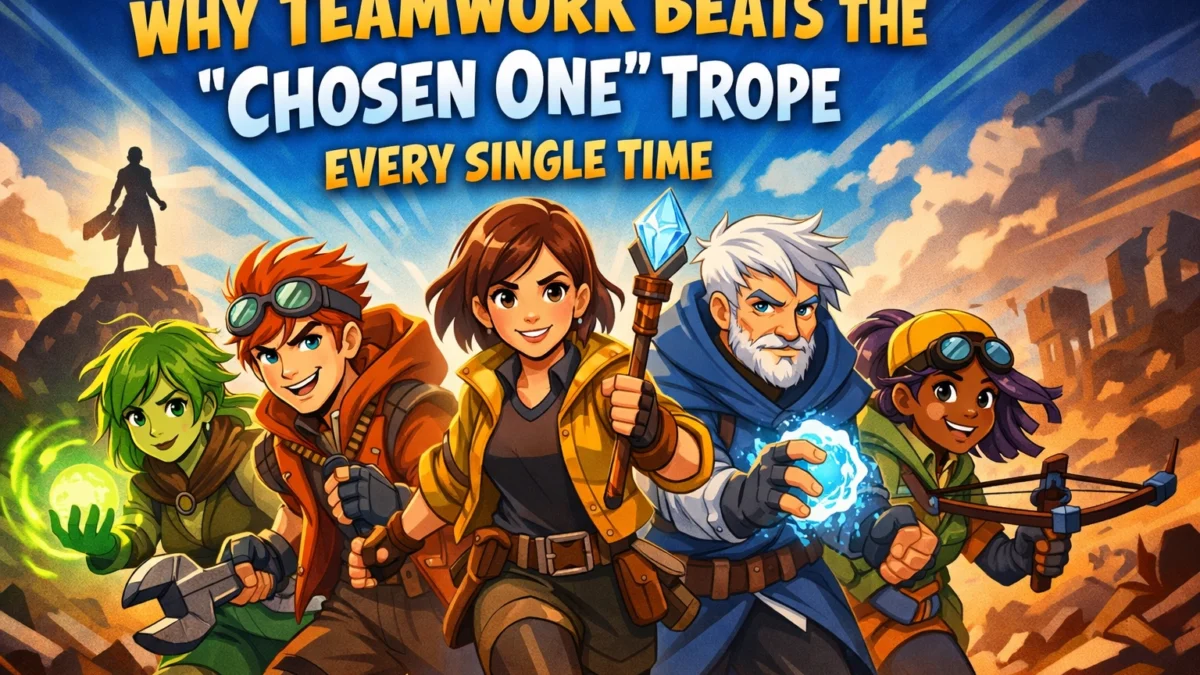
Team-based narratives force specialization. One person handles environmental science. Another handles tactical planning. Someone else manages communications and logistics.
This creates natural opportunities for characters to rely on each other, which creates investment, which creates better storytelling.
Plus it's, you know, how things actually work in reality.
So Where Does That Leave Us?
Look, there's nothing wrong with enjoying classic Chosen One stories. We've all got our favorites. But in 2026, maybe it's time to ask whether that's the only framework we want dominating adventure fiction.
The Rainsavers Books 1-6 prove there's another way: stories where teamwork isn't window dressing, where collaboration drives the plot, where ordinary people choose to act because they can, not because they're destined to.
That's the kind of story we need more of. Not because teamwork is trendy, but because it's true.
And honestly? It's just better storytelling.
Ready to experience teamwork-driven adventure fiction that doesn't wait for prophecies? Read Book One now and see why shared responsibility makes for better heroes: and better stories.
