Meta Description: Stop reading preachy, boring eco-fiction. Discover the 7 biggest mistakes in environmental action thrillers and how The Rainsavers uses Red Mercury, team-based tactics, and high-stakes adventure to fix them for the 2026 reader.
Hey there, adventure seekers! Steven G. Samuels here, CEO of The Rainsavers.
It’s March 2026, and if you’ve been keeping up with the bestseller lists or the latest streaming hits, you’ve probably noticed a massive surge in "Eco-Thrillers." Everyone wants to save the world right now, and honestly, that’s great. The planet needs all the help it can get.
But let’s be real for a second: a lot of environmental fiction is, well… kind of a slog. You know the ones I mean. You pick up a book expecting a high-octane chase through the Amazon, and instead, you get a 400-page lecture on carbon credits.
At The Rainsavers, we’re doing things differently. We believe you can have a pulse-pounding, tech-heavy, mystery-filled adventure that also respects the environment. We’ve spent a lot of time looking at why most eco-thrillers fail to land, and we’ve built our universe to avoid those pitfalls.
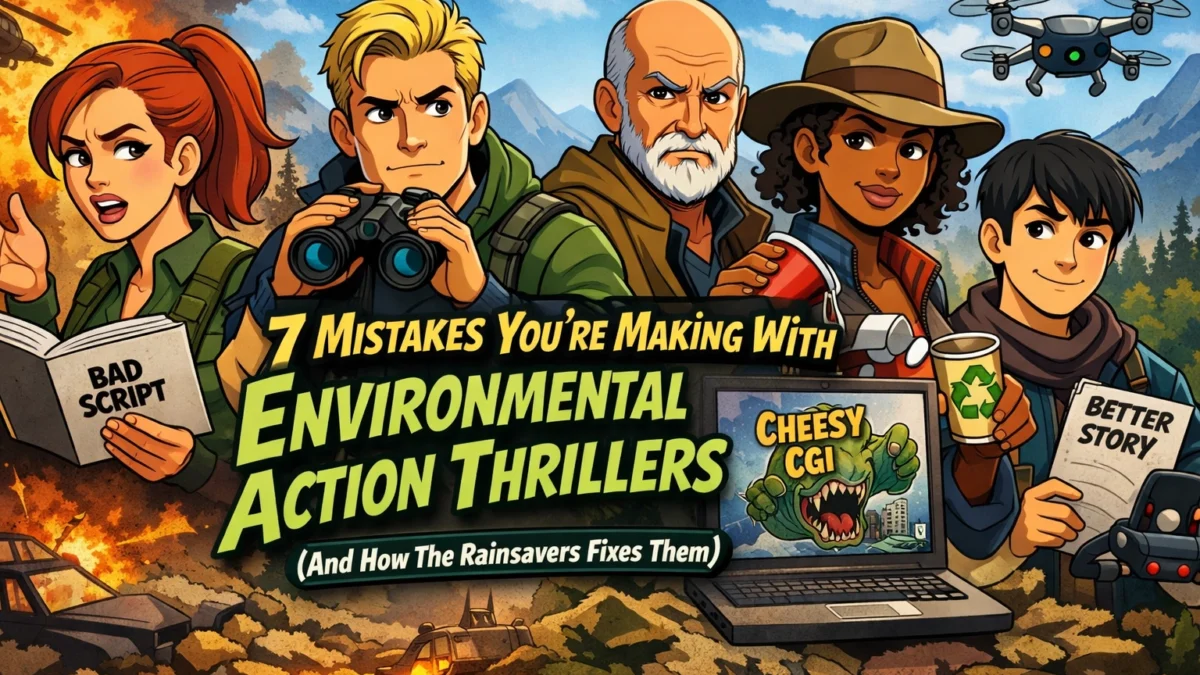
Here are the 7 biggest mistakes writers (and readers) run into with environmental action thrillers, and how we’re fixing them.
1. The "Lecture" Trap: Preaching Instead of Storytelling
We’ve all seen it. The hero stops mid-chase to explain the melting point of arctic ice for three pages. It’s the "preachy" problem. According to recent media research, audiences tune out the second they feel like they’re being sat down for a classroom session.
How The Rainsavers Fixes It:
We put the action first. In our world, the environmental stakes are the engine of the plot, not the moral of the story. You won’t find our characters standing on soapboxes. You’ll find them diving into classified research facilities or tracking down stolen Red Mercury. We show the beauty of the rainforest through a high-stakes extraction mission, not a PowerPoint presentation. If the story is good, the message takes care of itself.

2. The "Lone Ranger" Syndrome
For decades, the thriller genre has been obsessed with the solo "superhero" type: the one guy who can do it all. But in 2026, we know that solving global crises isn't a one-man job. In fact, solo hero stories are starting to feel a bit dated.
How The Rainsavers Fixes It:
We focus on the team. The Rainsavers isn't just one person; it’s an ensemble of specialists. You’ve got Mortalis, the strategist who sees the world like a chess board, and Primal, who brings the raw, tactical energy needed when things go south. By using a team-based approach, we create internal friction, diverse perspectives, and much more interesting combat scenarios. It’s about the chemistry of the group, not the invincibility of one person.
3. The Science is Either Boring or Impossible
There’s a thin line in sci-fi. On one side, you have "hard" science that is so technical it’s boring. On the other, you have "magic" disguised as science that makes the stakes feel fake.
How The Rainsavers Fixes It:
We use "High-Concept Tech." Enter Red Mercury. It’s the mysterious, powerful substance at the heart of our series. It’s grounded enough to feel like a breakthrough discovery but advanced enough to create "how did they do that?" moments. By blending ancient mysteries with modern tech, we keep the reader guessing. It’s not about realistic spreadsheets; it’s about ancient technology vs. modern threats.

4. Villains Who Are Just "Evil for Profit"
The classic eco-villain is a CEO in a suit who hates trees. It’s a bit one-dimensional, don't you think? In the real world, the most dangerous people are often the ones who think they’re doing the right thing.
How The Rainsavers Fixes It:
Our villains have motivations that make sense: sometimes they’re even relatable. They might be trying to solve a crisis using the wrong methods, or they might be obsessed with a "greater good" that ignores the human cost. When the villain has a legitimate point, the conflict with The Rainsavers becomes much more intense. It’s not just a fight; it’s a clash of ideologies. You can dive deeper into this in our post about villain motivations.
5. Ignoring Local Voices
A common critique of environmental films is that they rely on "celebrity saviors" who drop into a location, save the day, and leave without ever talking to the people who actually live there. It feels hollow and, frankly, a bit patronizing.
How The Rainsavers Fixes It:
The Rainsavers are global, but their missions are deeply local. Whether they are in the deep Amazon or the remote mountains, the environment isn't just a backdrop: it’s a character. We make sure the stakes involve the people on the ground. The "adventure" isn't just about saving the planet in the abstract; it’s about protecting specific homes, cultures, and ecosystems. That’s why we say rainforest adventures change the way you think.

6. The "Miracle Fix" Ending
You know the ending: the hero pushes a button, the pollution disappears, and the credits roll. In 2026, we’re all a little too smart for that. We know that environmental issues are systemic and complex. A "miracle cure" ending feels like a cheat.
How The Rainsavers Fixes It:
We play the long game. Our series is a 6-book journey. While our characters win battles, the war for the planet’s future is ongoing. We don’t offer easy answers. Instead, we offer a way to process the chaos through adventure. If you’re struggling with climate anxiety, you don't need a fake happy ending: you need a story that shows that the fight is worth it, even when it’s hard.
7. No Real Sense of Adventure
Somewhere along the way, "Environmental Fiction" became synonymous with "Depressing Fiction." People stopped associating the outdoors with adventure and started associating it with tragedy.
How The Rainsavers Fixes It:
We brought the fun back. The Rainsavers is, first and foremost, an action-adventure series. We’re talking high-speed chases, high-tech gadgets, and mysterious ruins. We want you to finish a chapter and feel energized, not exhausted. We believe that if we can make you fall in love with the adventure of the natural world, you’ll naturally want to protect it.

Why This Matters in 2026
The world has changed a lot lately. We don't have time for stories that don't respect our intelligence or our time. We need fiction that reflects the complexity of our modern world while providing the escapism we crave.
The Rainsavers is our answer to that need. It’s a series built for readers who want the adrenaline of a blockbuster movie but the depth of a great mystery novel. We aren’t trying to be the next superhero franchise; we’re trying to create something better: something that feels real, urgent, and incredibly exciting.
Ready to see how we’ve fixed the eco-thriller?
Check out our latest episodes and dive into the world of Mortalis, Primal, and the hunt for Red Mercury. Whether you’re looking for a new binge-read or you want to see our latest TV commercial, we’ve got you covered.
Join the mission today:
Explore The Rainsavers Universe at rainsavers.com
Don't forget to check out our blog page for daily updates, character spotlights, and more tips on how to survive the adventures of 2026!
Stay safe out there, and keep saving the rain.
: Steven G. Samuels
CEO, The Rainsavers
